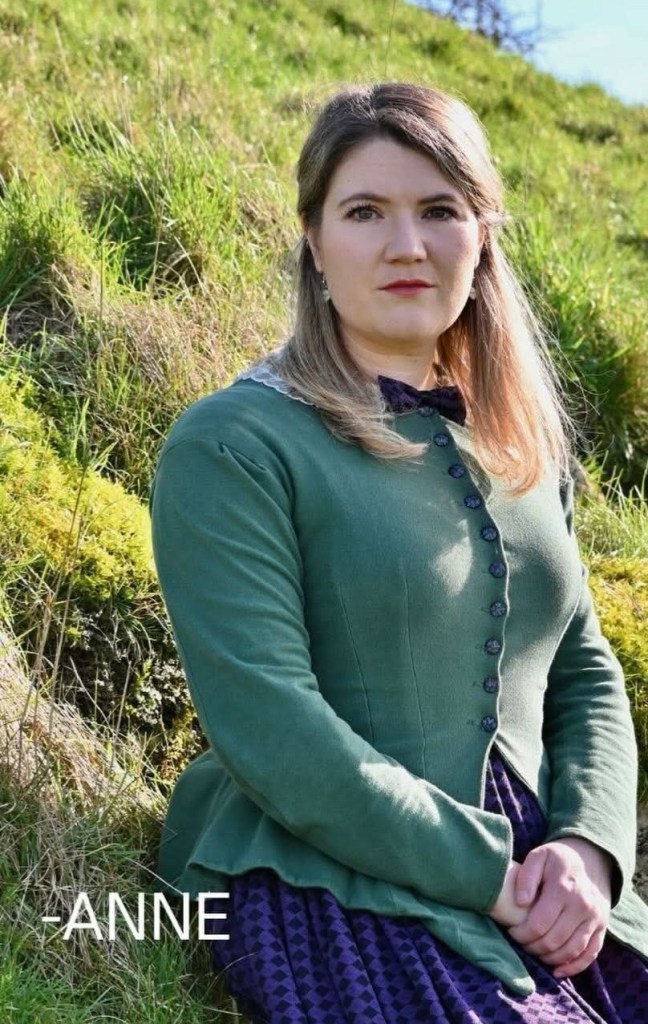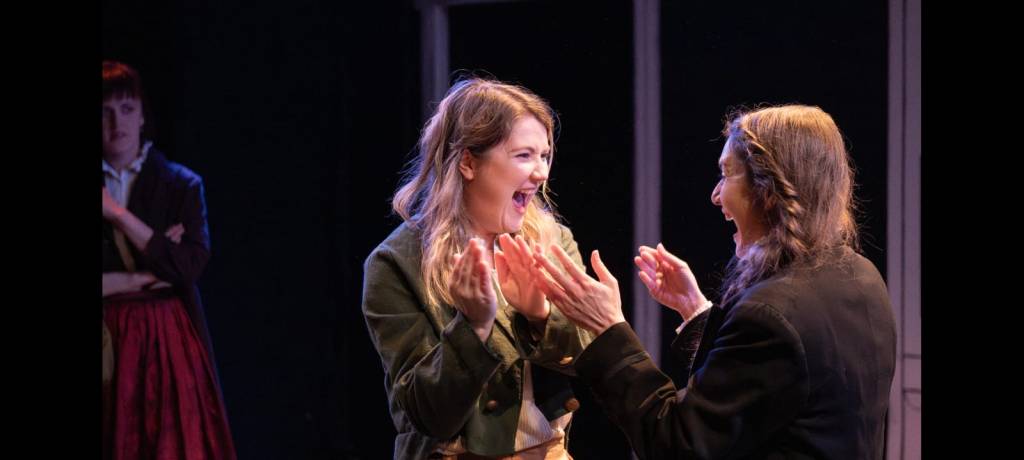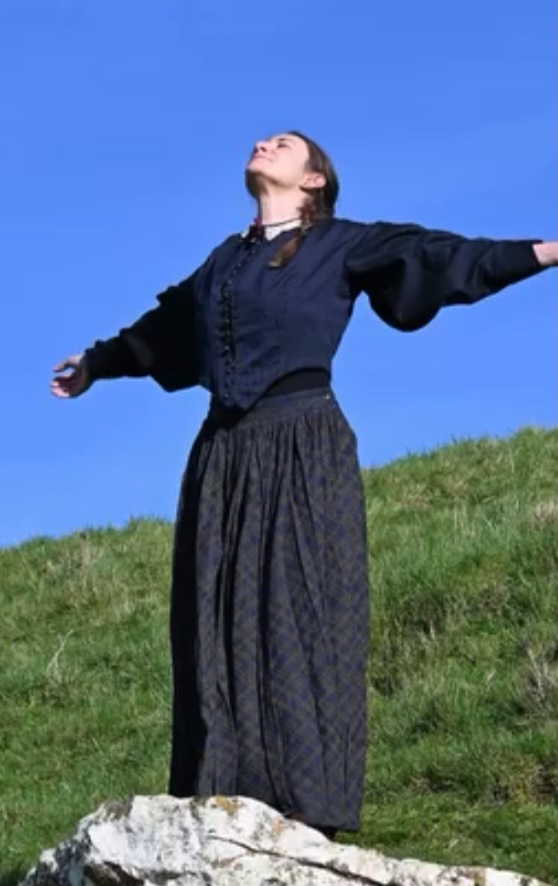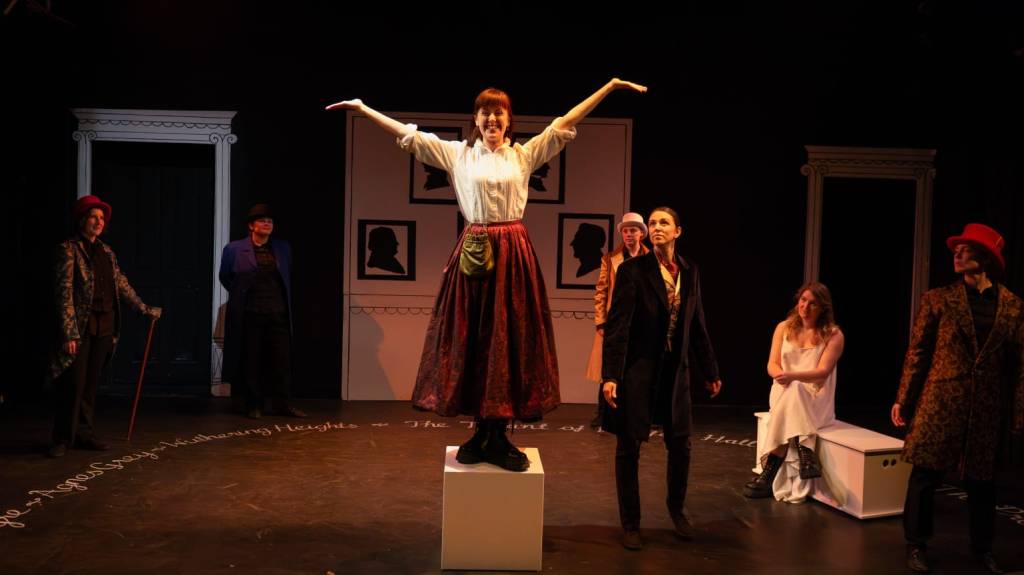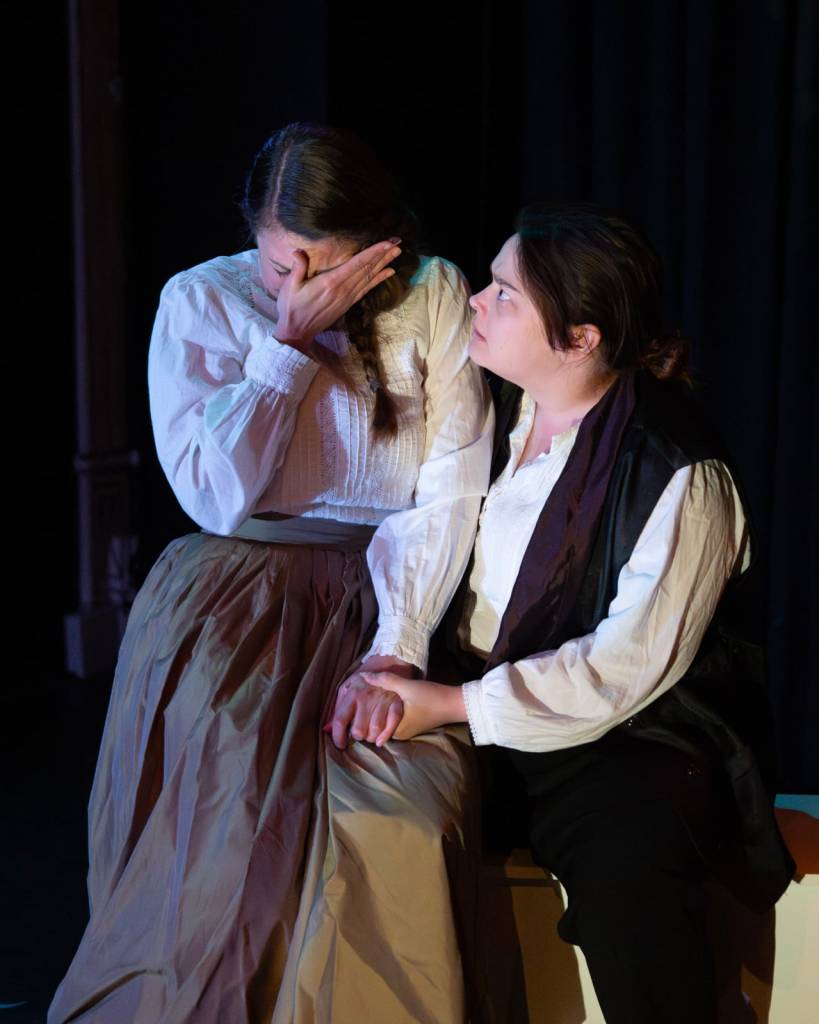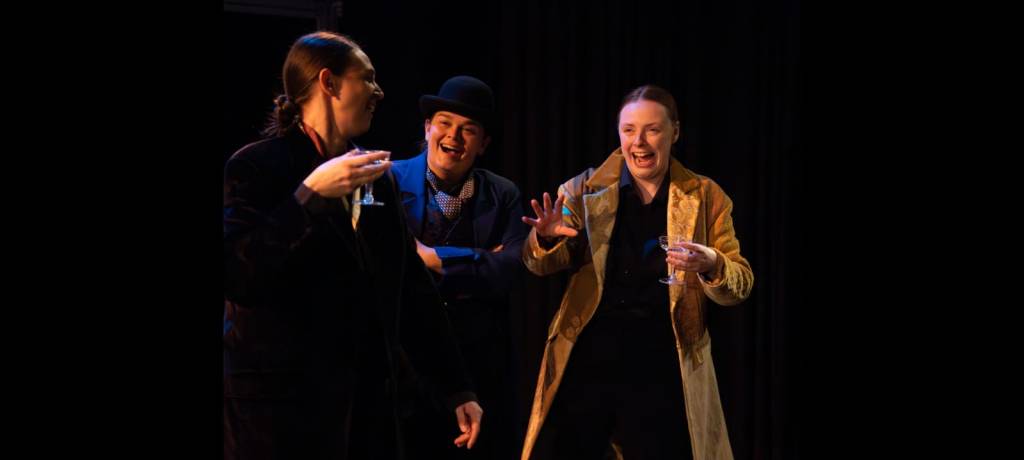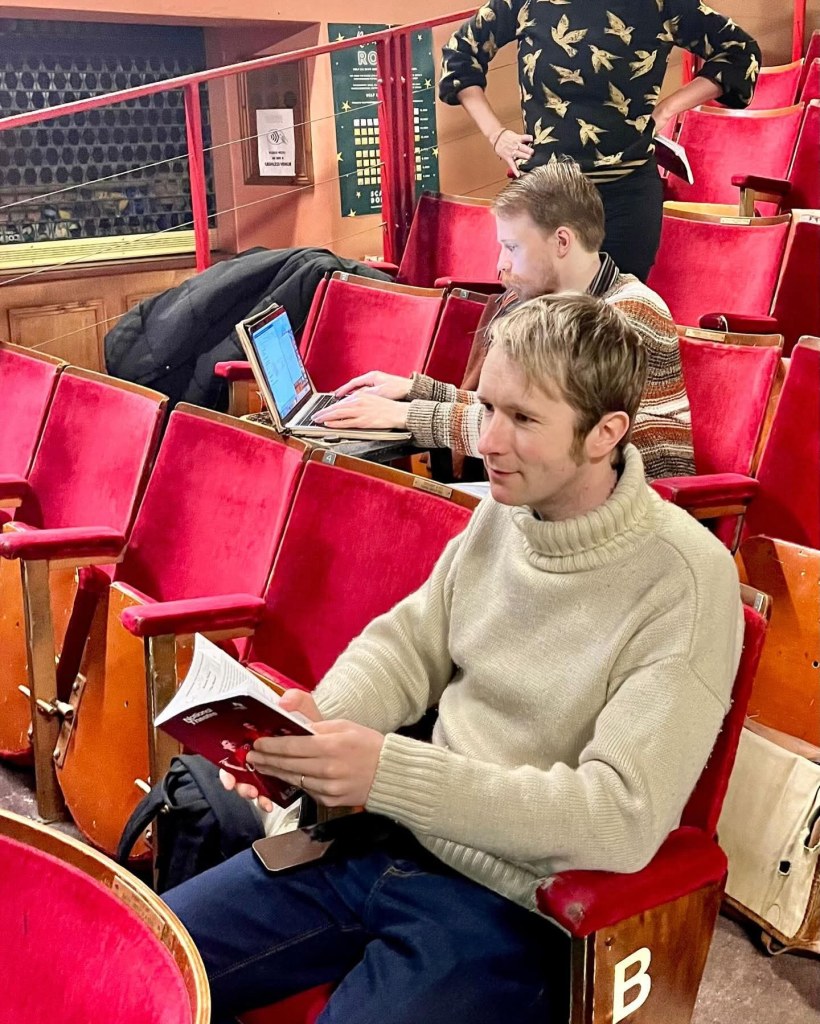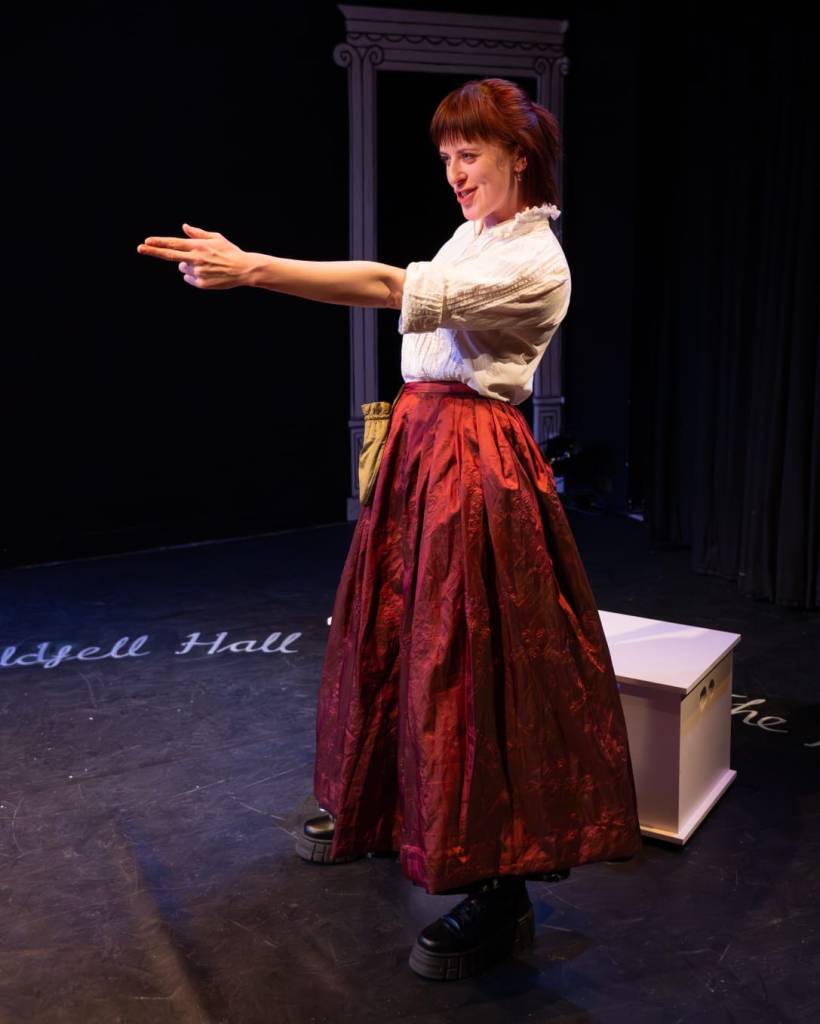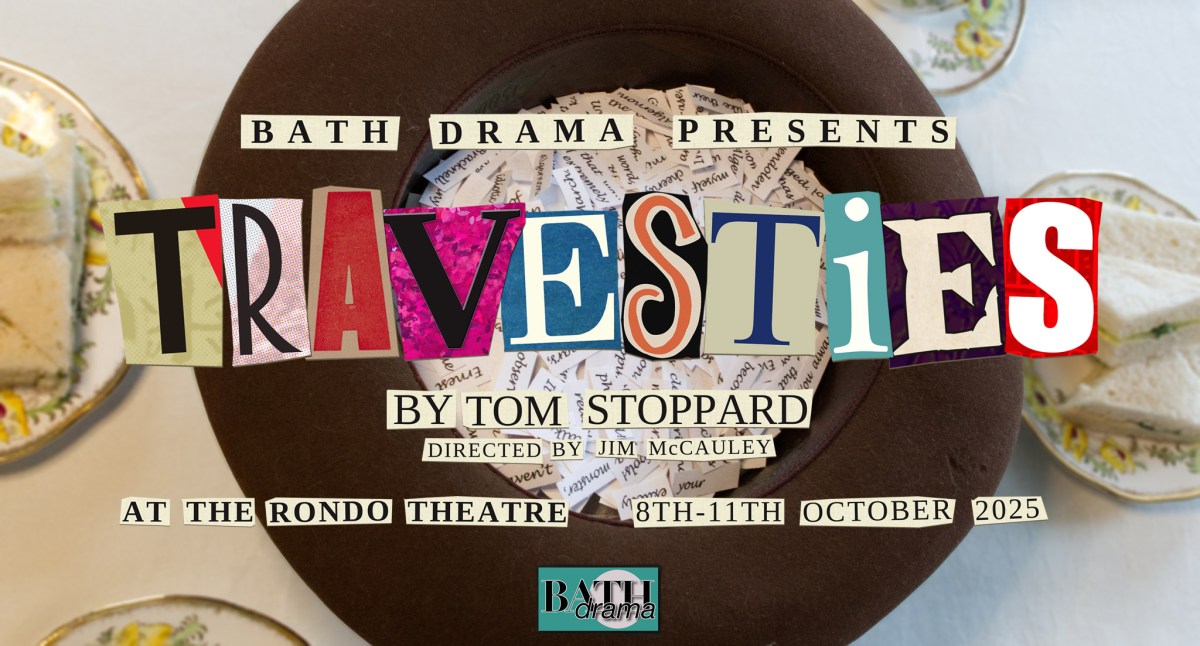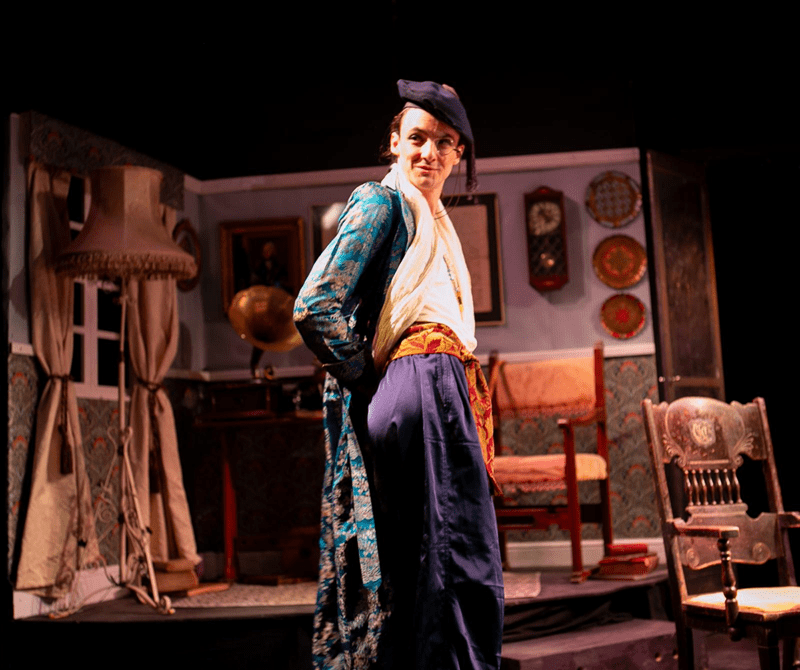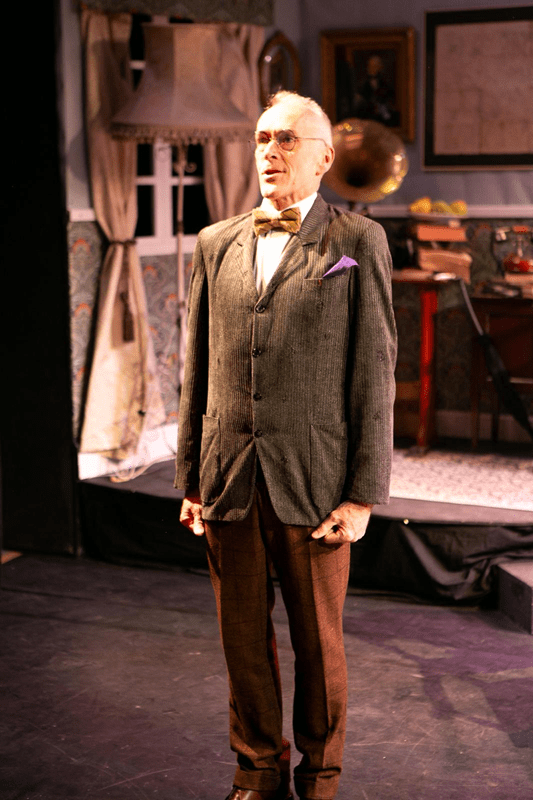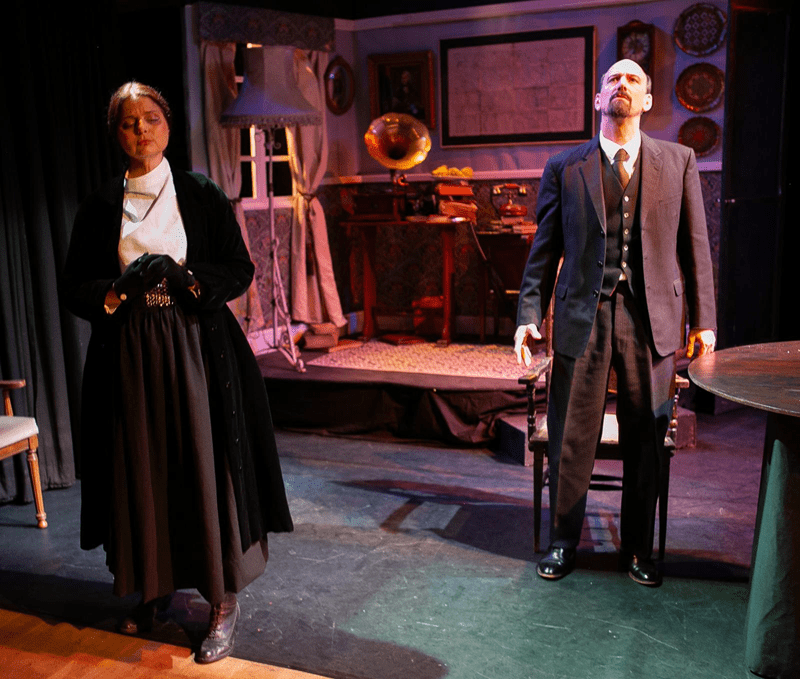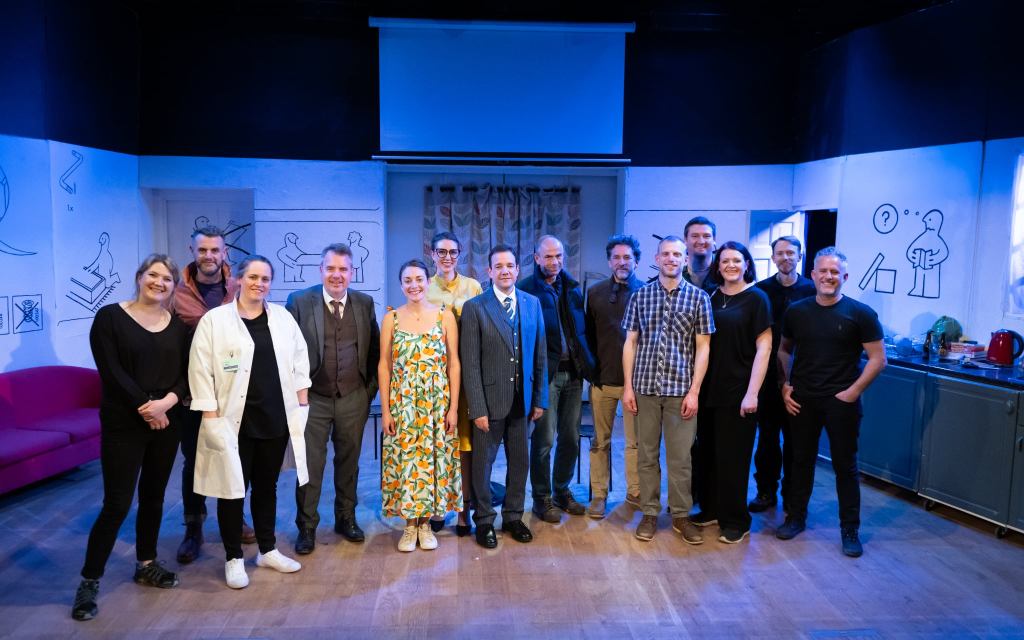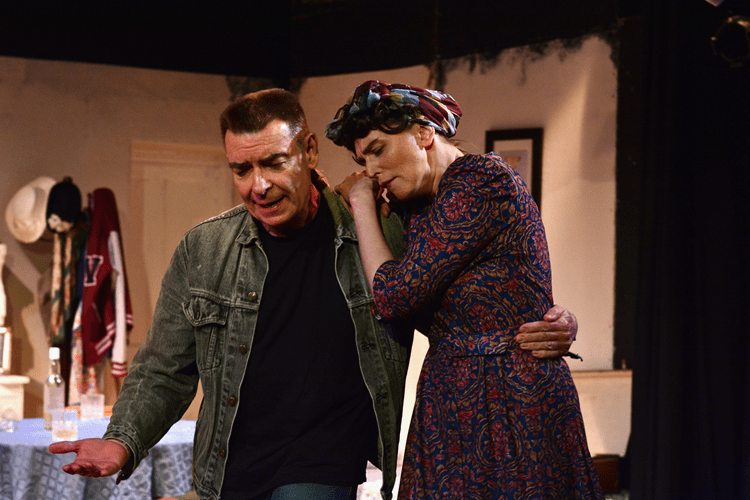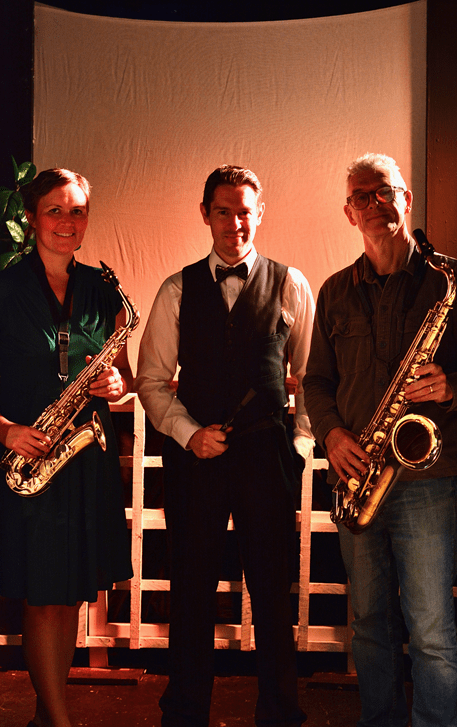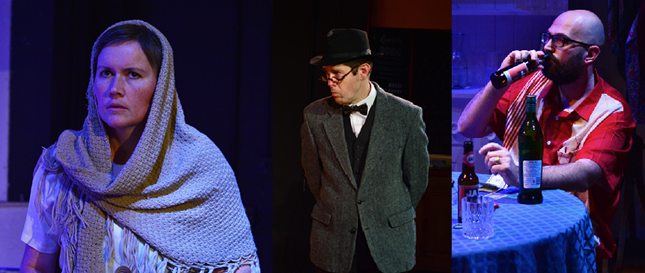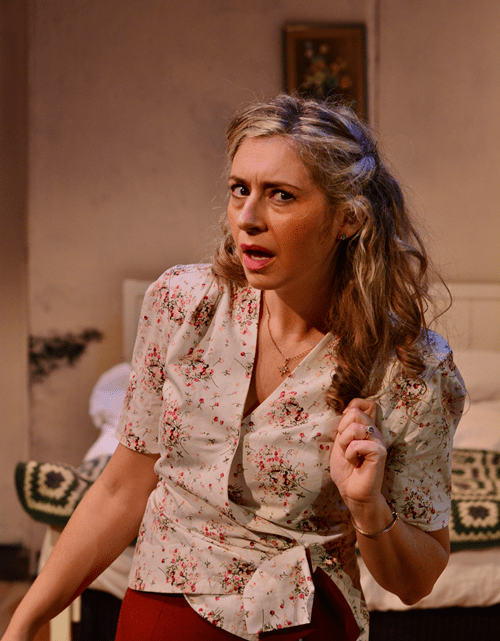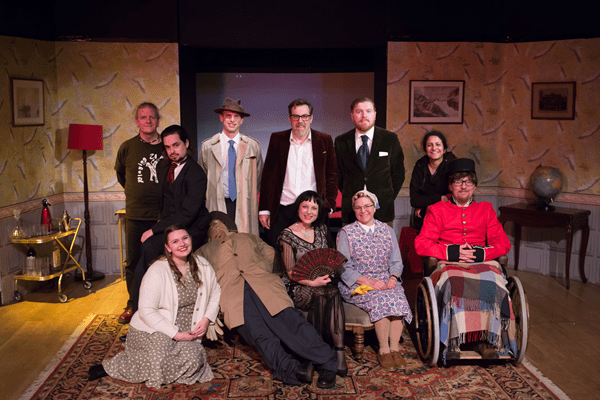
“Travesties” at the Rondo Theatre, Larkhall, Bath, October 8th-11th 2025.

by Mick Brian
images from Lauren Arena-McCann


The playwright Tom Stoppard is probably best known for his work “Rosencrantz and Guildenstern Are Dead”, his absurdist comedy based around Shakespeare’s “Hamlet”. Equally absurd is his country house murder mystery “The Real Inspector Hound” which has no *cough* resemblance to Agatha Christie’s “The Mousetrap”. A lesser known work of Stoppard’s, though no less absurd, is “Travesties” which has more than large hints and homages to Wilde’s “The Importance of Being Earnest” that is set in Zurich in 1917 and features such prominent people of the day as Lenin, James Joyce and Tristan Tzara.

“Travesties” is to be performed by Bath Drama at the Rondo Theatre, Larkhall, Bath next week from Wednesday 8th to Saturday 11th at 7.30pm.

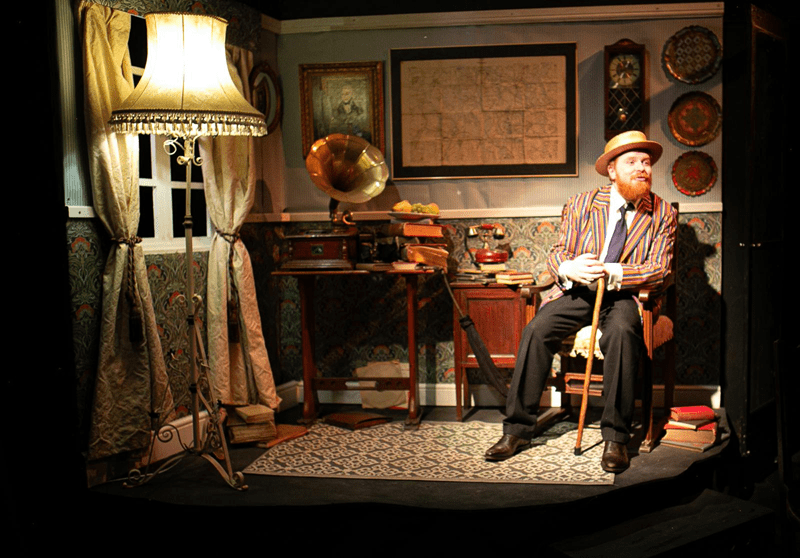
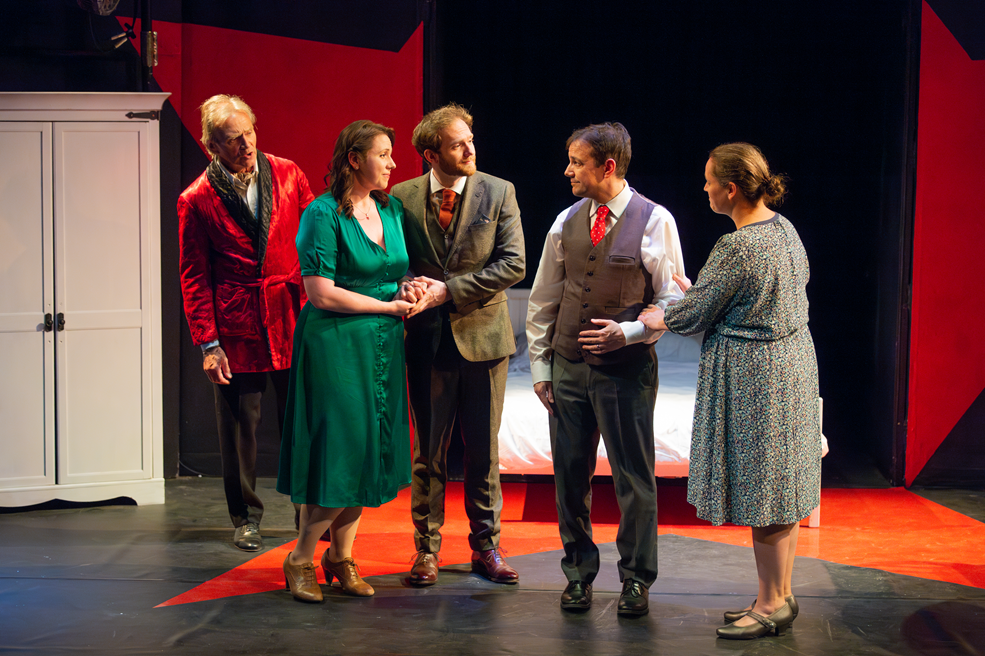
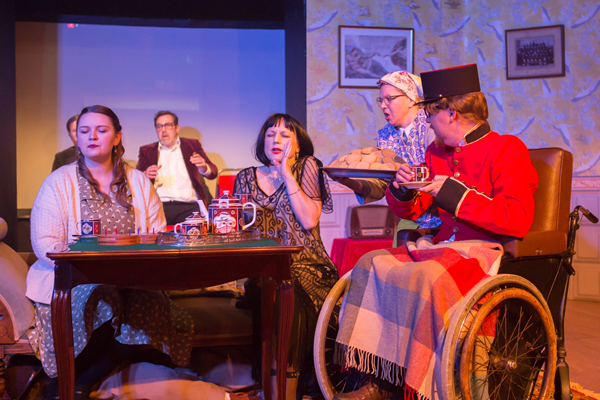
Henry Carr, a somewhat confused and muddled old man, relates his experiences as a British Consular official in Zurich 1917, kept abreast of current affairs by his butler Bennet, who it is clear has an interesting past of his own. Carr’s topsy-turvy memoirs interweave a social group consisting of the author of Ulysses, the founder of the Bolsheviks and the co-founder of the Dada movement set again the background of World War One and the Russian revolution. Amongst the turmoil we meet two young women keen on love in a confusing triangle of obfuscated names.

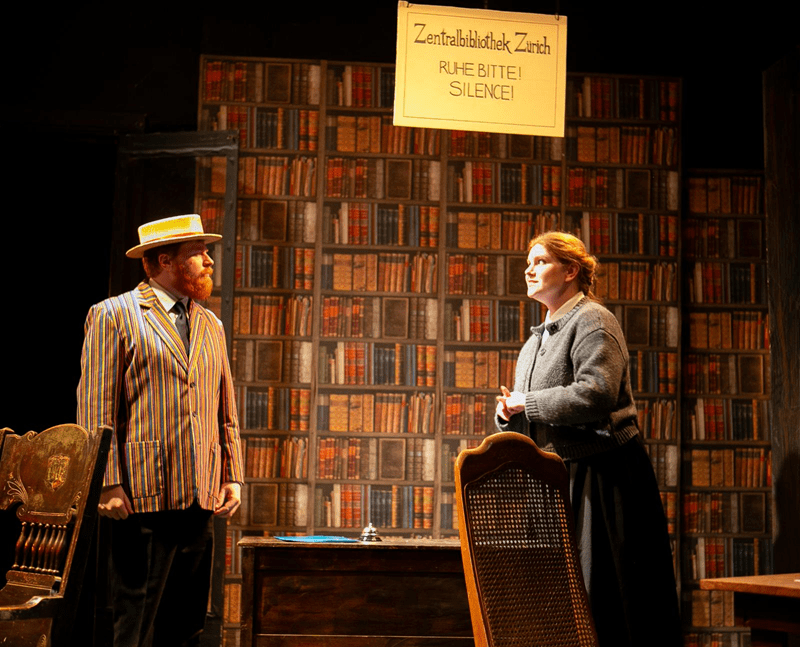
Jim McCauley directs this masterpiece in daftness, being a lifelong admirer of this play, more than ably abetted by Lauren Arena-McCann and the two of them have created a truly Stoppardian maelstrom – you’ll need to stay awake and concentrate to keep up as the characters deal with mislaid writings, revolutionary plans, mismatched trousers, library etiquette, court cases, Charleston dances and limericks.

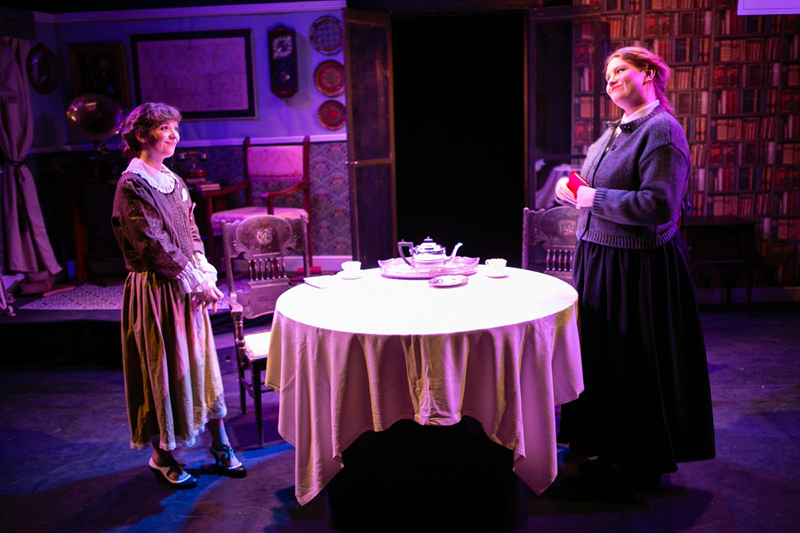
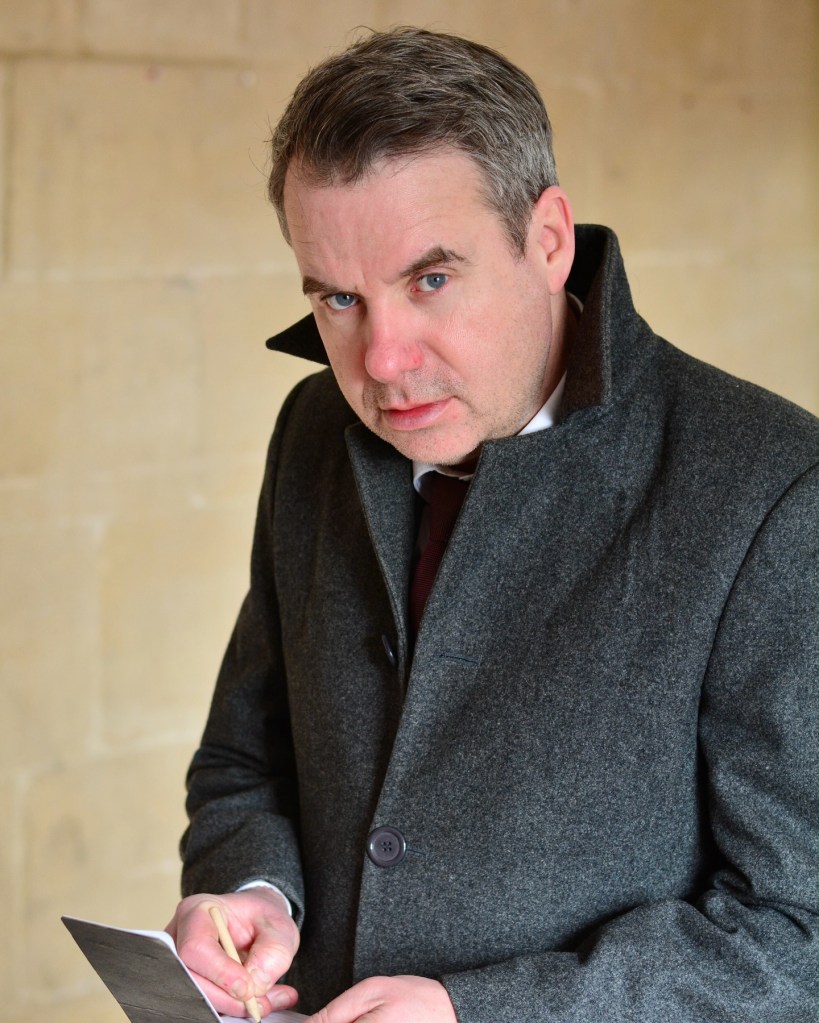
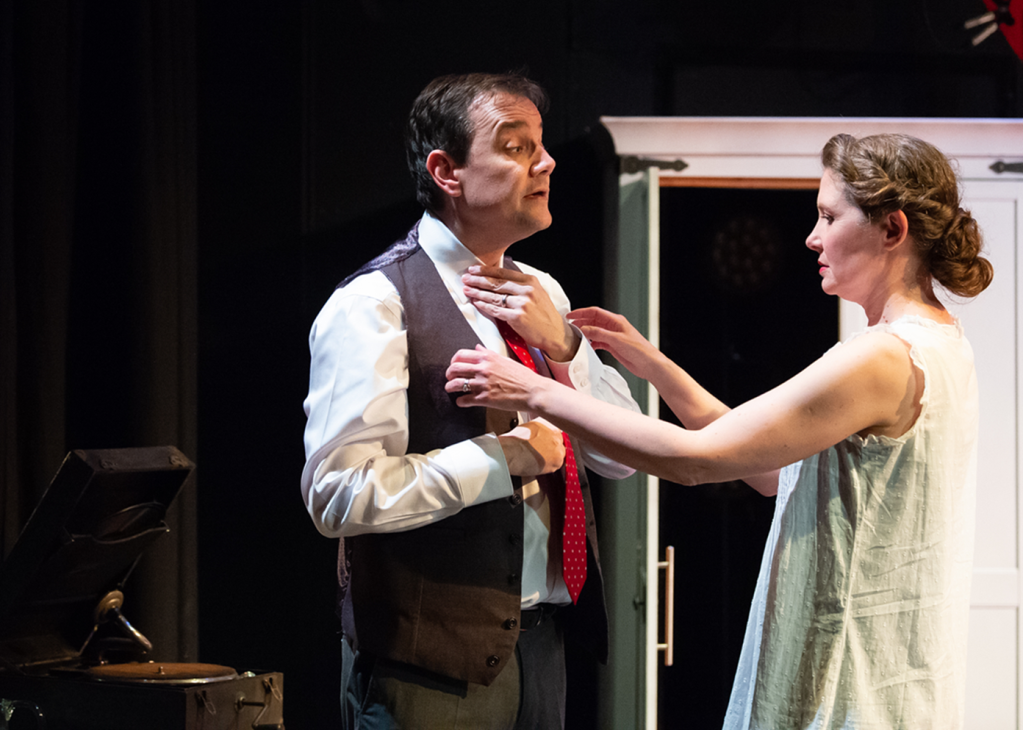
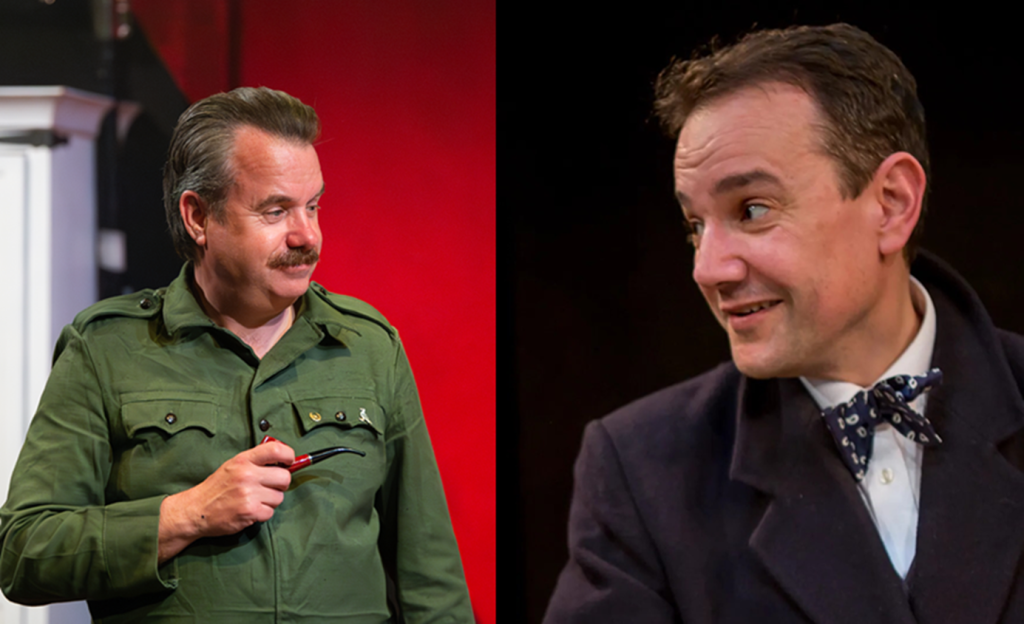
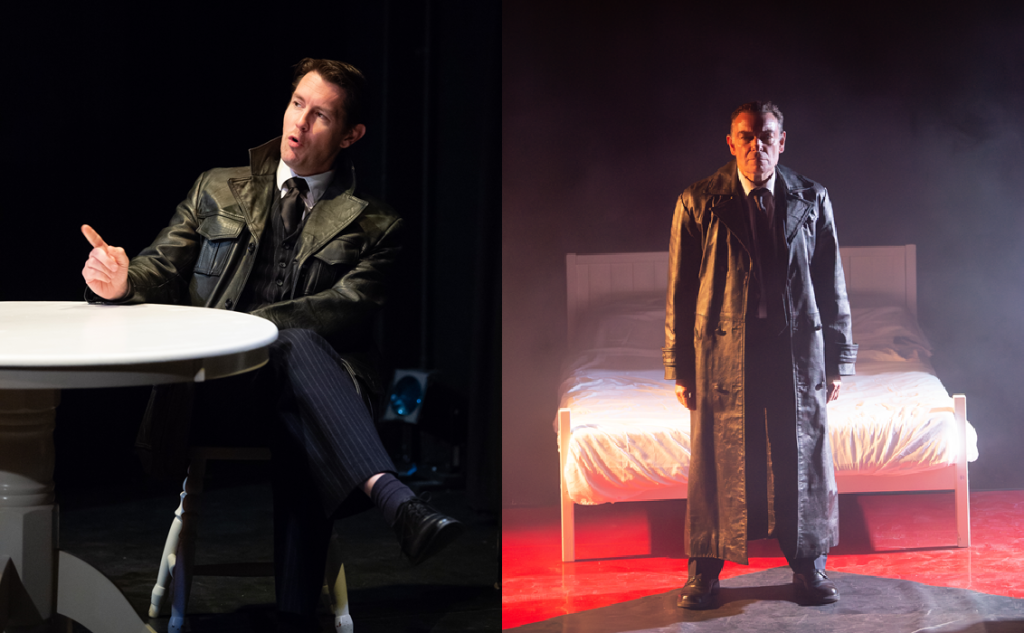
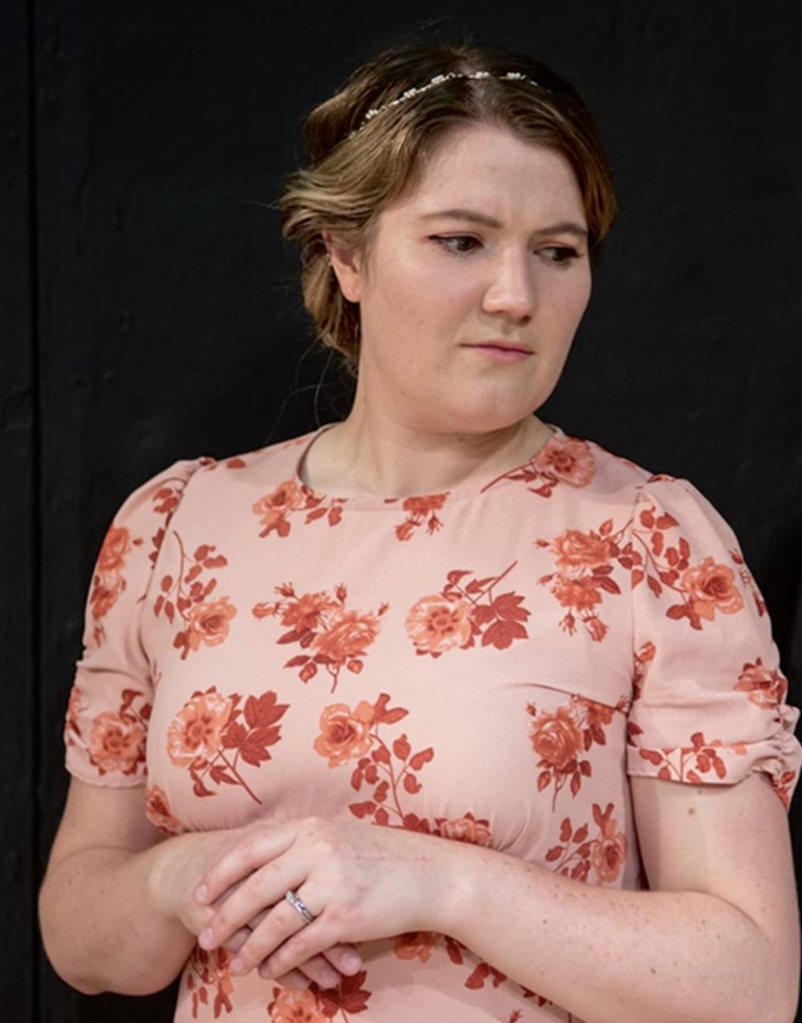
Henry Carr is played by Andrew Chapman, wonderfully portraying a confused old man and a younger, somewhat bemused Consul with a wonderful delivery and brilliant comic timing; his acting is of course thoroughly ernest (no, not Ernest – the other one). Carr’s love interest, Cecily Carruthers is played by Amy Smith, all strict demureness until her passions are roused by a decadent nihilist. Amy totally nails Cecily’s prim but not-so-proper presentation and is another whose comic timing is sublime.

His Butler, Bennet, played by Ian Diddams is a gentleman’s not-so-gentle man who it seems has far more going on than his – mostly – calm exterior may indicate… Ian encapsulates Bennet’s complex history and presence excellently, and – three witches like – is seemingly omnipresent.

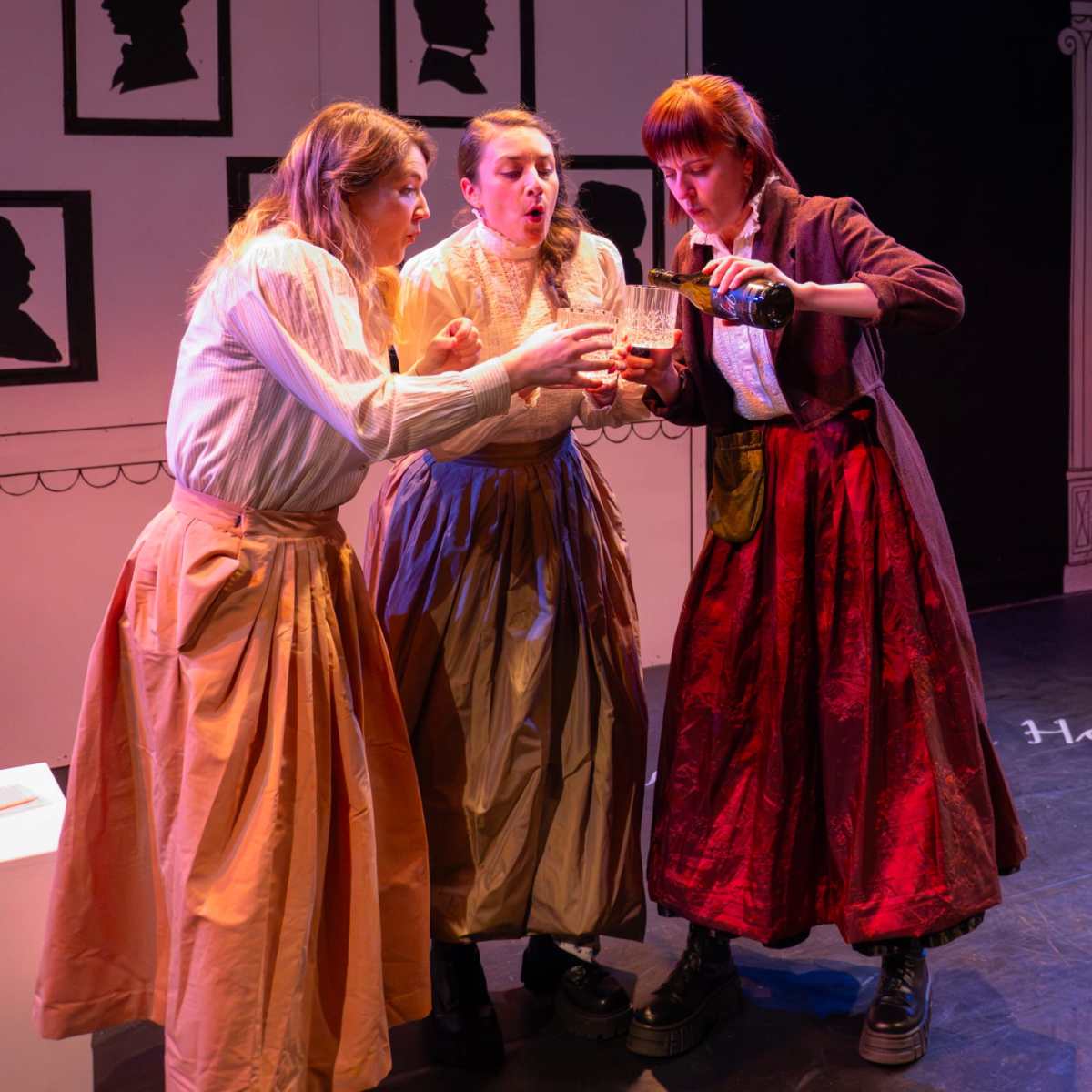
Cecily’s partner in crime as young women forging new socio-political paths is Sophie Turner as the Wilde-ly in love Gwendolen, but her pièce de résistance is as the straight woman to the most complex scenes which she effectively leads.

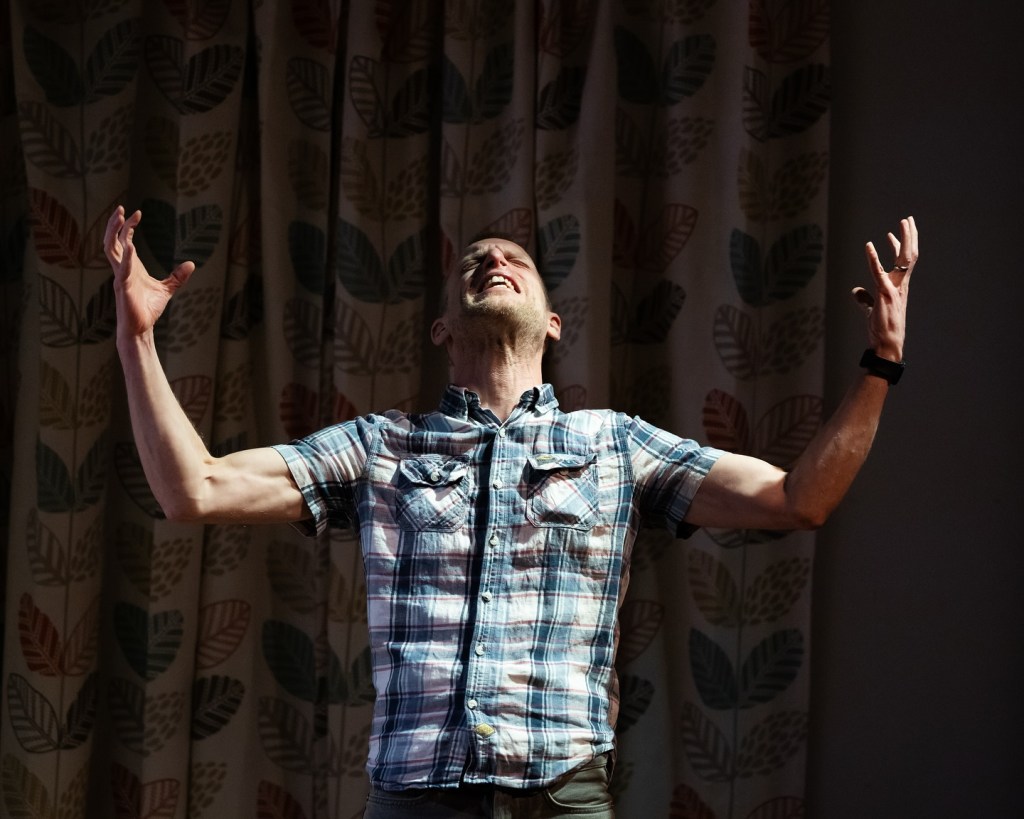
Gwendolen’s love interest, Tristan Tzara is portrayed by Jem Andrews, nonchalance and devil-may-care superbly louchely played, with and without monocle. Jem’s comic timing – again! – is superb and his interactions with Carr encapsulate multiple moods and attitudes easily.

Now, we mustn’t forget here James Joyce,
A man with an Irish voice,
Played here by Felix Byrne
Who gives us a great turn
As an actor in which we rejoice.

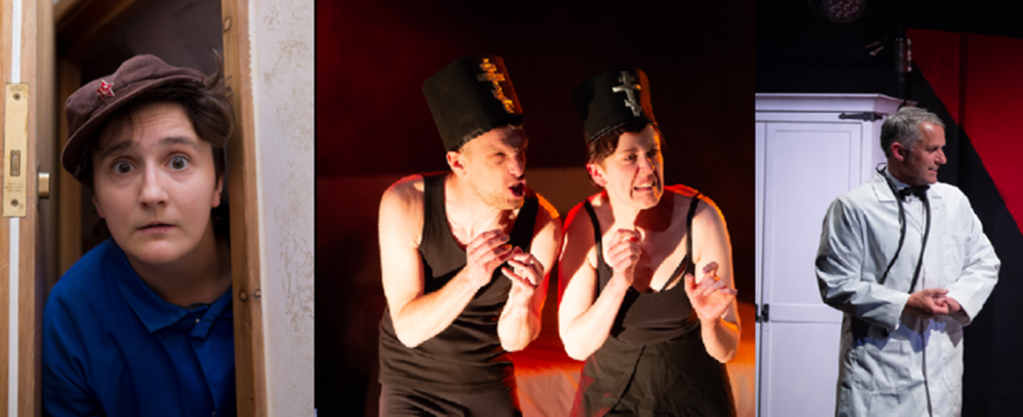
Which leaves us with Mr and Mrs Ulyanov. Also known as Lenin. Sam Fynn as ever pours his heart and soul into his portrayal, as shown by his dedication to learn the correct pronunciation of the Russian he speaks in his role. I’d put a quid on him. Imogens Notshaw portrays Lenin’s wife as narrator of their lives and dedicated partner… she too studied the Russian she speaks and whilst the “straightest” of characters in the play has a powerful presence throughout.

Tech as ever is provided by Alex Latham, with Connor Palmer as Stage Manager and Penny Clegg as his ever able assistant, with the ever brilliant Rich Canning as set design, costumes by Scarlett Hayler-King and Bath Theatrical with wardrobe support from Chloe Harris.

So come on along to the Rondo theatre to learn far more than you imagined about 1917 in Switzerland and Russia … or then again… not.

Tickets from https://www.ticketsource.co.uk/rondotheatre/travesties/e-pvmvgv


“The Taming of the Shrew” at the Rondo Theatre, Larkhall, Bath, June 18th-21st 2025.

By Ian Diddams
Images by Josie Mae-Ross and Charlotte Emily

Shakespeare wrote several plays that were termed in the late nineteenth century “Problem Plays”. These were some of his works that didn’t easily fall into brackets such as comedy, tragedy or history – usually covering at least two of those – but also dealt with uncomfortable social problems. When one looks at the basic plot of “Shrew” its difficult with our twenty-first century spectacles on to not include it in this classification. Unadulterated misogyny, gas lighting, and mental and physical abuse within marriage are not viewed as comedic obviously …  yet “Shrew” is universally billed as a comedy. The Rondo Theatre Company this week, however, sets to reflect these non-contemporary themes in a gender bent performance to highlight the inequalities and oddities of Shakespeare’s script.

It’s also a somewhat sumptuous treat – costumes (Harriet Hazelwood-Rose) are sublime with a red velvet theme running throughout, and the set whilst a very typical black box for Shakespeare nevertheless encompasses a balcony/second tier, an exciting addition at the Rondo.

Director Jazz Hazelwood-Rose had long planned this version of “Shrew”, using this gender-queered approach to (in their own words) “… examine how Shakespeare’s ‘comedy’ has a darker side that highlights how the gendered language we use affects how we see each other and interact with the world …”. That this is done so sublimely well is testimony to their vision, and the quality of the cast; very quickly the male v female “battle of the sexes” is forgotten, and the tale of bigotry and oppression just shines through. Alex Oliviere is simply phenomenal in her role as cock-sure (no pun intended!) Petruchio, wonderfully mirrored by initially surly and increasingly demure Toby Skelton as Katherine. Their stage chemistry builds throughout the play signifying not only Katherine’s submission to her husbands will, but also Petruchio’s adoration for her.

More than ably supporting them are Alana Wright as Hortensio, Megan Robertson as Lucentio, Charly Nehan as Tranio, Helen Taylor as Baptista, Yvonne Pauley as Gremio, and Charlotte Howard as Vincentio, to complete the female/male flips. Freddie Oliviere-Davies as Bianca performs the reverse Kate as it were, all light and softness – until married of course. Chris Constantine as Biondello and Matt Nation as Grumio follow a traditional casting, and both provide strong characterisation as Lucentio and Petruchio’s servants respectively, Matt Nation especially in an almost slapstick, court fool role. Teasel Howell, Will Prins, Sophie Turner, Ed Hodgkinson, and Moray Macdonald complete the cast as various servants, merchants, tailor, and rich widower.

The set as previously mentioned uses a two-level approach which is used very effectively – Geoff Rennie step forward for your design and implementation. Alex Latham provides the usual excellent “Technical Wizardry” and Steph Hazell and George Fletcher keep the whole thing running seamlessly as stage management.

In a time now where the main plot contains universally unacceptable traits – clearly more acceptable four hundred years ago – The Rondo’s production handles the subject matter with care and respect. This may not be a “problem play” by the usual definitions, but the jarring aspects of Petruchio’s “killing through kindness” are laid bare all the more through the gender queered approach.

“The Taming of the Shrew” is showing at the Rondo Theatre, Larkhall, Bath until Saturday 21st June, and is a perfect opportunity to see a lesser performed play from the canon…  and if you aren’t that sure of the background plots in particular, you would do well, in advance, to “Brush Up Your Shakespeare” … 

Tickets from https://www.ticketsource.co.uk/whats-on/bath/rondo-theatre/the-taming-of-the-shrew/e-moayov


“Flatpack” at The Rondo Theatre, Larkhall, Bath, March 26th-29th 2025.

by Ian Diddams
images by Josie Mae Ross and Richard Fletcher

John Hodge is well known for his screenwriting of “Shallow Grave”, “The Beach”, “A Life Less Ordinary” and “Trainspotting”, as well as plays such as “Collaborators” which played at the Rondo Theatre last June. This week sees his latest play “Flatpack” appear at the same theatre with the same company, RTC, in a world premiere.

Director of “Flatpack”, and “Collaborators” last June, Matt Nation says “I directed Collaborators at the Rondo last year. It went very well, and John was kind enough to support the production. So when we jokingly asked him if he had any more scripts up his sleeves – we weren’t really expecting him to say yes. But here we are – a brand-new John Hodge play”.  And John himself says “Watching ‘Flatpack’ come alive for the first time has been a privilege and a great experience”.

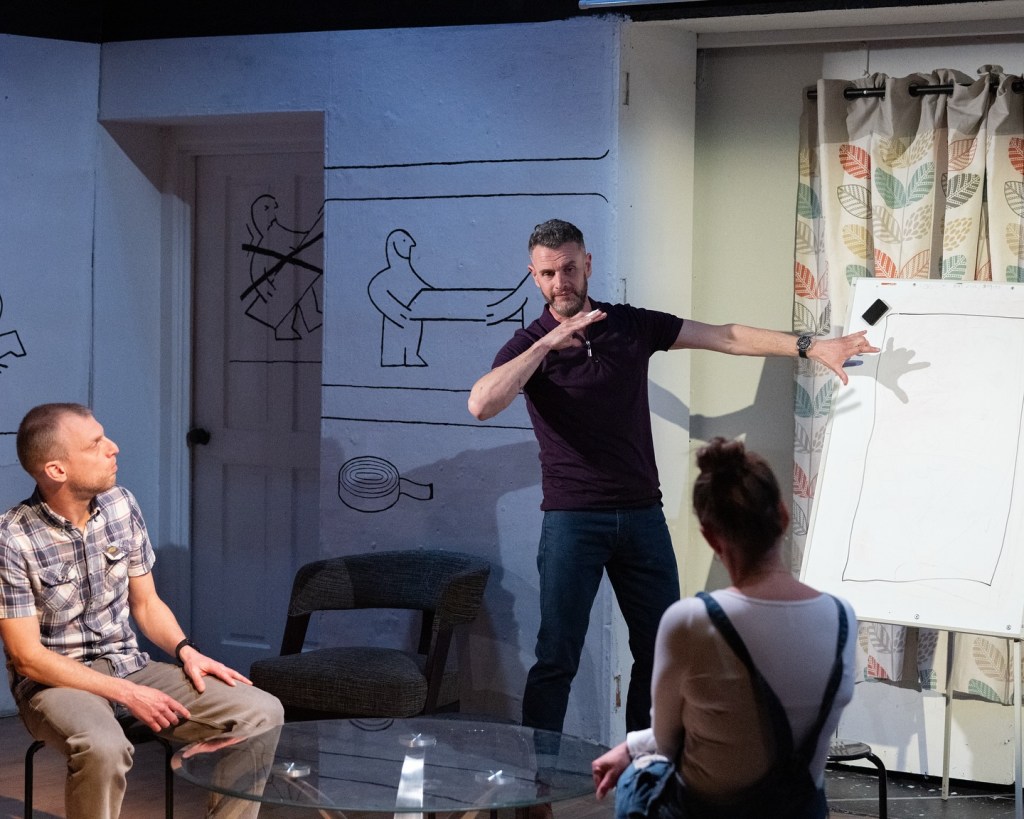
But enough of the show’s program’s plagiarism as review padding! “Flatpack” centres on a young married couple David (Richard Chivers) and Hannah (Naomi Miller) who buy a run down flat with excellent views of the railway, who have best friends Fiona (Sophie Kerr) and Tom (Rob Finlay). The flat is sold by an estate agent Philip (Jon Thrower), and this is all more than ably supported by an unnamed police detective (Andy Fletcher), equally unnamed doctor (Verity Neeves) and kitchen designer and wannabe artist Ryan (Toby Farrow). David’s life is thrown into disarray when he received not a death threat but a death announcement – June 27th 2025 is his final day of life. His increasing fixation with his impending death somewhat glosses over his relationship with Hannah, who falls for the charms of another, and his volun-selected triathlon training. Not to mention him succumbing to a femme fatale herself finding the idea of his approaching alleged death erotic. The detective provides a narration/ Greek chorus role piecing the story arc together and used as a MacGuffin to tie up plot lines. David returns again and again to the Doctor, who themself flits between altruism, greed and compassion with his story-line. Ryan is an over confident kitchen designer feeding his own internal lack of self esteem aching for an alternative life to which he was never suited, and finally the estate agent is one of those annoying characters in life that you can never seem to get rid of and you are never really sure why they are there – we all know the type.

The writing is unsurprisingly absolutely superb. The story arc moves smoothly with no fat, incorporating clever – nay brilliant! – time line and intra-scene flips to create a seamless transition from the “now” to the future and back again at all times explaining and developing David and Hannah’s relationships. I particularly liked John Hodge’s little homage  to his own play “Collaborators”  with a  tiny reference to an unseen and barely mentioned work colleague of David’s with regard to the unforeseen effects of a rashly invented suggestion..  The set (Production team, Yvonne Paulley, Alex Oliviere and cast)  is simple but highly effective – itself used as the flat’s front room, cafes, restaurant, wine bar, friend’s dining room, street corner, doctor’s surgery, garret flat, police station and a bathroom all created impeccably with a sofa, armchair, dining table, a kitchen unit, street lamp and a hidden boudoir. Not to forget either the as ever excellent tech provision by Alex Latham all held together by stage management from Alana Wright and Maria Finlay. A mention must also go out to the costumes – which at least for Fiona were simply stunning, and for Tom an intriguing  stream on a set of shirts…  the cast all provided their own wardrobe and it proved to be a superb directorial touch.

The casting was simply perfect. The characterisation just exquisite. Not a single weak part – testimony to great writing, great acting, great direction. Richard Chivers excelled as the uncertain, distracted and overwrought David as his life begins to unravel around him as his fixation with flatpack kitchens increases. The connections are provided in the play itself but the analogies of his marriage and a uncompleted kitchen unit combined  with the juxtaposition of his social entropy  and kitchen improvements are clear and the perfect holistic encompassing of the overall story. Naomi Miller as Hannah was as sweet and loving as a wife can be but we see the cracks in their marriage early on and her falling for the louche charms of Toby Farrow’s Ryan is a natural result of David’s loss of focus on her; Ryan is wonderfully cringy and hilarious in turn.

Sophie Kerr’s Fiona and Rob Finlay’s Tom as their best friends are wonderfully awful. Self-centred to a tee, their portrayal of a couple blundering through life as social panzers is hilarious.  Tom is obsessed with triathlon and promotion, bung full of toxic masculinity and without an empathetic bone in his body. Fiona as catty as can be,  happy to see those around her fail – and never more excited (and jealous) of others’ misfortunes. Verity Neeves as the doctor shows great skills in presenting youthful compassion, with personal greed but eventually shows her caring side at one time being the only person that actually sees David for what he is going through and has become.

The estate agent, Philip, played by Jon Thrower does a great job of being the spare part in the whole play – the annoying character that keeps turning up for no real reason, not particularly impressive as an estate agent…  so why does he keep getting in the way of David’s life?

That just leaves the Detective played by Andy Fletcher. Andy does a phenomenal job – as mentioned before Greek chorus and MacGuffin combined. And a harmonica player to boot as well as a handy publisher of useful kitchen safety tips…

Overall a wonderful world premiere to get to see. How lucky are we all to have such a chance to see this at a community theatre performed by such an adept company with such great writing.


So does David actually die on July 27th 2025?  Far be it for me to spoil the ending – there’s one way to find out though!

“Flatpack” shows from March 26th to 29th at 1930 at the Rondo Theatre, Larkhall, Bath.

Tickets from https://www.ticketsource.co.uk/whats-on/bath/rondo-theatre/flatpack/e-vkmvkq

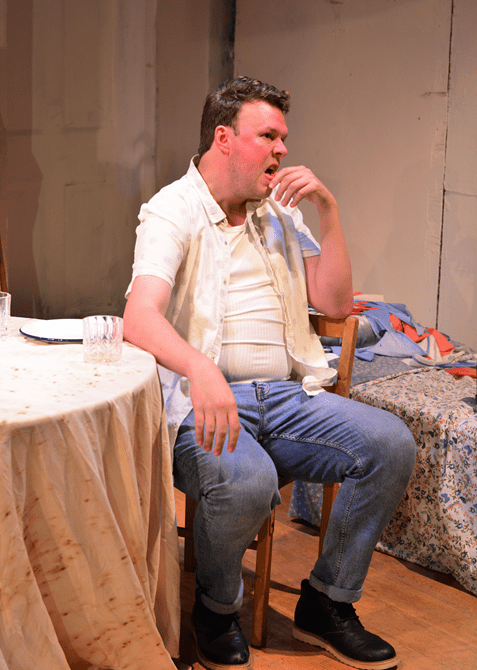
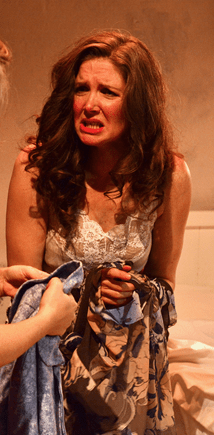
“A Streetcar Named Desire” at The Rondo Theatre, Larkhall, Bath, November 27th-30th.

by Ian Diddams
Images by Josie Mae-Ross and Infrogmation

Tennessee Williams’ quasi autobiographical drama “A Streetcar Named Desire” was first performed in 1947 as the world emerged from years of global conflict. That war had changed things for ever in many ways …  while in others, many things remained the same. Williams’ own family’s misfortunes and situations are threaded throughout the play, but while those may have been in reality based in the 30s and 40s the issues he raises – of misogyny, bigotry, domestic abuse, violence, homophobia, and social snobbery – are as obvious today as they were almost eighty years ago.

As titles go though, it may well have been simply named “The Fall and Fall….  And Fall of Blanche DuBois”
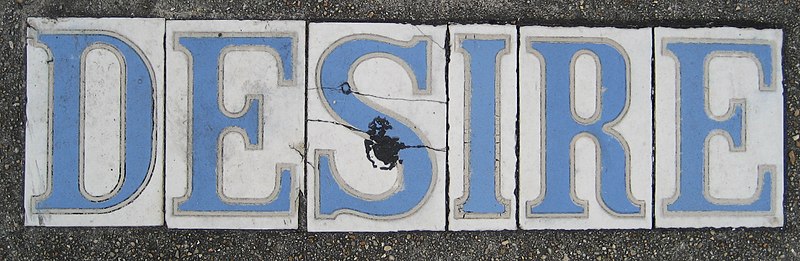
The eponymous streetcar ran on the line of that name in New Orleans until around the time the play was first performed. Its simple plot is that of Blanche DuBois and her fall from status, grace and finally sanity. Surrounding her is her sister Stella, who abandoned their cocooned life years before, Stella’s husband Stanley, a course, uncultured “Polak,” and their abusive relationship is mirrored by their neighbours Steve and Eunice.
A glimmer of light comes Blanche’s way in the guise of Mitch, seemingly gentler and more appreciative …  until he turns, showing his shared heritage with the other men. Blanche descends into madness as her airs and graces so vilified by Stanley slip away to expose her own seedy recent past, and her own bigotries, while exposing the other womenfolk’s tightrope walk through their marriages.

This is not a light play. It would come with plenty of trigger warnings – domestic violence, homophobia, rape, alcohol abuse, to name but a few of them. That the company present these challenging aspects convincingly without descending into casual titillation or merely seeking to shock is tribute to their acting skills, the direction of Heidi Street, and the set and technical wizardry on display.

There is another aspect to heighten the senses, and bring New Orleans’ Latin Quarter into this pleasant eastern suburb of genteel Bath, UK. The show’s very own jazz band of Tom Turner, Peter Tucker and Yvonne Paulley providing the appropriate Louisiana style soundtrack to complete this exquisite holistic production.

Not content with playing clarinet as above, Yvonne also appears as the Nurse and a rose seller with a fine command of Spanish, and in-between those two demands also produced the show. Accompanying her and is another clearly ridiculously talented man, Tom Turner swapping his saxophone to play the Doctor as the stranger whose kindness Blanche, for a final time, relies on. Toby Skelton is another all-rounder who aside from stage managing all of this also appears as the Young Man, while Riza Domi is obviously far more sensible, with just the one role of Pablo, one of Stanley’s poker playing buddies.

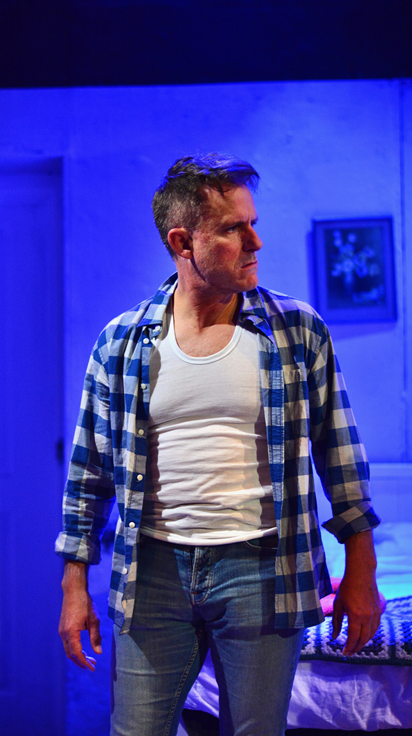
Neighbourly Steve and Eunice are subtly portrayed by Tim Carter and Sophie Kerr, all lovey-dovey and lustful – until the pans begin to fly. Tim Hounsome sensitively plays Mitch, Blanche’s almost love interest – until his urges almost overtake him and finally his own prejudices come through. Stella is sympathetically portrayed by the excellent Lauren Arena-McCann who as an American herself – albeit from New York State and not Louisiana also doubled up as unofficial voice coach! Her portrayal of an oppressed wife trapped in a caustic, abusive relationship in which she acquiesces easily to her own lustful urges, while protecting her sister from a world Blanche cannot comprehend is painfully perfect. Matt Rushton delivers Stanley cringingly well too…  his physical presence, large voice and overbearing character is full of unspoken menace the entire play; of course, to Stella but also to his drinking and poker buddies who he controls through fear.

Which simply leaves Blanche DuBois. Lucy Upward is the very essence of Southern belle – sophisticated, used to the finer things in life, seeking to move in the right social circles…  but exposing the cracks in that edifice as the story unfolds.  Delicious flirtatiousness, demure repose, increasing intemperance and the slide into insanity as her Walter Mitty world collapses around her. Lucy captures these airs, moods, and madness perfectly – she IS Blanche DuBois.

The set is a marvel – a perfect setting to portray a cramped two room apartment in the confines of a community theatre. Muslin roman blinds provide discreet views of more intimate – and jarring – moments while the rake of the stalls provides the upstairs flat from Stella and Stanley’s own. Costumes by Chrissie Fry as ever from her, capture the times and characters so well, from Blanche’s diminished trousseau to Stanley’s slobbish attire replete with hideous bowling shirt.

There is false hope, there is pain, there is self-delusion, there is despair. But overall, at the Rondo this week, with a sold out run, there is a Streetcar…  named Desire.


“The Real Inspector Hound”, at the Rondo Theatre, Larkhall, Bath, November 8th 2024.


by Ian Diddams
images by Playing Up Theatre Company

When is a mousetrap not a mousetrap? When it’s written by Tom Stoppard…
If you have seen “The Mousetrap” you may find elements of “The Real Inspector Hound” quite familiar. Or alternatively, if once having seen “The Real inspector Hound” you then progress to seeing “The Mousetrap” you may find elements of that show quite familiar…

“The Mousetrap” of course being a play by Agatha Christie that is the London West End’s longest running play, performed ever since 1952 with only a lockdown enforced break in all that time. Famously, audiences are asked not to reveal the solution.  Tom Stoppard, allegedly, found this requirement somewhat tedious and so set out to write his own, similar, play.  You would ideally want to see both however to fully understand what he created.

“The Real Inspector Hound” is also famously known for being a play-within-a-play; that is, a play in a theatre where the story is about a play. Stoppard though arguably takes this one step further especially as the surreal activities of the second half of the play unfold, as it becomes a play within a play within a play…  the complexities of what that entails are best learned by seeing Stoppard’s excellently bizarre play!

The Playing Up Theatre Company present this show this week at the Rondo, Theatre, Larkhall, on the eastern extremities of Bath. In it they take Stoppard’s already surreal comedy and add even more layers to it…  not only is their performance of Stoppard’s urine extraction of Agatha Christie, but they have added hilarious homages to “The Play That Goes Wrong,” “Acorn Antiques” and even “Monty Python,” especially in the first half – the second half is bonkers enough to not need any additional layers, but the surrealism is excellently portrayed with good pace and no blinking of an eyebrow – audiences need to stay awake and in tune and to have listened attentively to the opening fifteen minutes to get all the nuances going on!

Stoppard used to be a theatre critic himself, and uses this knowledge as a vehicle to extract the urine to that demographic. The two critics, Moon and Birdboot, played by Andrew Chapman and Simon Shorrock respectively, certainly portray two characters full of self-importance and one upmanship, though from opposite ends of the ethical spectrum and the two actors capture this interaction excellently. James Coy adeptly and gruffly spins his way around the stage in a wheelchair as the physically challenged brother-in-law Major Magnus Muldoon, overly protective of his sister-in-law and threatening dark retribution to any man displaying intentions towards her. But is he what he seems to be ?

The star of the show – if one may be permitted to pick any one actor out of a superb line out anyway – for me though was Anne Hipperson as Mrs. Drudge the housekeeper. Her self-confessed homage to Mrs Overall from “Acorn Antiques” is perfect – some exquisite comedic timing. The only thing missing from the portrayal was Stoppard failing, sadly, to provide her with a line of “Two sugars” during the painfully brilliant coffee scene.

Simon Gascoyne, smooth, suave, and sophisticated wooer of women was played by Jordan Phillpots, oozing self-confidence and smarm from every pore, while Felicity Cunningham, played by Leah Brine, the breathless, suspicious, doubly wooed young lady was suitably, deliciously aghast at the abhorrent menfolk in her life.

Then there was the almost obligatory femme fatale for such country house whodunnits – Sophie Brooks as Lady Cynthia Muldoon. Outwardly a devoted wife to her missing husband, but privately a hot bed of passion for passing fancies, Sophie mixed M’Lady’s brooding, sultry character in the farcical first act, and surreal second half to perfection, another actor with perfect comedic timing.


Which leaves just Inspector Hound himself – as ever perfectly played by the ever talented Richard Chivers. Or then again – is he the “Real Inspector Hound”?


That leaves just one more character on stage … mentioned several times, but hidden, then revealed – twice. No names, no pack drill, but the character never puts a foot out of place, and remains faultlessly in character and on stage for the entire show.

The set, by cast and crew, is a simple one as befits a typical country house murder mystery, with the use of the Rondo’s rear “cubby hole” option as the theatre seats used by Moon and Birdboot. Costumes fitted the period setting of 1930s upper class types, and technical design, operation and support was handled with aplomb by Darian Nelson and Emily Smith. This just leaves kudos for wonderful direction by Darian Nelson, abetted by superb stage management – also stepping into the fold of tech team for technical reasons – by Diluki O’Beirne.

I can’t praise this performance enough. From the pure delivery of Stoppard’s farcical surrealism, to the directorial tweaks and homages so well delivered by the cast, to use of Bluetooth technology to really sell on stage audio, everything gelled so well.

So all that remains now is to advise you all – go and see this play wherever you can and see if you can spot who is…  “The Real Inspector Hound.”


“The Collaborators” at the Rondo Theatre, Larkhall, Bath, June 19th-22nd.

by Ian Diddams
photos by Richard Fletcher & Lisa Hounsome

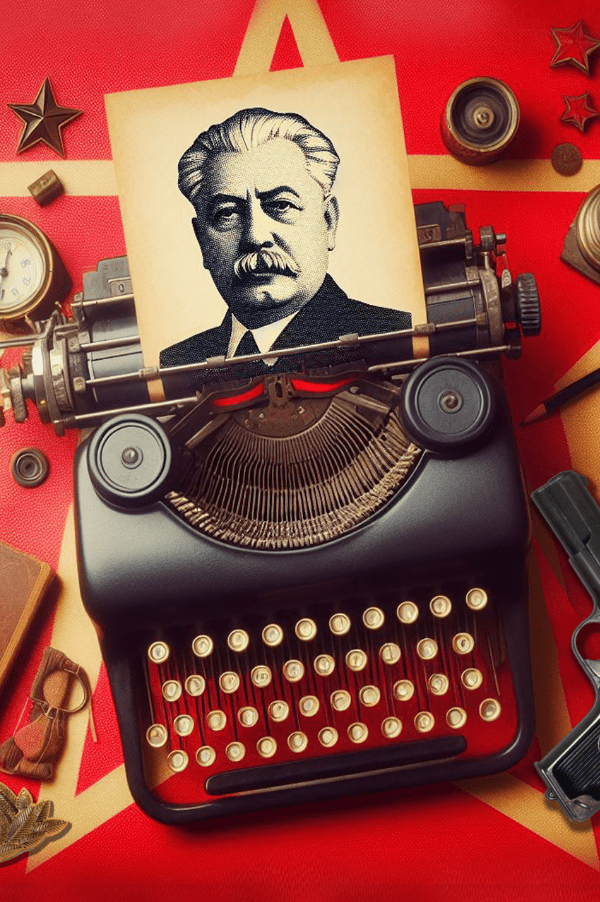
The concept of historical brutal dictatorships and comedy is not necessarily one that one considers as workable. Yet the likes of “The Producers” and “The Death of Stalin” show that the right level of satire can over come any qualms that may exist. John Hodge’s play “Collaborators” continues this trend as an Stoppard-like surreal absurdist comedy about the relationship between real life characters Joseph Stalin and Mikhail Bulgakov, which the Rondo Theatre Company are performing this very week.

John Hodge may be better known for his scriptwriting on “Shallow Grave” and “Trainspotting” amongst other blockbuster films but here in “Collaborators” he ratchets up the satire and hinges his story on a Machiavellian plan by Stalin toward the dissident playwright Mikhail Bulgakov.

Director Matt Nation has created a demanding – in effect – two scene play into a smoothly choreographed storyline, as the simple set of the Bulgakov’s Moscow flat replete with huge Soviet red star also covers the Lubyanka, theatre, rehearsal studio, doctor’s surgery, hospital, kremlin basement & metro, all clarified by Alex Latham’s subtle lighting changes, The cast smoothly transition between these environments adeptly – such is the skill of particularly community theatre in  representing multiple arenas in a limited space.


Act 1 is pure absurdist comedy. Bulgakov is pressured into writing a play for Stalin’s birthday, that ends up being written by Stalin himself while Bulgakov ends up running the Soviet Union. Its silly, its surreal – action also happening in Bulgakov’s head at times but just on the end of Act 1 the plot twists darkly.

Act 2 is pure black comedy. Though as the end of the play approaches is not so much comedy as horror as the repercussions of Bulgakov’s well intentioned “decisions” as a proxy for Uncle Joe come clear and those chickens come home to roost. Tragedy would be as good a description as the show reaches its denouement.

Weaving this excellently crafted and delivered tale are the cast of fourteen. Principal characters are unsurprisingly Stalin – complete with swept back hair and bristling moustache – played by Andy Fletcher, and Bulgakov played by Jon Thrower. They portray this odd collaboration skilfully and sympathetically, Stalin as an almost genial and friendly Uncle figure, Mikhail as the distrusting and incredulous playwright.


Mikhail’s peer group is comprised of his loving wife Yelena (Lucy Upward) portraying her increasing desperation and concern as to his health, Vassily an aging Czarist (Jonathan Hetreed), Praskovya a history teacher (Verity Neeves) that cannot discuss history before the revolution, and Sergei (Charlie Bevis) who have been billeted in the Bulgakovs’ small flat – Sergei lives in the cupboard!  On this note the cupboard is superbly used as the entry and exit of Mikhail’s dreams/hallucinations and also the secret Kremlin door (!). Charlie’s portrayal of the enthusiastic young Soviet is touchingly naïve, and the group rub along despite their clear and evident differences in opinion and approaches to life under Stalin. Completing Mikhail’s peer group are Grigory (Toby Gibbs) a young writer struggling to get his work published due to its anti-Soviet content and his wife Anna (Elisabeth Calvert) reflecting the times’ oppression.

Bulgakov’s doctor is portrayed amusingly (in all the right ways!) by Tim Hounsome, all overworked, distant and slapdash until treating the elite, while “the actors” are just wonderfully performed by Josie Mae-Ross and Richard Chivers, floating in and out of Mikhail’s dreams as well as acting out the play Bulgakov is “writing” …  Richard’s homage to Ernst Stavro Blofeld is almost a show stealer in itself.

Last but not least we come to the menace in the play – the NKVD officers.
Vladimir (Tom Turner) is quite brilliant as the jocular yet disquieting secret policeman who becomes more luvvie and obsequious as the play develops. Its unfair to pick out individual parts as “show stealers” especially in community theatre, but it would be remiss of me to not to praise one particular performance in this play. Tim Carter plays NKVD policeman number two, Stepan. A silent, brooding presence he delivers the real – literally unspoken – menace throughout whilst being at the back of the stage mostly. Its not until the very end that he comes to the fore in his own right, but it’s a special skill to not be heard but be influential in the action and Tim really nails the requirements.


Vladimir’s wife Eva is played with an almost cameo performance by mainstay of the Rondo theatre company, Alana Wright, who manages to stave of the unwanted attentions of Stepan… mostly…


Aside from Alex on lighting, Dylan Jackson provided sound tech and as a team they had a busy time and completed everything to perfection – this is a tech heavy show so huge congratulations to them. Other crew aspects were indeed “collaborated” on (d’ya see what I did there? ) by all of the above – set design and build, stage management (including Toby Skelton), costumes and publicity which was aided and abetted by Lisa Hounsome and Richard Fletcher with photography.

“Collaborators” is a fast paced, thinkers play – although the allusions to modern day Russia are evident and lie not very far beneath the surface. Some genuine laugh out loud moments, some shocking moments and Stalin’s final words to Bulgakov sum up the regime’s totalitarian control in a nutshell.

“Collaborators” is showing at the Rondo Theatre, Larkhall, Bath from June 19th to 22nd at 1930 every night.

Tickets from https://www.ticketsource.co.uk/rondotheatre/collaborators/e-eqavlp