Rude girls grito! Far from home perhaps, but so, so worth mentioning for tropical vibes of rock steady and ska in a fashion proportionately you’ll find hard to come by around these parts, it’s my beloved all-girl-bar-one Mexican ska band, Girls Go Ska with a bran-new album Frente al Mar. Girls and ska, what’s not to like?!
From the off, the title track simply melts, mellowly, and builds in tempo, but is never overdramatic; “cool” is the operative word; fresco! If I’ve put them on a pedestal before, they’ve now put another couple of pedestals atop it. Often steady paced for the genre, it proves ska, while upbeat doesn’t have to be full of macho-bravura skinheads, or a frenzied rancour attack against dogmatic tyranny it’s often misperceived here through the eighties’ second-generation Two-Tone scene, and within the dominate contemporary ska-punk internationally. I’ve made this point in the past when penning a more general piece about ska and reggae in South America, in which Girls Go Ska were featured.
Girls go Ska
Frente al Mar is breezy, bright and fun, light-hearted and beguiling. It roots the genre to its original Jamaican ethos, as a carefree dance music. Though, there’s a large chunk of assumption with those observations, as my Spanish isn’t up to scratch, so my presumption rests on the design, the album name, which translates to the seaside, basically, and mood of the vocals; if they’re singing about anything other than romantic themes and enjoying oneself dancing on a tropical beach, like making political statement, it certainly doesn’t sound that way! You just have to enjoy the professionality and untroubled vibe this album breezes in your direction, it’s gorgeous, and it absolutely skanks!
Packaged femininely in loud pink and decorated with cute shōjo manga, rather than our typecast black and white chequered trade identity with Walt Jabsco splashed all over, Frente al Mar provides an alternative to norm, but is no way attributes the “fairer sex,” rather riot grrrl kick-ass in tenet, gender-neutral in sound. Not that punk comes into play; throughout it’s steadfast traditional ska sound, one should credit Studio One rather than Two-Tone, or even Reel Big Fish for, there’s also sprinklings of Latino sound traditional to Mexico, of ranchera, norteño and their contemporary offshoots, but are subtle and likely naturally occurring.
Imagine, if your English mind will adapt, Gloria Estefan performing ska, and you’re nearer to the mark than The Specials. But no, eight sublimely flowing tunes is what you get, a sun-kissed blessing on the ear, in the style of brass-based rock steady and good ol’ ska. While pukka boys, Death of Guitar Pop are currently returning the welcomed Nutty-Boys-esque frivolous and fairground ska home for lads, further afield, here comes the girls.
Meanwhile here in my hometown of Devizes, the newly opened rum bar, The Muck & Dundar has been a roaring success, proving a taste of the tropical is welcomed, ergo, taken out of its context and origins, Frente al Mar would make the perfect soundtrack to it. Me? I’m smitten, with a little crush!
David slew Goliath with a sling and a stone. Bishop’s Cannings Parish Council used evidence, against a group of Devizes Town councillors’ more circumstantial land…
Retrieved footage from a stolen drone of the Wiltshire Hunt Saboteurs reveals the Beaufont Hunt making a fox kill earlier this month, and it’s undeniable…
What’s Spanish for “diva?” Oh, Google translate aptly says it’s “diva!”
Super sassy Spanish vocalised RnB-pop doesn’t come sexier than Mexican singer Diana Leoport’s debut single. Aching with masses of Latino promise there’s elements of Shakira and Gloria Estefan in this smooth tune. My glasses have steamed up!
Discovering a thriving ska scene in South America is like England in 1979……
Studio 1’s architect, composer and guitarist, Ernest Ranglin proclaimed while the US R&B’s shuffle offbeat being replicated by Jamaicans in their early recording studios went “chink-ka,” their own crafted pop, ska, went “ka-chink.” Theorised this simple flip of shuffle took place during Duke Reid’s Prince Buster recording session mid-1959, added with Buster’s desire to include traditional Jamaican drumming, created the defining ska sound.
Prince Buster’s block party on Orange Street
Coinciding with the island’s celebration of independence in 1962, the explosion of ska was eminent and two years later the sound found its way out of Jamaica, when Byron Lee & the Dragonaires, Prince Buster, Eric “Monty” Morris, and Jimmy Cliff played the New York World’s Fair. But if Jamaica’s government revelled in the glory of the creation of a homegrown pop, behind the scenes, Kingston’s downtown was using it as signature to a culture of hooliganism, known as The Rude Boys, and thwarted it. Through curfew and a particularly sweltering summer of 67, horns were lessened, tempo was mellowed and reggae’s blueprint, rock steady, had formed.
World’s Fair, New York 1964
Forward wind fifty-five years and Jamaican ska pioneer, Stranger Cole launched album “More Life,” yet it’s released by Liquidator Music, a label dedicated to the classic Jamaican rhythms, but based in Madrid. Perhaps in similar light to Buster’s innovation, Jamaica doesn’t revel in retrospection and strives to progress; the last place in the world you’re likely to hear ska these days, is in Jamaica itself. Modern dancehall trends can be attributed closer to the folk music of mento.
But the design was set, and to satisfy the musical taste of Windrush immigrants in England, Bluebeat, and later, Trojan Records set to cheaply import the sounds of home. It was a combination of their offspring taking their records to parties, and the affordable price tag which appealed to the white kids in Britain. Thus, the second wave of ska spawned in the UK. By the late seventies the formation of Two-Tone records in Coventry saw English youths mimicking the sound.
Similarly, though, this has become today somewhat of a cult. Given the task of producing a radio show last year, for ska-based internet station, Boot Boy Radio, while aware of American dominated “third gen ska,” that there were few contemporary bands here, such as the Dualers, and Madness and The Specials still appeased the diehard fans, I never fathomed the spread of ska worldwide. The fact Liquidator Music is Spanish, it is clear, ska has a profound effect internationally, and in no place more than Latin America. Yet while England’s second wave is largely attributed to the worldwide distribution of ska, and waves the Union Jack patriotically at it, the sound of ska music spread to Jamaica’s neighbours significantly prior.
Caribbean islands created their own pop music. Barbados had spouge, cited as “Bajan ska,” despite a completely different rhythm section more attributed to calypso. Columbia likewise saw a surge in cumbia during the early sixties, a genre derived from cumbé; “a dance of African origin.”
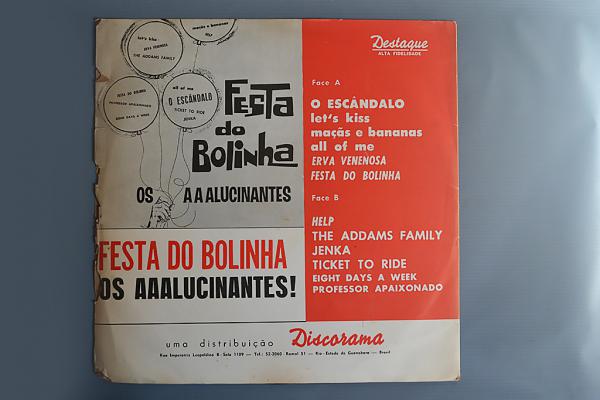
In South America though, ska was fused with their own sounds of samba, and particularly upcoming rock ‘n’ roll inspired genres such as “iê-iê-iê,” via Brazilian musical television show, Jovem Guarda. Os Aaalucinantes’ 1964 album Festa Do Bolinha predates England’s embrace of ska, the same year, in fact, as Byron Lee & the Dragonaires, et all playing the New York World’s Fair. At this point in time, through Bluebeat, English youth were only just discovering a love for Jamaican music, and Lee Gopthal wouldn’t found Trojan Records for another four years. This mesh of fusions gave birth to a creative period in Brazil, vocal harmony groups like Renato E Seus Blue Caps, and The Fevers followed suit, blending US bubble-gum pop with jazzy offbeat rhythms. It did not borrow from England’s mods; it followed a similar pattern.
Las Cuatro Monedas
Similarly, in Venezuela, Las Cuatro Monedas introduced ska and reggae as early as 1963, with their debut album, “Las Cuatro Monedas a Go Go.” Through maestro arranger and composer, Hugo Blanco they won the 1969 Song Festival in Barcelona, and continued until 1981, when over here The Specials were only just releasing “Ghost Town.” Desorden Público is Venezuela’s most renowned ska band, formed in the eighties. When frontman Horacio Blanco was still at school, he wrote “Paralytic Politicians,” an angry, anti-Hugo Chavez anthem which his fans still yell for. Although Chavez died in 2013, his protégé Nicolas Maduro has descended the country into political and economic crisis; one example where South American ska is equally, if not more, dogmatically defending justice as Two-Tone here in the UK.
Desorden Público
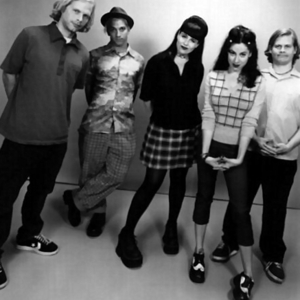
Chile trended towards cumbia through tropical orchestra Sonora Palacios in the sixties, therefore ska didn’t fully surface until the third-gen bands of the nineties. Even today though, Latin enthused bands such as Cholomandinga and reggae is favoured through bands like Gondwana. The modern melting pot is universal and extensive though, I’ve got a lovely cover of Ghost Town by Argentine cumbia band Fantasma, who cite themselves as being the first to develop a cumbia rap. And when upcoming, all-female Mexican ska band, Girls Go Ska sent me some tunes to play, a cover of the Jam’s David Watts was one of them.
Girls Go Ska
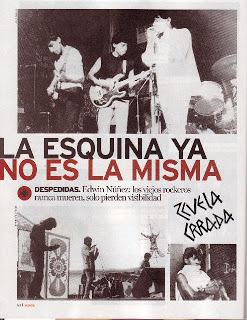
All’s fair in love and war; undoubtedly the Two-Tone era of England has had a profound effect on the worldwide contemporary ska scene, so did their revolutionary principles. Peru commonly cites its scene commenced in the mid-eighties, when punk and second-gen underground rock bands emerged in Lima. Edwin Zcuela’s band, Zcuela Crrada differed by having a saxophonist, and adopted a sound which bordered ska. Azincope and Refugio were quick to follow, not to the taste of the rock-based crowd who classed it commercialised pop. Psicosis came about in 88, the band to initiate the term “ska band” in Peru, taking steps to eradicate the preconception. They won a recording contract through a radio contest, the jury expressed concern; the band were radicals within a pseudo-movement with libertarian ideas, and so the band refused to record.
Zcuela Crrada
With influences from the Basque ska-punk band, Kortatu, Breakfast continued the rebellious nature with ska in Peru, but discarded their discography. It will take us into the nineties to start to find orchestral flairs, when Carnaval Patetico and Barrio Pamara emerged, bringing with them the country’s belated by comparison, second wave. Odd to see how punk gave ska a leg-up in this legacy, but the melting pot is bottomless.
Where some bands, such as Swiss Sir Jay & The Skatanauts, favour pouring jazz into their style, akin to how the Skatalites formed the backbone of Studio 1 through attending Kingston’s Alpha Cottage School, others, such as the States bands like The Dance Hall Crashers prefer to fuse punk influences, Big Reel Fish takes Americana to ska, and one has to agree the tension of teenage anguish felt by eighties skinheads equalled that of latter punk-rock.
The Dance Hall Crashers
The rulebook is borderless and limitless, to the point there is no longer a rulebook, through an online generation one can teeter on the edge of this rabbit hole, or go diving deeper. If I said previously, Two-Tone is a cult in England, in South America ska is thriving. Some subgenres bear little relevance to the sounds and ethos of original Jamaican ska. Other than the usage of horns to sperate them from punk or rockabilly, off-shoots of skacore and skabilly tangent along their own path. Oi bands prime example, where a largely neo-Nazi tenet cannot possibly relate to an afro-Caribbean origin.
Again, the folk of a nation mergers with the sound, and there can create an interesting blend, such as the Balkan states, where the Antwerp Gipsy Ska Orchestra and Dubioza Kolekiv carve their own influences into ska. Which, in turn, has spurred a folk-ska scene in Bristol and the Southwest, bands like The Carny Villains, Mr Tea & The Minions and Mad Apple Circus, who add swing to the combination, and folk-rock bands such as The Boot Hill Allstars, confident to meld ska into the dynamic festival circuit. South America typifies this too.
Mr Tea & The Minions
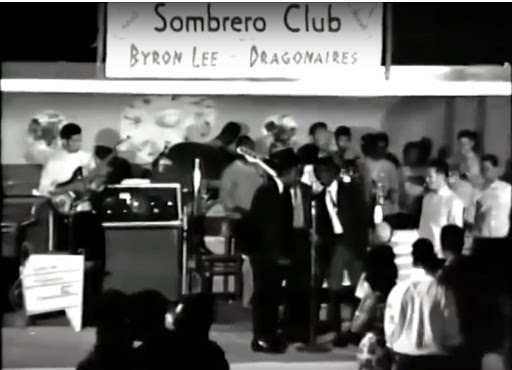
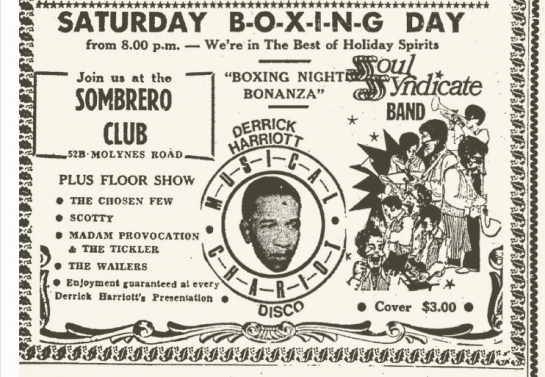
Modern murga, a widespread musical theatre performed in Montevideo, Uruguay and Argentina hugs ska through carnival. Argentina’s scene is as widespread and varied as the UK or USA, in fact it was former Boot Boy presenter, Mariano Goldenstein, frontman of The Sombrero Club who led me to the rabbit hole. If the name of this Argentinean band signifies Mexican, one should note, The Sombrero Club was a Jamaican nightclub on the famous ‘Four Roads’ intersection of Molynes and Waltham Park Roads in St. Andrew.
Byron Lee @ The Sombrero Club
Journalist Mel Cooke recalls in a 2005 article for the Jamaica Gleaner, “although it carried a Mexican name, the senors and senoritas who stepped inside the Sombrero nightclub did it in true Jamaican style. It was an audience that demanded a certain quality of entertainment and, in the height of the band era the cream of the cream played there. “It was one of the premier dance halls for bands, live music,” says Jasper Adams, a regular at The Sombrero. “If you capture the image of the dance hall in London at the time, you get an idea of what it was like.”
Note the Wailers, bottom of the billing!
After the demise of the Bournmouthe in East Kingston, in a bygone era, The Sombrero was the place to catch ska legends, Toots and the Maytals, Tommy McCook and the Supersonics and Byron Lee and the Dragonaires. There could be no name more apt for Argentina’s Sombrero Club, for within a thriving scene which mimics England in the grip of Two-Tone, their proficient and authentic sound is akin to our Specials or Madness.
The Sombrero Club
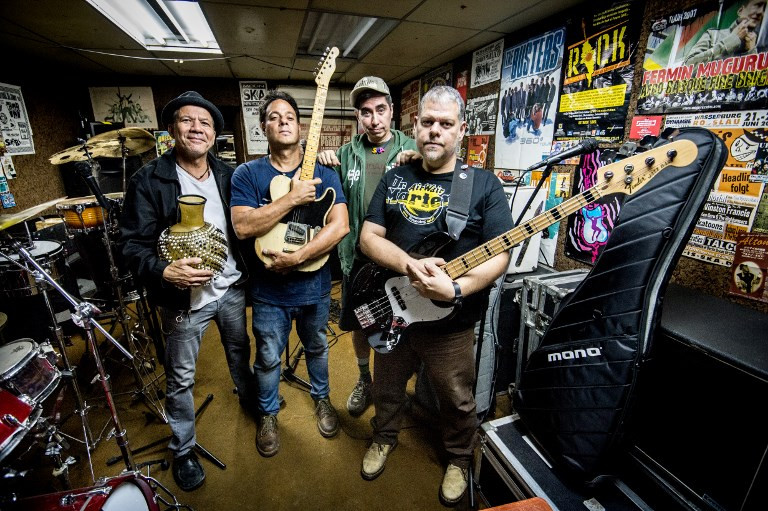
It is, however, through Marcos Mossi of the Buena Onda Reggae Club from Sao Paulo, perhaps a lesser known band outside Brazil, who have really spurred my interest in South American ska, through their sublime blend of mellowed jazz-ska and reggae, and through it I realise I’m still teetering on the edge of the rabbit hole. Aside the aforementioned bands, I’m only just discovering Brazil’s Firebug, Argentina’s Los Fabulosos Cadillacs, Los Calzones Rotos, Los Auténticos Decadentes, Karamelo Santo, Cienfuegos, Satellite Kingston, Dancing Mood, Staya Staya, Los Intocables, and Ska Beat City, Cultura Profética from Puerto Rico and Peru’s Vieja Skina. Pondering if the list will ever end.
Bunena Onda Reggae Club
One thing this highlights, while ska is international now, with vibrant scenes from Montreal to Melbourne, Latin America holds the key to a spirit akin to how it was when I opened my Christmas present in 1980 to find Madness long player, Absolutely.
Tune into my show on http://www.bootboyradio.co.uk – Friday nights from 10pm till Midnight GMT, where we play an international selection of ska, reggae, rock steady, soul and funk, RnB, shuffle and jazz, anything related which takes my fancy, actually!




















 devizine.com