
Part 1: An Introduction
March 1936: newlywed French telecommunications engineer Pierre Schaeffer relocates to Paris from Strasbourg and finds work in radio broadcasting. He embarks on early radiophonic experiments. Fifteen years of his research, his inventions of various electronic instruments, and collaborations with Pierre Henry would lead them to found Groupe de Recherche de Musique Concrète. Musique concrète would be the root of the utilisation of modified recorded sound through audio signal processing and tape techniques.
Across the channel, it’s the St. Clement’s Fair in Devizes. The town hall is decorated with a foliage of oranges and lemons, and the “Bells of St Clement’s” was recited with handbells to declare the fair open. Devizes Congregationsts arranged a small eisteddfod, which would be the origins of today’s Devizes Eisteddfod, founded ten years later to raise funds for the Congregational Church, opposite Wadworth’s Brewery.
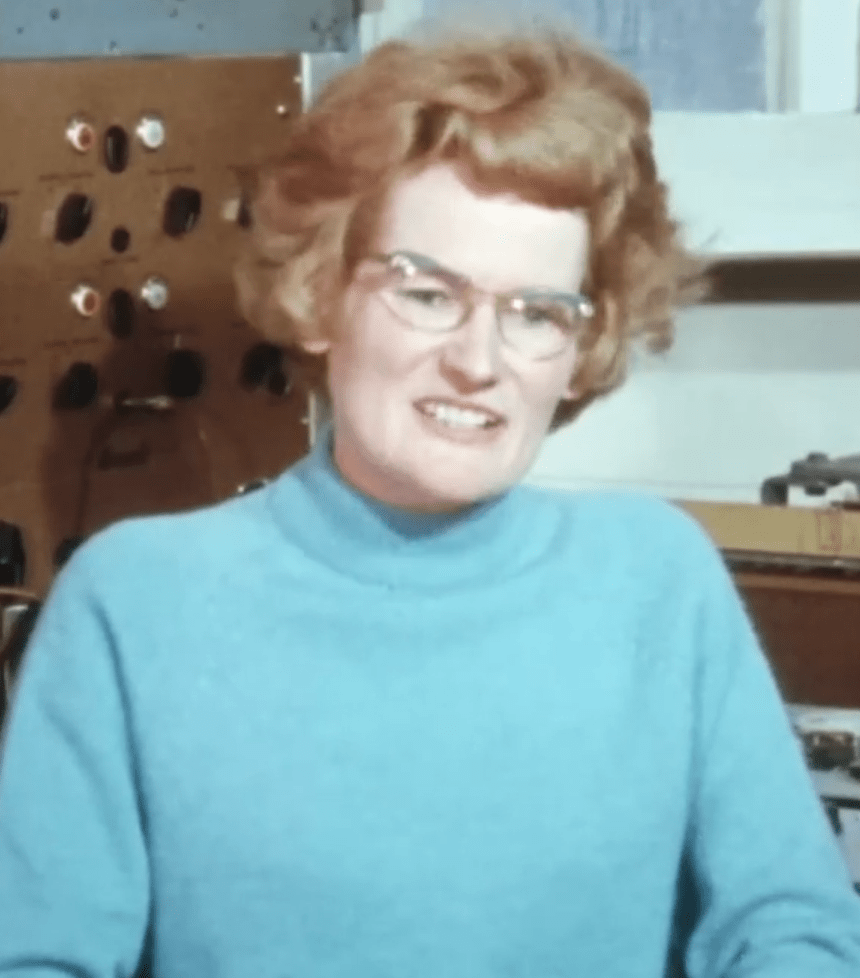
The connection? Well, two cups were awarded by the minister Rev. W.S.H Hallett; one for Ruth Mead for a vocal solo, and the second to eleven-year-old Daphne Oram, for a pianoforte solo. The daughter of James and Ida Oram, Daphne was educated at Sherborne School for Girls in Dorset, where she was tutored in piano and musical composition.
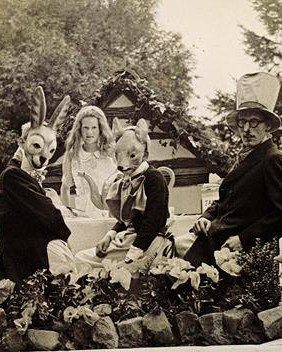
At seventeen Daphne moved to London, turned down a place at the Royal College of Music, to become a junior sound engineer at the BBC, where she would “shadow” concerts with a pre-recorded version, allowing the broadcast to continue despite interference or blackouts due to air raids.
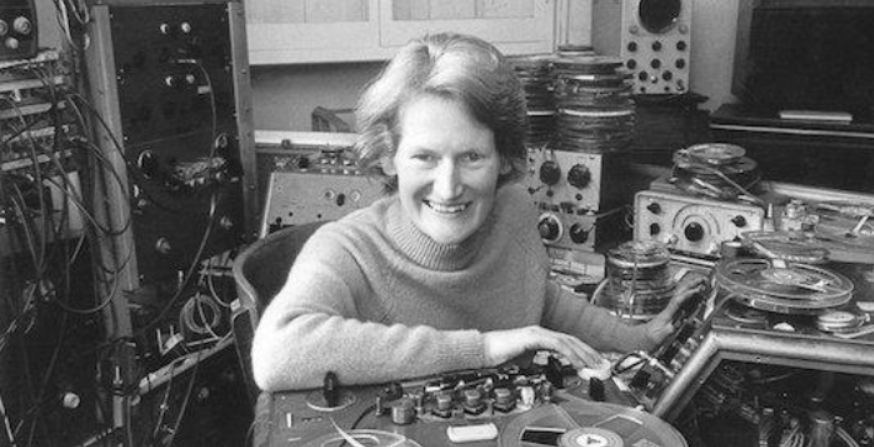
Throughout the 1940s Daphne devoted herself to the pioneering of electronic sound, labouring into the night composing various pieces, most far too avant-garde for the traditionalist BBC bosses to consider publishing. Promoted to music studio manager after a decade, she eventually convinced the BBC to the benefits of electronic music and musique concréte for use in programming; particularly for The BBC Third Programme, replaced by BBC Radio 3. By 1957 they caved, and Daphne was appointed the original co-director of The BBC Radiophonic Workshop with Senior Studio Manager Desmond Briscoe.
Their early efforts were for radio: radiophonic poems, effects for prevalent sci-fi serials like Quatermass and The Pit, and comedy sounds for The Goon Show. Yet Daphne’s motivation remained in electronic music production, and she resigned in 1959 to freelance, moving again to Kent.
Daphne Oram was way ahead of her time, a visionary frustrated with the direction The Radiophonic Workshop was heading, because electronic music was still in its infancy, especially the acceptance of it. The workshop continued without her and eventually branched into music, as television took over.
A trainee assistant studio manager called Delia Derbyshire joined the workshop, creating numerous scores and effects for television programmes. Most notably in 1963, when Derbyshire electronically modified Ron Grainer’s Doctor Who theme, hailed as the pinnacle moment in the advancement of electronic music in Britain. Though, BBC bureaucracy as it was, Delia was never credited on-screen for it until twelve years after her passing, in a 2013 fiftieth anniversary special, The Day of the Doctor. Her work has since been acknowledged and revered, whilst Daphne Oram remains a relatively unsung heroine in the development of electronic music.
Futurist Luigi Russolo argues in a 1913 letter to composer Francesco Pratella, a manifesto referred to as The Art of Noises, that the ear will become accustomed to noises of urbanisation and industrial soundscapes, and thus mankind will develop a new sonic palette as technology progresses. A fascinating and accurate theory into the evolution of sound, in which Russolo encouraged musicians to listen to city sounds, which will putatively be the cymatics of future music.
I find myself reasoning if this explains why electronic music today is most popular in urban environments rather than rural. Due to music famed promoter Mel Bush, Devizes retains an affection for the blues, using authentic analogue instruments. Producers of electronic music are rare here. If you want dance music, which greater acquires the usage of technology than rock, blues, or folk, you may need to head towards Bristol, Swindon, or Salisbury.
But coming from a more urban background and growing up in the eighties and nineties, personally I’ve never outcasted electronics in music. Even if a musician is using analogue methods to create music, they will at the least use the internet to promote them. With eclectic tastes, I also love electronica, hip hop, dub, and dance music, and I love to explore the origins of it. So, this research project has me fascinated, the life and work of Daphne Oram, and her growing up in Devizes. I wondered how she became involved.
A graphical sound technique where shapes etched into filmstrips are read by photo-electric cells and transformed into for various parameters of sound is called Oramics, after its creator Daphne Oram at her Oramics Studios in Kent. She expressed hope that her work on Oramics would “plant seeds that would mature in the 21st century.” Her legacy is commemorated in the annual Oram Awards, and the 2022 BBC Masterbrand Sonic, was internally known as “Daphne,” but still in her hometown she’s not widely known, neither are her early years spent in Devizes well documented.
This month, Daphne would have celebrated her one-hundredth birthday. So, join me in an exploration of her life and work in a series of articles. We will talk with Daphne’s niece, Carolyn Scales, about her early years in Devizes, explore her work further, and talk with a local producer of electronic music about her legacy and the impact her work has on them. Because one thing is certain, without Daphne Oram music today would sound vastly different, at least it would in the UK, and during the boom of pop, as you should be aware, Britain led the way. I believe that it is worth commemorating and honouring her here in her birthplace, Devizes.
 devizine.com
2 thoughts on “Daphne Oram; Devizes’ Unsung Pioneer of Electronic Sound”