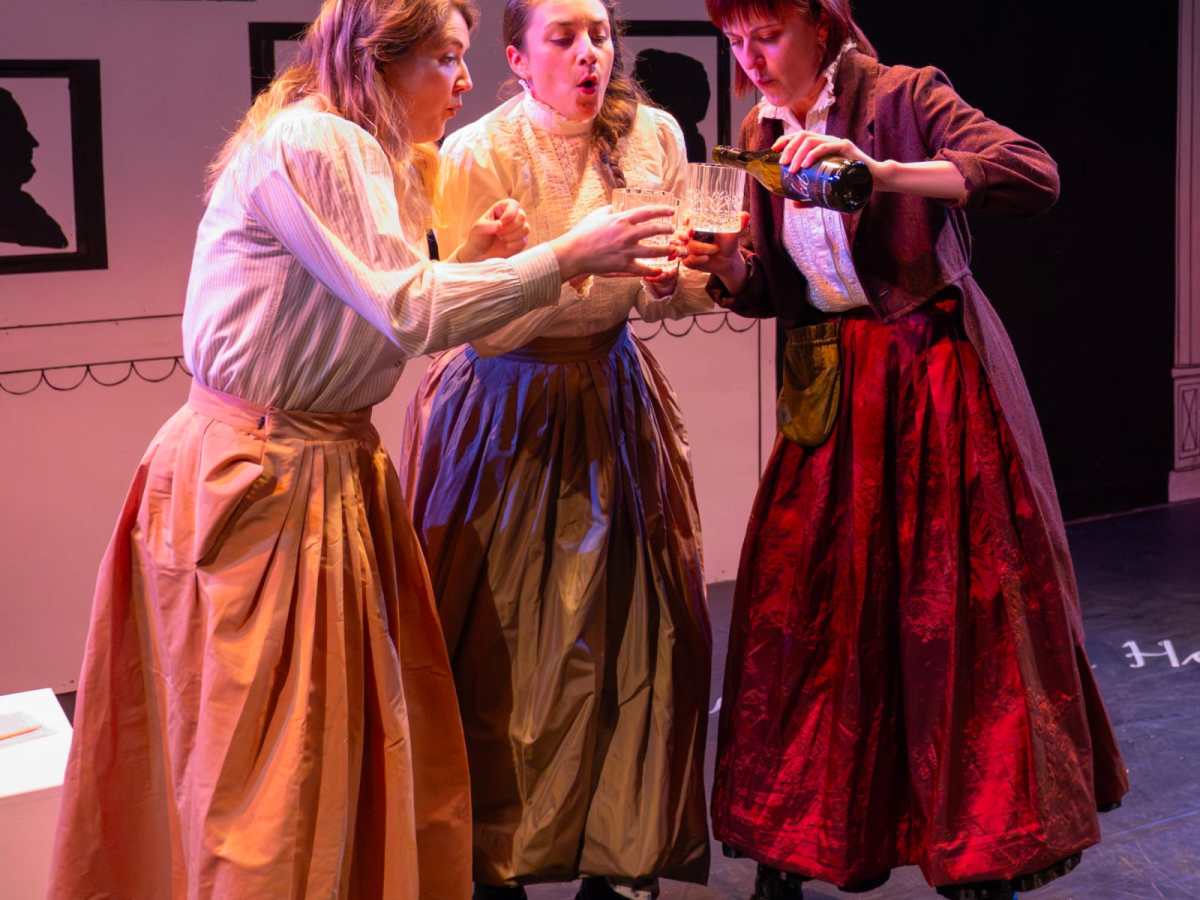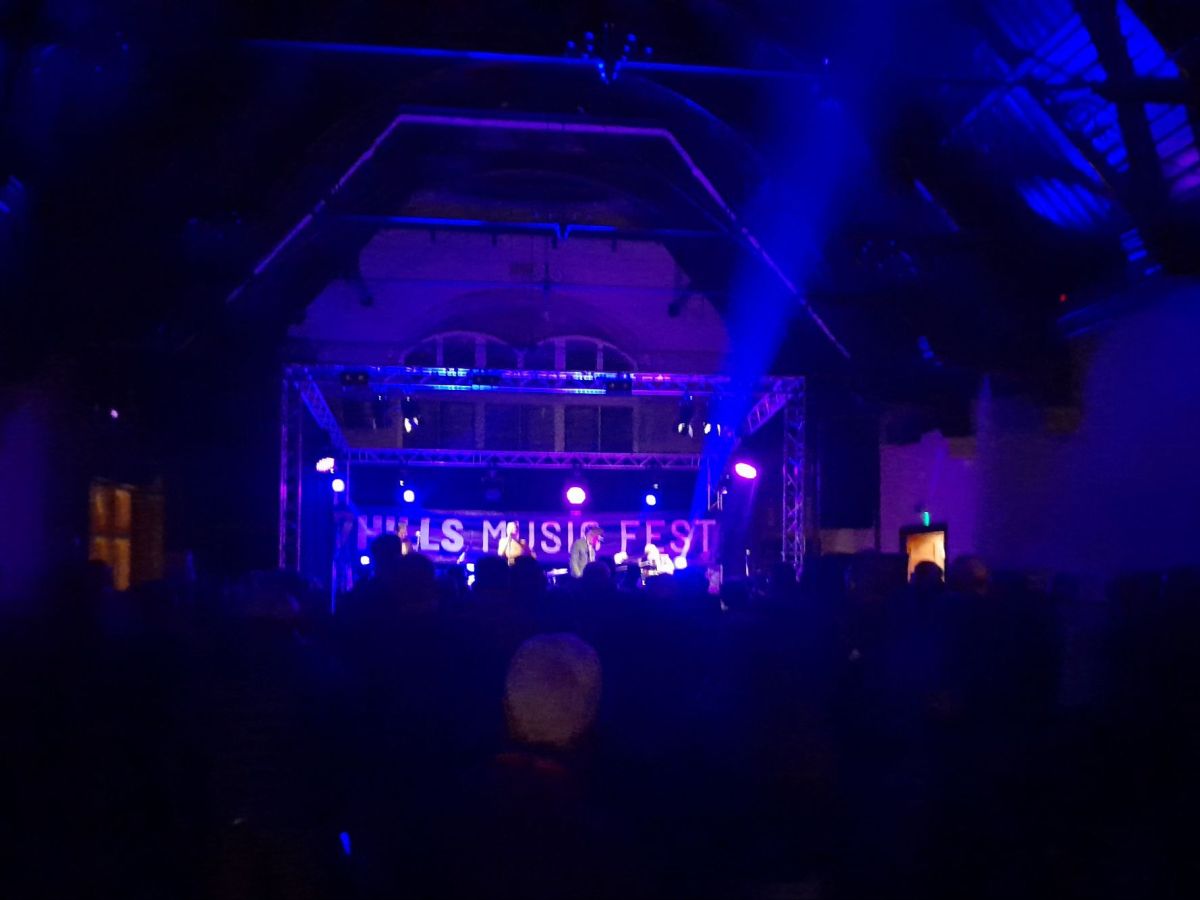
โ€œLarkin with Womenโ€ at the Mission Theatre, Bath, November 25th-29th November.

by Ian Diddams
images by Ian Diddams, Mike Stephens and Next Stage


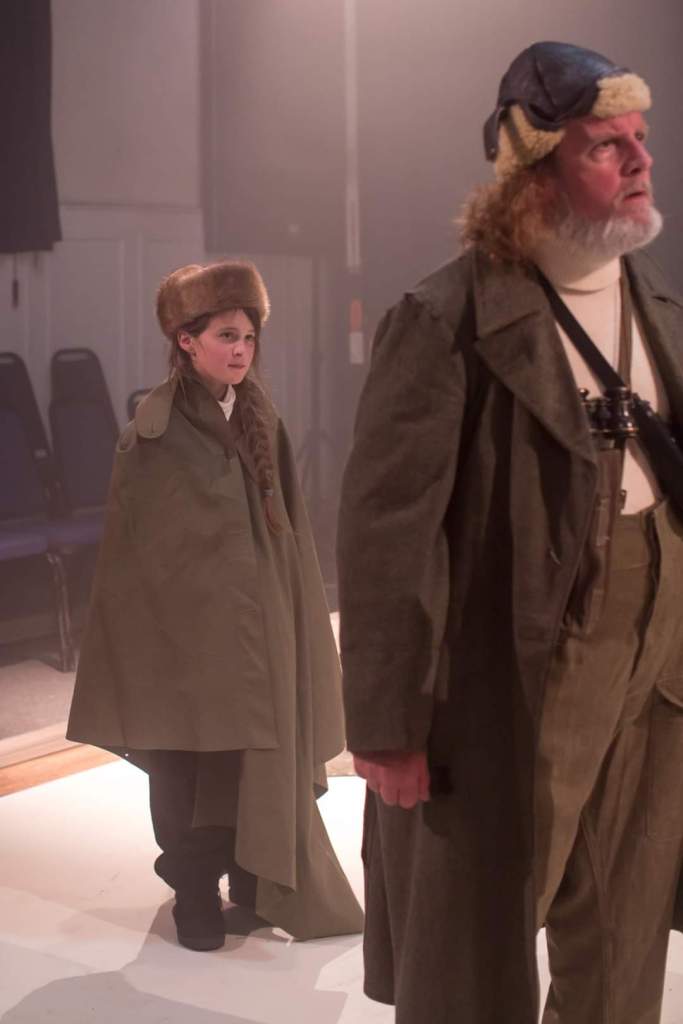
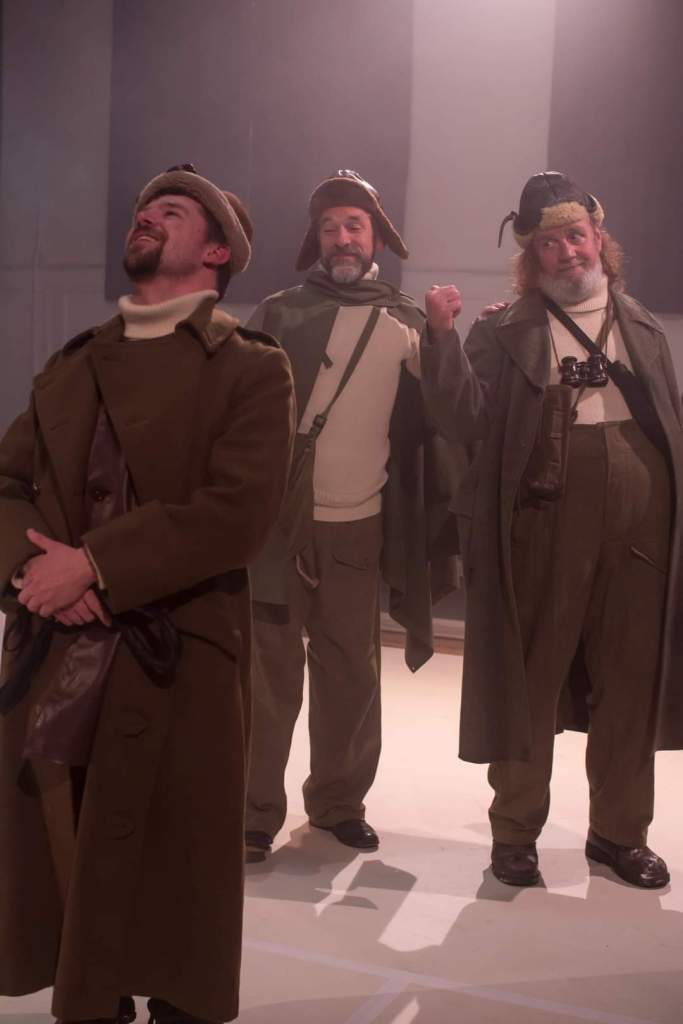
Ask people what they know about Philip Larkin, and the general best response may well be โ€œa poetโ€. They may even know he was a librarian at the University of Hull. Some may even know he coined a phrase concerning the effect of oneโ€™s parents upon one โ€“ a rather rude quote, far too rude to be spelt out here in Devizine obviously. What they โ€“ or you โ€“ may not know though is that he had thirty plus years polyamorousโ€ฆ arrangementsโ€ฆ with three women none of whom were overjoyed at sharing him but couldnโ€™t let him go. Or at least, that is the wonderful picture painted by playwright Ben Brown in his play โ€œLarkin with Womenโ€ which Next Stage Theatre Company are performing this week at the Mission Theatre, Bath.
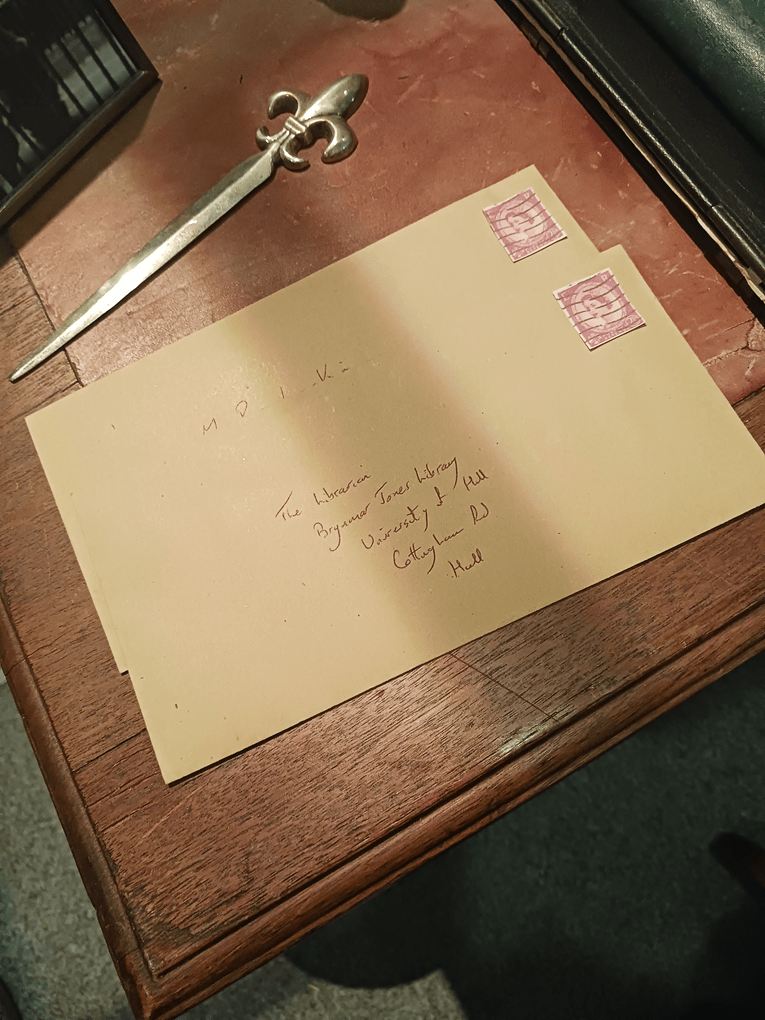

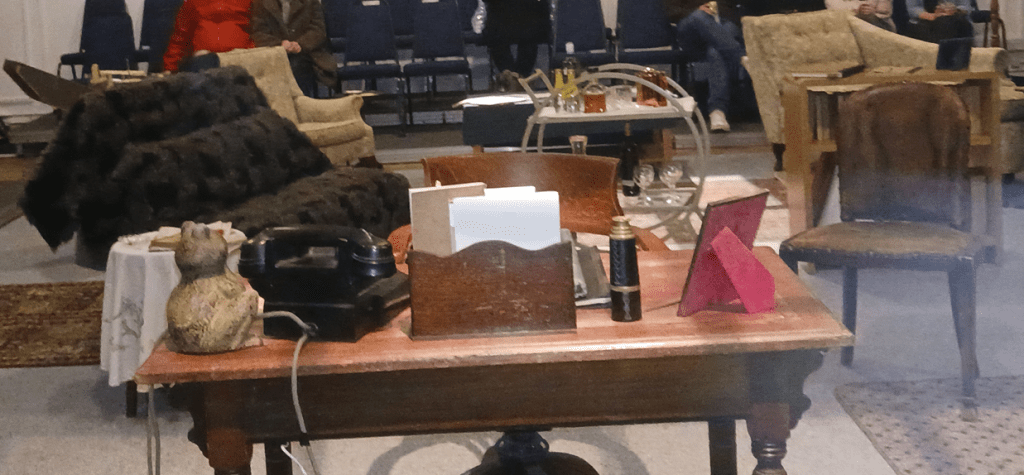
This is a sumptuous work,. Deliciously delivered in a simple in the round setting of office, flats and a weekend cottage with an equally delightful sound track to set it all off. The plot runs through Larkinโ€™s life with his amours Monica a long standing girlfriend and English lecturer, Maeve who comes to work at the library he runs, and Betty his secretary. His persona is of a sharp witted, pithy remarked but not uncaring man, his dialogue stuffed full of ironic responses and jokes. Yet he is egocentric at times seemingly oblivious to his devoteesโ€™ desire for monogamy, or at least uncaring, with his rejection of marriage as an institution. This especially causes a barrier with Maeve who as a strict Catholic cannot agree to sex outside marriage and they carry out their unconsummated affair for over a decade until the inevitable happens, Maeve is distraught, and Larkin responds with โ€œYouโ€™re forty-six years old. Its not as if you can hang on to it for everโ€. Monica is the closest of the three to Larkinโ€™s approach to love but is jealous of the othersโ€™ involvements. Betty is last to fall for him and she too wishes him to herself.

The play draws to the obvious conclusion as Larkinโ€™s life ends at the age he prophesied, his three partners in life visiting him for what may be a last time. Monica has the most heart wrenching line in the play as she answers a question posed by Larkin as he approaches death โ€“ as an audience we can see the answer coming, but when it does it is delivered with such great timing, and tenderness that it still brings forth an immediate emotion and reaction.

The cast are sublime, each playing their part superbly to eke out each characterโ€™s nuances and foibles. Tania Lyons as Monica, Antonia White as Maeve and Stephanie Hunt as Betty create three distinctly different womenโ€ฆ Betty caring, Maeve desperate for marriage, Monica devoted. Brian Hudd fulfils the role of Larkin with panache and even brilliance. Mannerisms, delivery, auraโ€ฆ if this is not how Larkin really was, then he should have been Brianโ€™s portrayal.

A simple set, a gorgeous playlist, subtle yet engaging tech and period clothing throughout from Kris Nuttall, Andy Punt, Vanessa Bishop and Ann Ellison โ€“ who also directed this wonderful piece of theatre, more than ably assisted by Andrew Ellison as Stage Manager.

Ben Brown the writer in the program notes is quoted as saying โ€œthere is a fine line sometimes between humour and ironyโ€. He is spot on of course, but Iโ€™d go one further and suggest there is a fine line between irony and pathosโ€ฆ and Ben delivers that second fine line absolutely perfectly, in this absolutely perfect play. Next Stage have dedicated this performance run to the real life Betty Mackereth, who died this week.
โ€œLarkin with Womenโ€ is playing at the Mission Theatre, Bath, until Saturday November 29th November at 1930 each evening, tickets from the theatre itself or from
https://www.missiontheatre.co.uk/whats-on/2025/larkin-with-women

“Glasshouse” at The Mission Theatre, Bath, July 21st 2025

by Mick Brian

With Sandcastles Productions marking its debut production with Charlie McGuireโ€™s original play Glass House, the cast and crew behind this production are clearly anything but inexperienced as the piece delivers its thrills and emotional beats at every turn.

What Glass Houseย ultimately delivers is a play packed with fascinating questions about the nature of transaction and social transience; questions for which, it would be amiss to neglect, a public bus is not only an apt but a deeply compelling setting. For its sharp 55-minute run time, the audience are held in suspense with the passengers themselves as our collective inaction serves as the playโ€™s crux.

What the perhaps overly wordy synopsis does get right is this: a houseless man, unable to buy a ticket, boards a bus and drags the six others on board into a โ€˜mire of social tensionโ€™. Itโ€™s a simple premise, yet McGuire adeptly and continually reinvents the tension of this idea in a way not dissimilar to Hitchcockโ€™s approach to bottle storytelling; think โ€˜Rear Windowโ€™.

At age 21, this is McGuireโ€™s third original play, having penned and staged his first effort โ€˜Sandcastlesโ€™ (from which his production company naturally gets its name) in 2021 before his sophomore script โ€˜Vignettes from an Inkblot Archipelagoโ€™ was met with critical acclaim (โ˜…โ˜…โ˜…โ˜… – Varsity, โ˜…โ˜…โ˜…โ˜… – The Tab) just last year.

Following his work directing a bevy of projects whilst at university in Cambridge, the mercifully compactly-titled Glass House shows a maturity in its consistent empathy, flair and razor-sharp dialogue. It moves from social realism, to political agitation, to a fantasy about love overcoming hate. At other times, it takes on an existential dread, feeling like a timeless, placeless hell, similar to the works of Samuel Beckett, or simply an inescapable trap, as an Alan Bennett character might experience. The play is far more than 7 strangers sat on a bus for an hour.

And about those strangers; the cast were truly excellent across the board, meeting and arguably exceeding the demands of the script. So strong was each performance that it felt impossible to single-out a protagonist, I simply let myself be compelled by each actor to invest deeply โ€“ almost immediately- in either loving or hating their character. Itโ€™s that sort of play.

Sarah, executed with gripping intensity and striking emotional sincerity by Marta Zalicka, certainly has the most to say as she commands the bus with Malcolm Tucker-esque quips and hard-nosed logic. Rising directly to Sarahโ€™s challenge is Freya, brought to life by May Daws, who is routinely the beating heart and moral compass of the bus. Daws plays Freyaโ€™s simmering frustration to perfection and her chemistry with Zalicka was one of the playโ€™s most compelling dynamics.

Freyaโ€™s girlfriend/not girlfriend Natalie brings further tension to the bus with a painfully-apparent urgency for her feelings to be requited, as Madeleine Whitmore skillfully conveys the weight of her emotional exasperation often through a mere micro expression. As the play progresses, Whitmore becomes more involved in the verbal sparring and superbly delivers the plays most biting one-liners.

Similarly quiet yet nowhere near as observant, Harry Lloyd-Yorke’s Calum feels like a character who could easily have slipped towards a Harry Enfield-reminiscent teenage stereotype. Lloyd-Yorke’s portrays apathy, however, with such well-timed line deliveries and poignant stillness that Calum has more of the menace of a Lord of the Flies character than the dullness of an Enfield trope.

Charles Wolrige-Gordon scored many of the playโ€™s laughs with his portrayal of Colin, however prevented Colin from coming off as merely a comic stock character by lacing many of his lines with genuine threat and malice. Far less loathsome was Joe Orrellโ€™s performance as Owen, the bus driver who seems to be stuck in some form of Beckett-esque purgatory. Sporting a flawless Welsh accent, Orrell undergoes a character progression which may not feel earned in the hands of a lesser actor, but was deeply authentic and ultimately heartbreaking.

Perhaps most surprising is Rafael Grisoโ€™s performance as Eden, the houseless man who canโ€™t afford a ticket, which soars from invigorating the playโ€™s ecstatic, surrealist moments to a remarkable subtlety. Naturally, there are ethical questions to be raised about performing homelessness on stage, especially within the context of the Edinburgh Fringe, but I was glad to see that this is something the play very much interrogates. Without spoiling the scene, as it really was a great shock to the system, Glass House questions in a troublingly-entertaining way why Eden must give us something in order for us to sympathise with his plight.

Outside of the play itself, the team are evidently aware of the potentially problematic nature of performing a play with a prominent houseless character at a festival quietly-renowned for its displacement of the homeless; the play will partner with a homeless charity in Edinburgh, having charity collection boxes at each show and donating profits of the Fringe run to a local homeless charity.

The play tackles a lot, not only thematically and narratively, but theatrically. Attempting to pull off a fictional documentary angle, where interviews of the characters on stage are used to reconstruct a story that supposedly happened years ago, may have felt overstuffed had the play not benefitted from the expert technical design and execution of Barash Tunahan. Interweaving purposefully homespun-sounding interviews with a forlorn and jazzy soundtrack whilst punctuating the playโ€™s emotional beats with precision โ€“ Tunahan’s work seamlessly builds the world of the play in effortlessly cinematic fashion.

If I were to critique the production, I would say that Glass House perhaps is not the best fit for a space like the Mission Theatre. The Mission, a treasured and historic performance space in Bath, has a scale to it which does not benefit the intimacy which McGuire is evidently shooting for, however I am sure this will be remedied by the venue they will find themselves at in Edinburgh.

Whilst I am eager to see what McGuire and Sandcastles Productions do next, Glass House is without a doubt a brilliant piece of Fringe theatre.

โ˜…โ˜…โ˜…โ˜…โ˜…

Glass House is at the Edinburgh Fringe from the 18th-23rd August at Greenside Venues George Street in the Olive Studio.

โ€œBlood Brothersโ€ at The Mission Theatre, Bath, March 27th-30th 2025

by Ian Diddams
images by Ann Ellison.

What can possibly be better than watching a performance of โ€œBlood Brothersโ€ by Willy Russell?  Watching TWO performances of โ€œBlood Brothersโ€ by Willy Russell of course!  Next Stage Youth performed their dress rehearsals at The Mission Theatre last night, and with two casts we were treated to both of them in action.

The story-line of โ€œBlood Brothersโ€ is easily findable on the web if required, so I won’t bore you with it here, but Next Stage Youth deliver a stripped back โ€“ but by no means lesser for it โ€“ version of the musical. With most of the songs trimmed out to create a fast paced, bare boned, breathless ย ninety minute production, the audience is kept fully engaged as the tale of twins separated at birth (sound familar?) takes us from city to country, working to middle class, struggles.

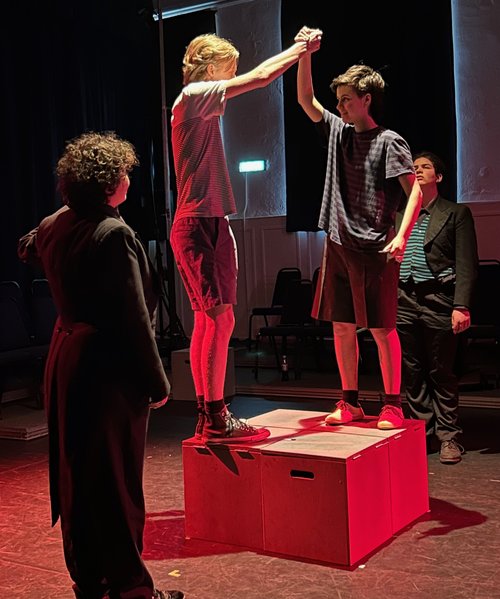
The set matches this approach โ€“ in the round, bare floor with clever use of eight hinged lidded boxes as prop containers, chairs, windows and walls and the actors do the rest. Clever tech from Kris Nuttal, Alex Tarasevych and Rowan Bendle, with choreography by Hayley Fitton-Cook and wardrobe by Vanessa Bishop paints all the pictures our minds need for this tale of friendship, jealousy, social extremes and madness. Voice coaches Kay Francksen and John Matthews deserve credit too for taking what are a group of West Country youth and getting them to deliver decently passable Scouse accents ๐Ÿ˜Š

Principals are split between the two casts but the ensemble for both remains the same four core actors, a huge kudos to their abilities despite their young ages. Iโ€™ll wrap up with the cast lists at the end of this review, but it is more that fair to say all the casts show passion and no little assurance in delivering their characterisations as separated twins raised each side of the tracks (sound familiar?), their mothers, best friend and the wonderful narrators (more of them later!). It would be unfair to pick any of these principles out for any more praise that others but I will say I had the pleasure of seeing two generations of the Chivers family perform in two nights in two different shows and the dynasty forming is clear! Also Dilys Hughes deserves a mention as itโ€™s the second time Iโ€™ve had the privilege of seeing her act after her appearance in โ€œJerusalemโ€ recently.

The pairings of Mrs Johnston and Micky were spot on. Both the Eddieโ€™s almost stole the show. The pair of Lindas broke all our hearts as the devoted girlfriends of both twins, while both Mrs Lyons craft the characterโ€™s descent into madness superbly – sound familiar?. And the Narrators excel in both casts, including the siblings Gully and Edith Kuenzler playing opposite each other. And another mention to the pairs of twins which are devoted to each other until Micky rejects Eddie and his best friend becomes his enemy โ€“ sound familiar?

This just leaves my appreciation of the director Ann Ellison. The stripped back show she has developed really works but itโ€™s the little touches that really shine. The narrators appear as marionette puppeteers, controlling the characters as the story unfoldsโ€ฆ.  Sound familiar?

So those allusions of familiarity?  Well, four hundred years is a LONG time in theatreโ€ฆ  but what stood out to me again and again were the parallels in the story and developed by Ann just shout Shakespeare to me. We have twins separated at birth ( Comedy of Errors, Twelfth Night) but the clear parallels are with Macbethโ€ฆ  where Eddie is Banquo and Mickey is Macbeth in their friendship story arc, Mrs Lyons is Lady Macbeth in her descent into madness, and brilliance of brilliance the marionette puppeteers controlling the destiny of the characters are the Witches. Sublime. Goosebumps.

The play itself encompasses so much; itโ€™s a story of superstitions โ€“ shoes on tables, a single magpie, prophecies of separated twins. Foreshadowing of the twins eventual demise with the use of a particular implement throughout Mickeyโ€™s personal timeline. And almost biblical allusions to two mothers โ€“ one mother giveth, the other taketh away. And Russell โ€“ and Next Stage Youth โ€“ leave us with existential queriesโ€ฆ  is Eddie patronising? Is Mickey ungrateful? Had Mrs Lyons selected the other twin would the story have ended the same โ€“ nature versus nurture? And overall it is a play that presents a very downbeat view of married life from both ends of the socio-economic spectrum, wonderfully portrayed by these young actors.

โ€œBlood Brothersโ€ is showing this week Thursday 27th March to Sunday 30th March at 19:30 with matinees at 14:00 Saturday and Sunday


Tickets from https://www.missiontheatre.co.uk/tickets?category=Blood Brothers

Waiting for Godot @ The Mission Theatre

By Ian Diddams

Images by Playing Up Theatre Company

Samuel Beckettโ€™s existential work is performed in the round this week in Bathโ€™s Mission Theatre, by the Playing Up Theatre Company…..


โ€œGive them enough rope and theyโ€™ll hang themselvesโ€ โ€ฆ. Beckettโ€™s rope is superbly used by the company to great aplomb as it happens. Gogo (Matt Nation) and Didi (Darian Nelson), have no rope to do so whilst wanting to, while Lucky (Sam Fynn) and Pozzo (Jack Strawbridge) do have rope but no suicidal tendencies. Godot naturally never appears although his messenger (Scarlett Nation) delivers his tardy apologies.

These five perform on a traditionally sparse set, with cunning use of lighting for the tree, accompanied by two large rocks and two entrances to frame the action. Heavy winter clothing sets the season. Sophie Brookesโ€™ direction does the rest, ably supported by Richard Chiversโ€™ tech.

โ€œGodotโ€ is fundamentally a five-person, two-hour โ€œmonologueโ€. Itโ€™s word heavy, with little flow โ€“ โ€œNothing happens, nobody comes, nobody goesโ€. It has challenging scenes of slavery and abuse. Large parts of it are difficult to fathom. But the company provides a phenomenally slick production that avoids turgidity. This is community theatre at its very finest โ€“ professional qualities abounding. All characterisation is stunning, the gibbering loon of Lucky especially โ€“ disturbingly – so.

โ€œGodotโ€ ran until Saturday 13th May. The only question you needed to ask is โ€œShall we go?โ€. But now like our eponymous heroesโ€ฆ donโ€™t moveโ€ฆ


Future productions at the Mission Theatre, Bath, Here.


Trending….

Lady Nade; Sober!

Dry January, anyone? Well, Lady Nade just plunged into an outdoor 4ยฐC eucalyptus sauna for a social media reel. But whilst I’d require a stiffโ€ฆ

Ha! Let’s Laugh at Hunt Supporters!

Christmas has come early for foxes and normal humans with any slither of compassion remaining, as the government announced the righteous move to ban trailโ€ฆ

Rooks; New Single From M3G

Chippenham folk singer-songwriter, M3G (because she likes a backward โ€œEโ€) has a new single out tomorrow, Friday 19th December. Put your jingly bell cheesy tunesโ€ฆ

Burning the Midday Oil at The Muck

Highest season of goodwill praises must go to Chrissy Chapman today, who raised over ยฃ500 (at the last count) for His Grace Childrenโ€™s Centre inโ€ฆ