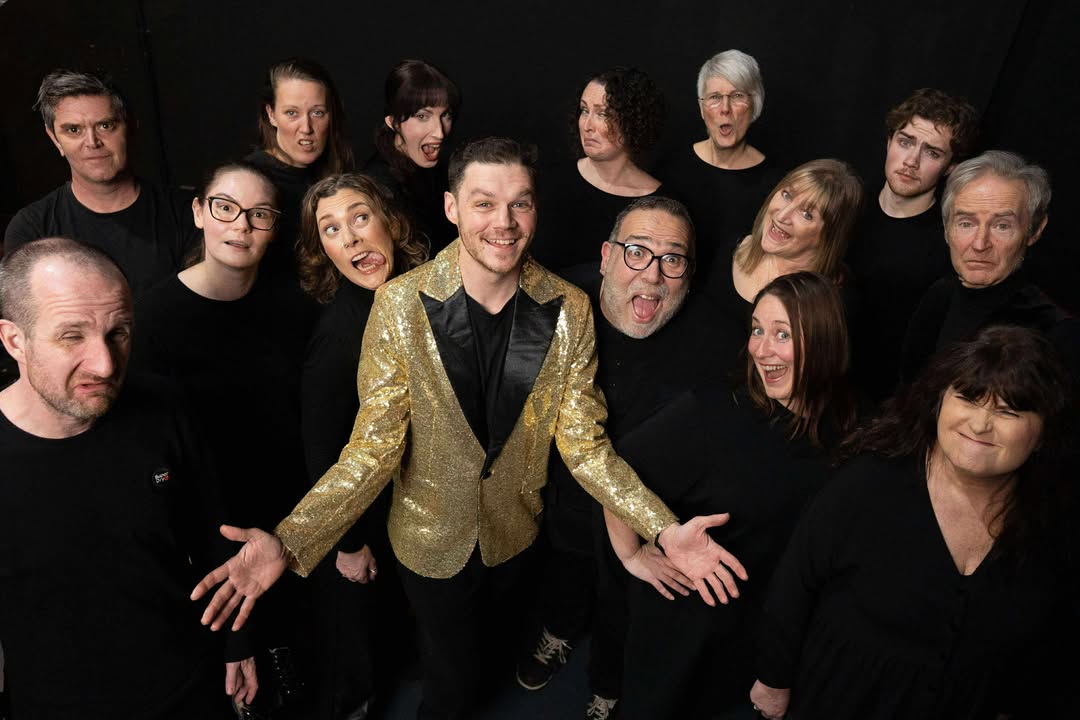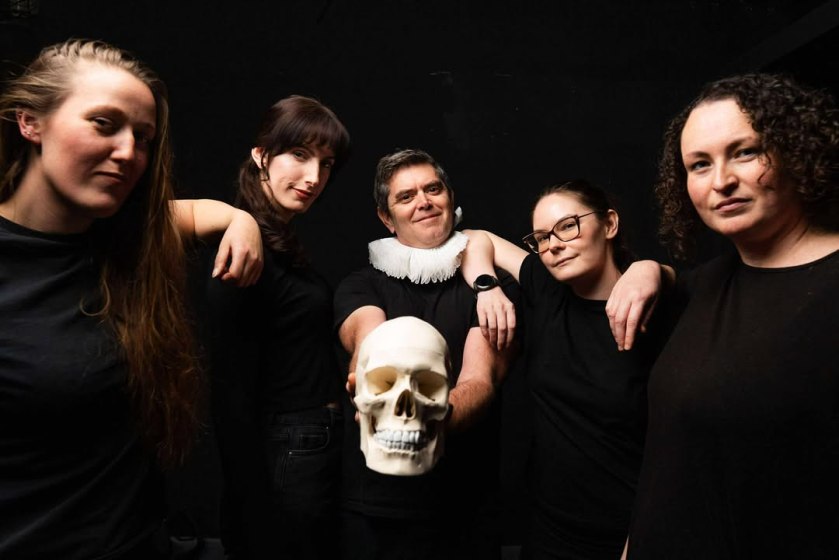
May seemed so far away back in Feb when we ran a preview of two plays which will see a Devizes acting company debut at the Edinburgh Fringe. Beforehand, they’re staged at their base, the Wharf Theatre. I’ve had a sneaky peak already, you can too….
Acting coach Lou Cox, director of The Wharf Acting Company, wrote and devised both shows. Whose Play is it Anyway is showing at the Wharf Theatre on Friday 29th and Saturday 30th May, before heading north, but the second, Having a Baby and the Sh!t They Don’t Tell You in Books is only on Saturday.
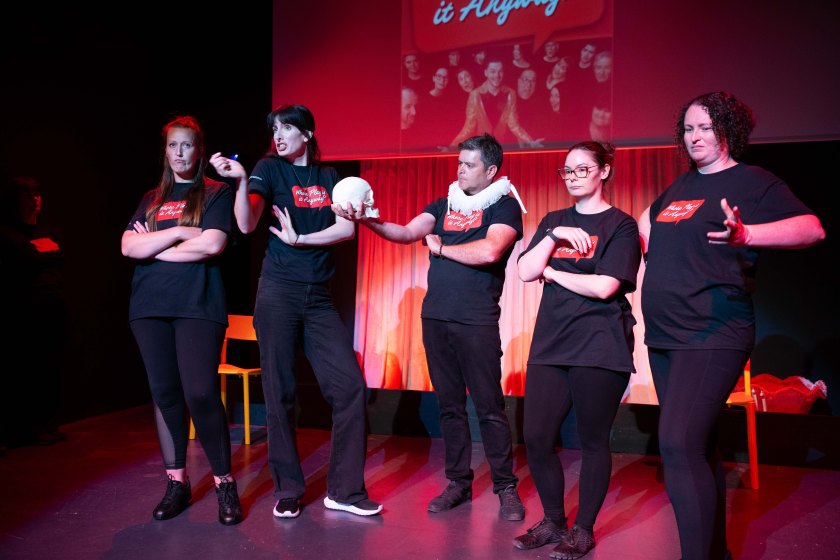
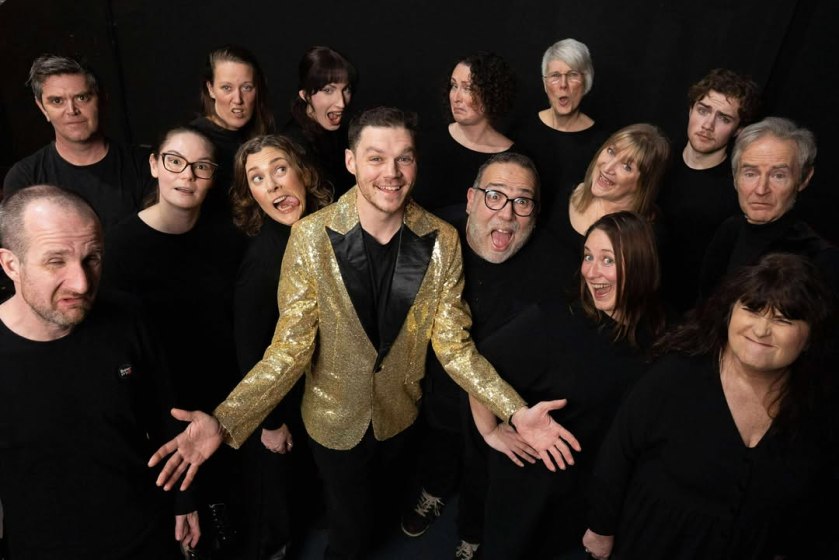
Firstly, and undoubtedly the easier to summarise is the interactive comedy Whose Play is it Anyway? Name-spin upon improv show Who’s Line is it Anyway, but more a general parody of low-budget TV quiz shows of the seventies, thirteen actors of the group perform eighteen scenes from various plays and it’s up to audience to call out which decade, genre or play it is, according to the question set by the grandstanding host, Barry Ruffles.
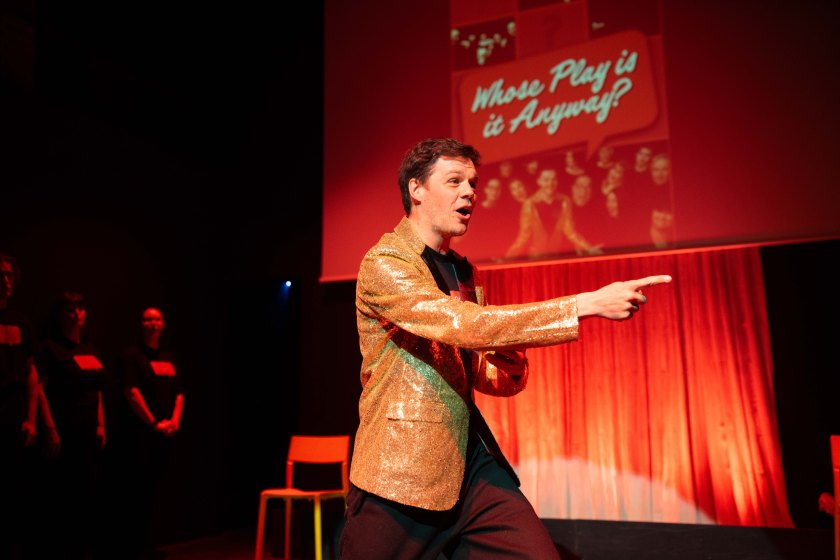
With no fourth wall Ruffles, played with diligence by Gavin Rand, tempts the audience to be the quiz show crowd with offers of carrot-on-a-stick prizes. But the utmost comic element is his impertinent relationship with his superficially glitzy assistant, Jenny Flannel, played with such absolute perfection and improv timing by Danielle Cosh, you’d think you regretfully picked her up in a Wetherspoons in Romford.
A unique angle, yet the greatness of this show is in the contradiction between the sombreness of the scenes against the comical game show concept, and in turn, the scenes make for an interesting display of the diversity of theatre throughout the ages. For the theatrophile it might act as a boastful test to their knowledge, but for someone less culturally aware it has the potential to be a fun clipshow sampler. Being the latter, there were several encapsulating scenes which made me think, you know what, I’d like to see that play in full?
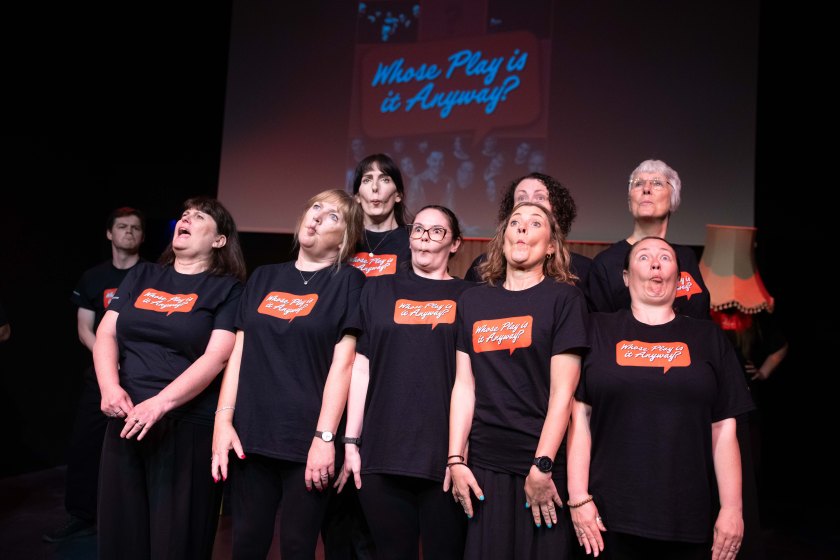
It’s originally quirky, bottom line, ideal for the Edinburgh Fringe but also with a degree of universal appeal. What was most fascinating, and also a testament to the skills of the actors, similarly to its namesake Whose Line, there’s a genuine improv component in the order the scenes are played out. Governed by a deliberately tawdry bingo ball machine, the order is genuinely random, even if you’d be forgiven for assuming it was fabricated. “It keeps us on our toes,” one actor, Matt Dauncey jested, “and makes the show different each time.”
The others, as follows, Laura Deacon, Dion Smith, Karen Payne, Brigid Maude, Laura Bartle, Rhiannon Fitzgerald, Isla North, Jamie Whatley, Jenni Prescott and Lisa Smith all need to be highly commended too, for the immense amount of preparation undertaken to develop this, and their readiness to randomly jump into any of the various characters and styles of play. The team also fondly remembered member Andy Bendell, who recently passed away. This was fun and intriguingly original in equal measure, and (in joke) more a waste of Haribo than a waste of your time!
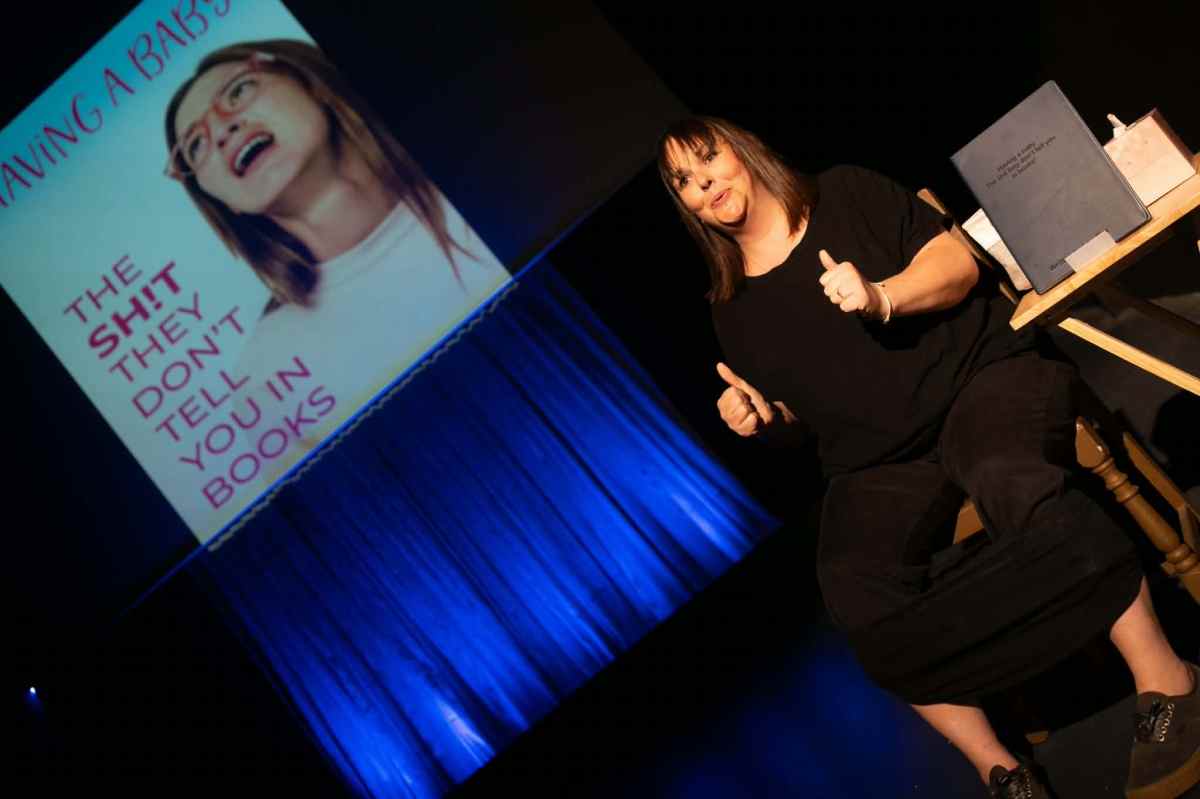
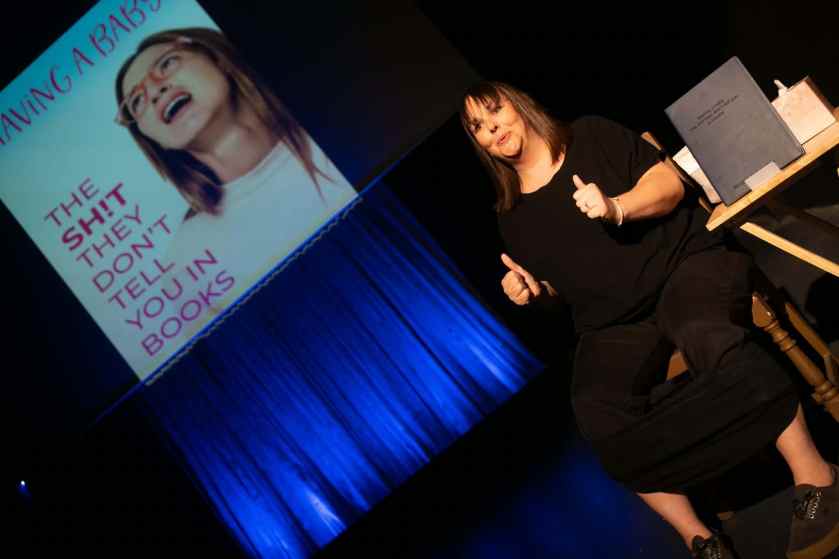
Only similar for contrasting comedy against tragedy, Having a Baby and the Sh!t They Don’t Tell You in Books I was treated to next. Lou has performed this one-woman show before at The Wharf and elsewhere; Helen Robertson reviewed it for us, causing me to want to see it myself.
Committed to taking a “manly” perspective to one with their knickers at their ankles chatting about their vagina, which is usually blushing and smirking like Finbar Saunders, I found equal heartfelt emotion and gulp in this unbridled masterwork.
I’m reminded of a podcast interview with Adrian Edmondson, hardly recognising his voice, a voice I should know only too well. He was crying over thoughts of the passing of his comedy partner Rik Mayall, and I reasoned, because I’d never heard Adrian cry, only ever laugh. What happens to the funny person when the funny runs out?
I marvel at writers like John Sullivan, with his knack of creating loveable character relationships, like Del-boy and Rodney, who can switch the comedy narrative to the most sombre and touching moments. But if this takes genius, it’s a whole other ballgame to take a monologue twisting comedy from tragedy to the stage, when it comes from the heart of personal experience. What begins as part stand up routine, part PowerPoint presentation, ends with the most unfeigned emotional piece of theatre you’re likely to witness.
Lou runs off a frank and quite brilliant stand-up routine akin to a most alternative, brutally honest and graphic guide to pregnancy, and while keen to state each case is different from any other and many women like to talk about their experiences, she describes the stark revelations of mental and physical changes due to her own maternity, with comical precision. This self-observational comedy would be plentiful for a trip to Live at the Apollo, and whilst this is impossible to summarise without spoilers, the conclusion to her story is not bathed in the glory of childbirth, nor amusing anecdotes of post-natal activities.
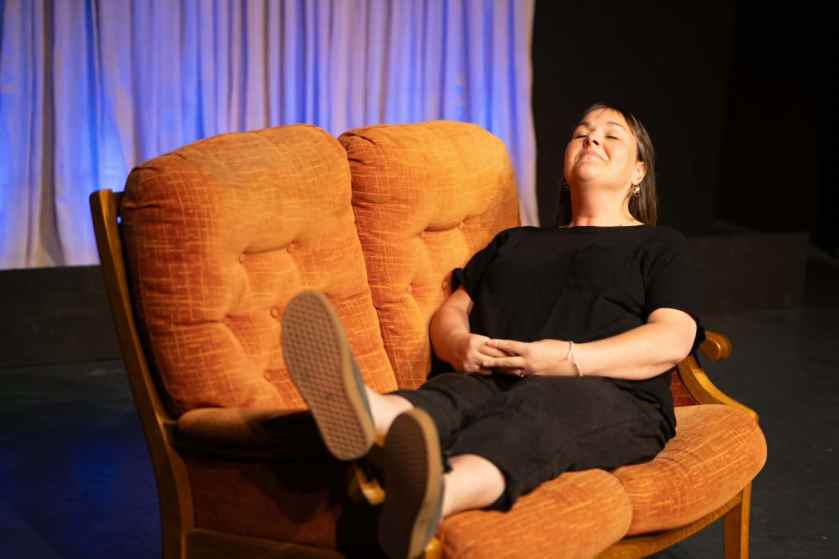
Until this point, you ride it with Lou, especially parents with a story to tell themselves. But, due to lack of oxygen during a traumatic birth, Lou’s daughter Hattie was left severely brain damaged, and only managed five days. Lou reflects on her tragedy honourably but with understandable criticisms to faults made and how they were dealt with, abruptly halting the jokes, and twisting the direction to finalise with a tearful poignant message so powerful you’re at loss for a suitable expression to account for such grief.
I asked Lou if this was her way of dealing with it. “For my show it’s certainly cathartic,” she replied, “but more importantly I’ve been able to raise so much money previously under Hattie’s name. Also having had to be silent during the legal case I feel I can finally tell my story in the hope that I can raise awareness and promote change in maternity services.”
You can donate to Hattie’s Fund here, but sympathy, try as you might, the show is a glimmering reality horror not calling for it. Only commanding you to walk in those shoes for a moment, causing it to be breathtakingly brilliant, but hard to review, words will fail you, dammit. Easier to present to it a deserved award; it’s something you have to see for yourself.
Which you can do, HERE, before they see it in Edinburgh. Of which we wish them all the best for, and being clips of multiple plays, suggest they break more than one leg!




Trending…..
Captain Accident’s Sayonara Paranoia
After five years, a new album drops tomorrow (Friday 23rd October) from southwest Welsh reggae outfit, Captain Accident & the Disasters, and it’s worth the…
Keep reading
Cephid; Electronic Music Producer and Town Crier Partnership in Devizes
Well, what else is there to oyez about? Congratulations must go to our Devizes Town Crier, Charlotte Howard-Macdonald, again today, as Brian Mathew MP tabled…
Keep reading
Devizes; a Place for Festival, or Negativity?
On the Festival of Discovery, other political discoveries, and is the Crammer full yet?! No to the latter, but local Facebook groups are full ….of…
Keep reading
“Shakespeare’s Green-Eyed Monster” on tour, Central Wiltshire October 17th-24th 2026.
by Ian Diddamsimages by Gill Morrell and Penny Clegg How all the other passions fleet to air,As doubtful thoughts and rash embraceddespair, And shudd’ring fear, and green-eyed jealousy- Merchant of Venice, Act 3 Scene 2, William Shakespeare O, beware, my lord, of…
Keep reading
Shrek at Mac’s Theatre School
“What are you doing in my swamp?!” Shrek asked a horde of fairytale creatures, exiled to his wood by Lord Farquaad in his namesake Dreamworks…
Keep reading
Devizine Launchpad on Sunday
Okay you lovely lot, who are deffo coming The Festival of Discovery this weekend across Devizes, and who, deffo, going to pay us a visit…
Keep reading
Devizine Launchpad at DOCA’s Festival of Discovery
So, you’re joining us at Albion Place on Sidmouth Street in Devizes this weekend, right?! Don’t say I’ve not told you about it once it’s…
Keep reading
Delaying the Inevitable with Lou Trigg
Wowzers, it was four years ago since we last mentioned local singer-songwriter and musician Lou Trigg, when we reviewed her single to come out of…
Keep readingSomething went wrong. Please refresh the page and/or try again.