While The Hebrew Bible depicts women in composite roles, from submissive domestic positions in a patriarchal society to powerful figures of leadership excelling moral courage, and in Abigail’s case, political peace-making, there are few exceptions from the rule that, being it was written and compiled by a male scribal elite, the Hebrew Bible is narrated from a male perspective. There remains only one exception, an Egyptian slave called Hagar in the Book of Genesis, where expression of any femininity derives from a character not linked to nobility. And herein lies the genius of local author Kirsty A Wilmott…..
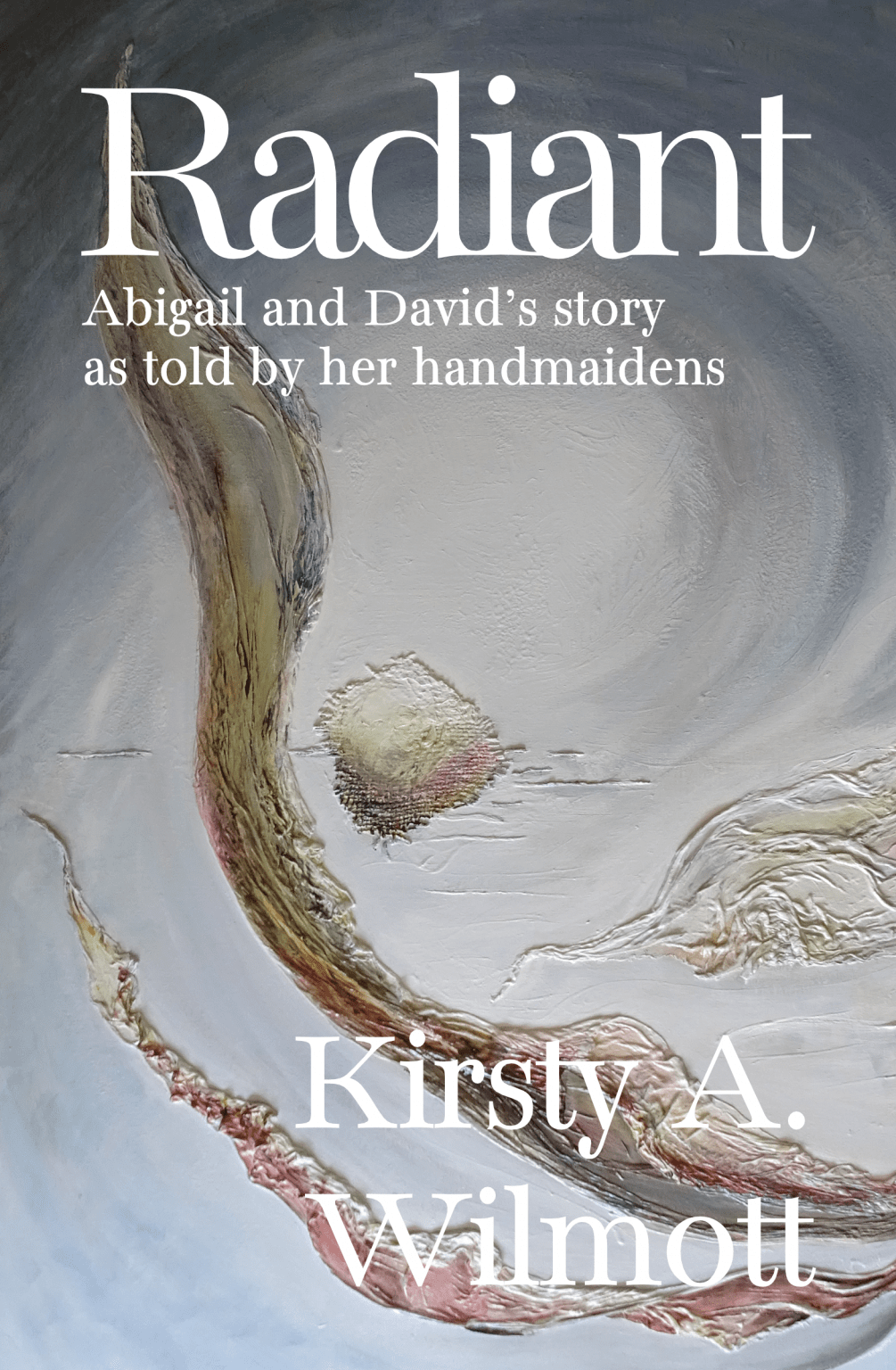
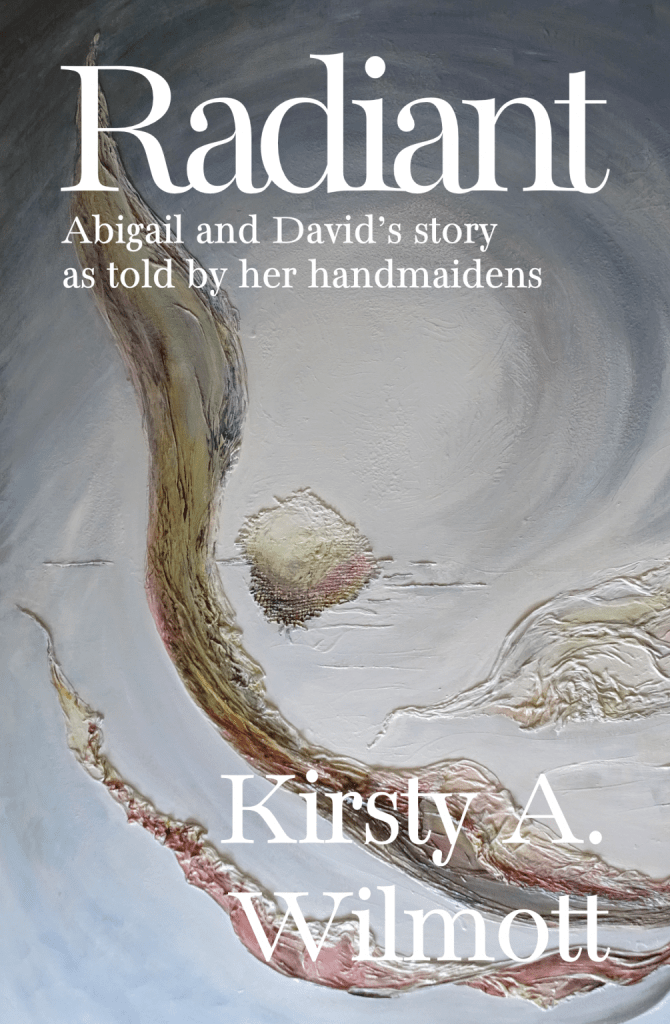
I’m glad to find Kirsty’s latest novel, Radiant popped through my letterbox, as we promised to review more local authors’ works. It is, essentially, a love story between Israelite Abigail and the future King David, but told through the varying point of views of her handmaidens.
Let it be known, I’m far from knowledgeable about biblical passages. Any understanding of it in this review was encouraged by this book, and I would recommend a little research before, or at least during, embarking on its complex and seemingly historically accurate narrative.
This story begins before the original texts, with Abigail as a child, and charters her life akin to classic novels like David Copperfield or The Count of Monte Cristo, rather than usual briskness of contemporary pulp fiction. Thankfully though it’s not as lengthy, as I was thoroughly locked into this realm of yore, and would never have got this review out there!
To draw you in, everything from the artefacts to the social and political tenets of the era are meticulously researched, alongside the actual biblical story, and, I suspect, characters and situations from other scriptures are ingeniously intertwined too. It creates a vivid curiosity of the world in biblical times, just with a completely alternative perspective.
It is the method which allows the reading to become somehow more modern, not just the concept of telling the tale from a female and enslaved point of view. Through the thoughts and separate lives of the handmaidens, each of them taking turns reciting a chapter, it creates alternative narratives, where their everyday occurrences and concerns might not necessarily be relevant to the actions of the men, where the story would usually be told. And, in turn, the happenings of the men, especially those of superior ranks, as they drink, fight, and treat the women as possessions, are depicted confusing or inconsequential to the lives of those telling this version of the story.
The handmaiden’s lives, though, are intricately intertwined with their mistress, and they often seem to care more for Abigail, and her relationships with Nabal and later, David, as they do their own lives and interconnections. But living under their roofs and in their employment, it’s understandable. In such, I’d compare the flow of this book with that of a soap opera, but please, that is meant as a compliment! For it can be no simple task for a writer to infuse all the lives of various soap opera characters into one combining narrative.
Yet, it is no soap opera in the modern sense, for the patriarchal context is so defined and entrenched, it’s another world. The social roles and everyday depictions so strictly ruled, with an emphasis on betrothment, the divide between the genders is distanced beyond our normal, even modern historical allowances, and none would dare question it.
Meanwhile, the lives of the men are typically common with the modern world, and biblical battles for wives or other possessions, landgrabs and kingdoms aren’t so dissimilar from blokes today, whether starting wars or punch-ups outside a Wetherspoons!
Kirsty makes no fantastical attempt to break these boundaries, leaving us with a harsh reality rather than a fairytale ending where the feminine get the upper hand or the slightest hope of their own governance. But they are not depicted as secondary in importance, as they were in most bible texts, and certainly not as intellectually inferior either. They have their own lives, and issues, aside shouldering bouts of the men’s too, Kirsty weaves them as paramount above the bravadoism of their male counter-characters.

Given the synopsis I wondered to Kirsty if I should hand this project to one of our female writers, but she assured me it was suitable and aimed also for men. Not, I’d suggest, those testosterone-driven guys whose life’s objectives is to race in fast cars, drink twenty pints and talk football, for they are the matching modern stereotype of the kings and soldiers in the book! Rather for the considerate fellow who favours walking in the shoes of others to better understand their take on a notion, yeah, I’d agree!
For I loved this fascinating and unique read. And in such, the choice of biblical story, where Abigail intervenes between her warring first husband and David, shoulders the blame, and twists David’s vengeance into peace by talking him down, through the consideration he would not want the burden of needless bloodshed, and David praised her wisdom, spared Nabal, fell in love and married Abigail, was apt for the writing style. It’s as if Kirsty used the plot to define the writing style, and that is nothing short of precision sagacity.
It is within the harsh reality the patriarchal society is ingrained, that David takes other wives, and this becomes a talking point for readers of Radiant, to consider how different the story might be if set in modern times, and if, and how much progress we’ve made on the way to gender equality. Yet it contrasts with the similarities of men’s behaviour when their grievances are not depicted as glorifying, as they are in most biblical stories.
Radiant by Kirsty A Wilmott is published through Bear Press, is available from Devizes Books, other bookshops, or from her Website HERE.