
In 1985 Tenor Saw toasted the lyric, “another sound is dying,” in Ring the Alarm. It implied his sound was the contemporary champion, yet while it’s true reggae is competitively progressive, this particular tune’s dubplate derived from the Stalag riddim created by Ansel Collins twelve years earlier, as did Sister Nancy’s Bam Bam and numerous others. I appreciate the ethos of dubplates, for a musician to lay down a track and various singers to interpret it, but favour, if you want a true contemporary champion sound, it’s not to regurgitate existing riddims, but to use past influences to create original composition; the more the merrier! I may have opened a Pandora’s box upon receiving The Soul Sessions EP from Bristol’s Kaya Street, but it’s certainly a refreshing and interesting original sound…..
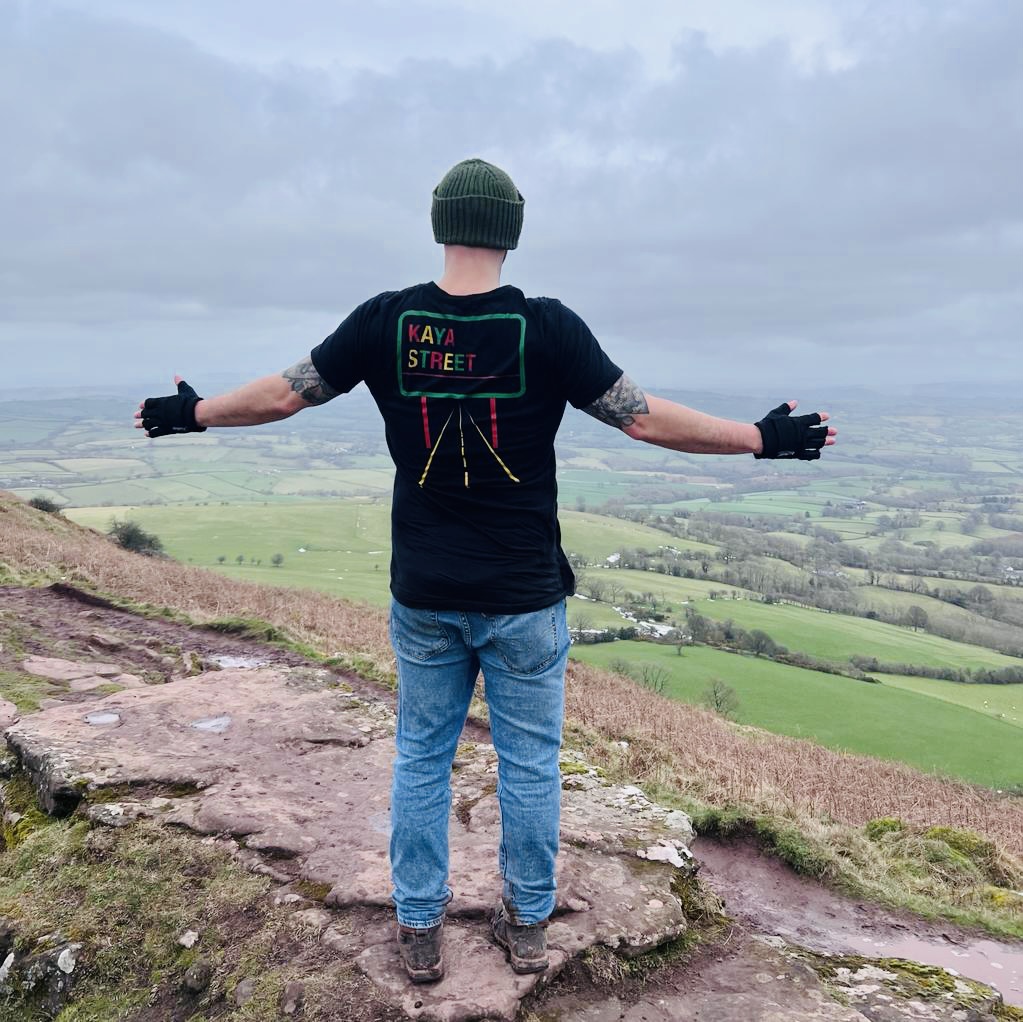
In a promotional shot advertising their latest single Wild Child, getting spun on Daniel Pascoe’s BBC Introducing show, Kaya Street’s main man, Kaya, is shown wearing a Trojan Records logo on his T-shirt, it connotes awareness of their roots. I beg to differ from their accompanying quote, “like nothing we’ve heard before,” while perhaps not recently, the fusions Kaya Street experimented with here, reggae, soul, and afrobeat, have indeed been tried before, in abundance.
I could cite bands from Misty in Roots to the Clash, and even Bristol’s own Massive Attack. I could point to the logo on the shirt and suggest many discs sought for distribution by Trojan in the sixties experimented in such a manner; take Lord Brynner’s 1966 single Congo War as one of many examples, or even predate this with the notion mento is rooted from African rhythms. Yet, it’s not the ingredients in Kaya Street’s melting pot which makes it prominently interesting and beguiling, rather the way they stir it, the method in the composition and production. Either that, or I’m an ageing trainspotter beyond the years of all at BBC Introducing!!
The single Wild Child is an enchanting one-drop steppers march, steeped in conscious vocals akin to Marley’s Get Up Stand Up, denouncing the violent crime epidemic in the UK.
It’s bravely brassy too. In an electric modern world taken for granted, it will wake you up to the roots of reggae, when brass sections ruled the day, something which trends throughout the EP. I’m more than happy for the EP to flow throughout like this, but, imagine, a pleasant surprise when the second tune, Alfie proves Kaya Street are no one trick pony.
This is positively alive in an uplifting, paced soukous-inspired sound, while the last song Sway sounds more south than east African; funky township jive, reminding me somewhat of Thomas Mapfumo, with such a saxophone solo to rival Hugh Masekela’s trumpet, least as near as dammit! The penultimate song Be Mine is more commercially western, the offbeat is slight, the theme is romance, the overall vibe is soul, with its silky backing vocals, and again with this consistent concentration of saxophone.
But the best example to highlight my opening point is Low. Low certainly wasn’t my favourite on the EP, to begin with. It starts very lounge jazz, again with the prominent sax and silky vocals, but then subtly and unexpectedly twists into a dubby rockers riddim, so smoothly I had to rewind just to identify when and how this occurred. This alone caused my first impression to alter from, “yeah, this is good,” to “actually, this is a stroke of genius,” and for me to take it back to the beginning and reassess it.
Kaya Street’s sound, like anything progressive and experimental, is a grower, it creeps up on you. There’s narratives to each song I’ve yet to analyse fully, but the more you listen, the more you detect an element from this vast melting pot of cherry-picked influences, and comprehend the story behind each, and I love it for this!
Being I was digging into the archives to find examples of similar past fusions, a subject I could chew your ears off about, if Brynner’s Congo War is a specimen to ska’s African roots prior to the commercial blossoming of Rasta, as opposed to the more commonly cited jump blues influence, derived from US troops leaving radio masts in Jamaica after the second world war, try The Paragons’ lesser-known If I Were You for soul train size. It’s so funky it could be in the Stax catalogue, and is something Be Mine reminded me of; there’s so much going on here.
Yet as many examples of where and how the melting pot has been stirred, none are apogees; it takes Jamaican born Bronx DJ Kool Herc to reach that climax, when he maintained the procedures of King Tubby and applied it to funk and soul to appease the multiculturalism of New York, and created hip hop. Bristol in the nineties was a kingpin to pioneering a UK hip hop formula, which returned influences full circle and incorporated reggae again. Kaya Street continues this Bristol epoch, reviving it freshly. The Soul Sessions is a revisit, recorded in three sessions in 2012 at Exeter’s Valvetastic Studios, with prolific award-winning producer and musician Jolyon Holroyd.
If I am to find some niggly, it’s a lack of intro; the songs tend to jerk right in, but I guess it’s because I have the single edits here, and Kaya Street’s impressive lineup is plentiful to convince me they know the formula to extend and polish. It consists of Revelation Roots drummer Dan Salter, bassist Mark Lee from Hot Dub and Kolo, and that gorgeous sax is provided by Ray Beavis of The Clash, Suzy Quatro, and Katrina and the Waves. Kaya himself has previously worked with dub producers The Vibronics and Dubmatix. Herein is an insight to how the influences meld so professionally, so absolutely sublime.

And sublime is a word I’ll happily use to sum this up, save me waffling further! The initial project was a limited run of CDs for gigs, now for the first time, they are being remastered and released online. Wild Child was released 1st of November, the rest, I believe, will follow, and you need to be there to hear them when they do; Don Letts is raving about this, so here’s the socials to follow.


Trending…..
A Year into a Lib Dem Wiltshire Council; Chatting with Ben Reed
It’s a Friday, just polishing off a big boy breakfast at New Society. Got the window seat; I ponder how beautiful Devizes Market Place looks…
Keep reading
Battle of Bishop’s Cannings Ends in Devizes Defeat
David slew Goliath with a sling and a stone. Bishop’s Cannings Parish Council used evidence, against a group of Devizes Town councillors’ more circumstantial land…
Keep reading
How it Feels for a Bluebeard!
The first time I heard the name Bluebeard and the Desperate Hours, I presumed their sound might be folk or blues inspired. Judging a book…
Keep reading
“Underdog: The Other Other Brontë” at the Rondo Theatre, Larkhall, Bath, March 25th-28th 2026
by Ian Diddams images by Richard Fletcher How many Brontë sisters can you name? Which books did the sisters write between them? Can you name…
Keep reading
7 Hills to Trowbridge’s Old Town Hall
To clear up any confusion, Trowbridge’s old town hall is no longer the town hall, but The Old Town Hall. I have no idea, nor…
Keep readingSomething went wrong. Please refresh the page and/or try again.
 devizine.com
One thought on “The Soul Sessions from Bristol’s Kaya Street”