A Must-see Dazzling Production!
by Andy Fawthrop
It seems ages ago since I was last listening to the guys and gals of White Horse Opera (WHO) bringing their considerable vocal skills together to bring a new opera production to Devizes. But yet here we are!
Following previous recent successes with Offenbach’s “La Belle Helene” and Mozart’s “Cosi Fan Tutte”, WHO have now turned their attention to one of my favourite opera composers Giuseppe Verdi. That’s Joe Green in English. His “La Traviata” is probably one of the most famous, and most frequently performed, of all of his works, and indeed in the whole opera canon. It was a critical success from the very start, and has remained a popular favourite ever since.
“La Traviata” (or The Fallen Woman) is a three-act opera originally set to an Italian libretto by Francesco Maria Piave. It is based on La Dame Aux Camélias (1852), a play by Alexandre Dumas fils, which he adapted from his own 1848 novel. The opera was originally titled “Violetta”, after the main character. It was first performed in March 1853 at La Fenice opera house in Venice. Piave and Verdi wanted to follow Dumas in giving the opera a contemporary setting, but the authorities at La Fenice insisted that it be set in the past, “c. 1700” (because of some of the characters and themes in the opera, which were deemed a little too racy to be exposed to a contemporary audience). It was not until the 1880s that the composer’s and librettist’s original wishes were carried out and more “realistic” productions were staged.
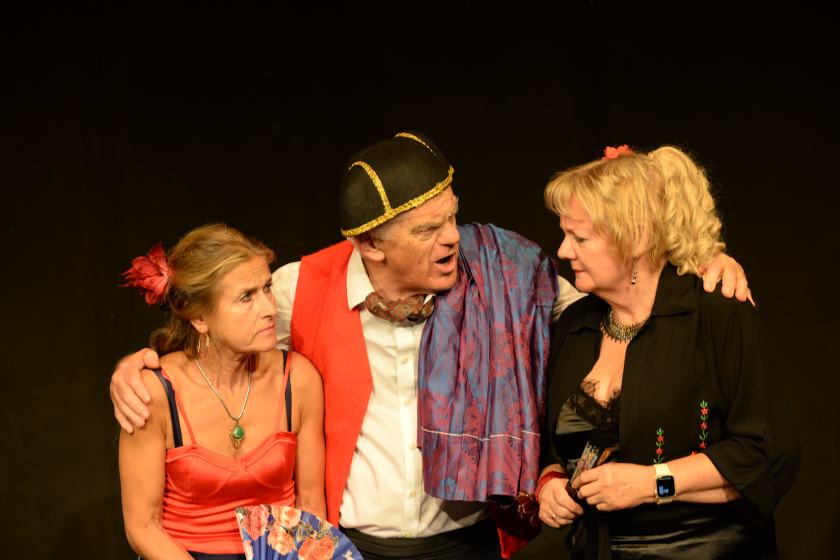
It tells the story of Violetta Valéry, a celebrated Parisian courtesan who is dying of tuberculosis, and of her doomed love affair with the young nobleman Alfredo Germont. Yeah I know – all the usual cheerful stuff, but bear with me. It’s not all doom and gloom. Well, it is actually, but let’s just press on.
In the first act (The Party & The Confession) Violetta hosts a lavish party at her Parisian salon, where she is introduced to Alfredo Germont, a young man who has adored Violetta from afar. He leads the famous drinking song (“Brindisi”), and Violetta joins him. When Violetta suddenly feels faint; Alfredo stays behind to care for her, and passionately confesses his love. Though initially hesitant to give up her independent lifestyle, Violetta is moved by his sincerity and agrees to see him again.
By the time of the second act “Sacrifice In The Countryside”, Violetta and Alfredo are living happily together in a country house outside Paris. But when Alfredo discovers that Violetta has been secretly selling her possessions to fund their quiet life, he rushes off to Paris to secure money. Whilst he’s away Alfredo’s father, Giorgio Germont, visits Violetta unexpectedly. He begs her to leave Alfredo because her “compromised reputation” threatens to ruin his daughter’s upcoming marriage. Violetta reluctantly agrees, writes a farewell letter to Alfredo, and returns to her old life in Paris under the protection of Baron Douphol. Alfredo reads the letter in agony, misunderstands her motives, and tracks her down at a party hosted by Flora. Consumed by anger, Alfredo publicly insults her and throws his gambling winnings at her feet as payment, prompting his horrified father to step in and rebuke him.
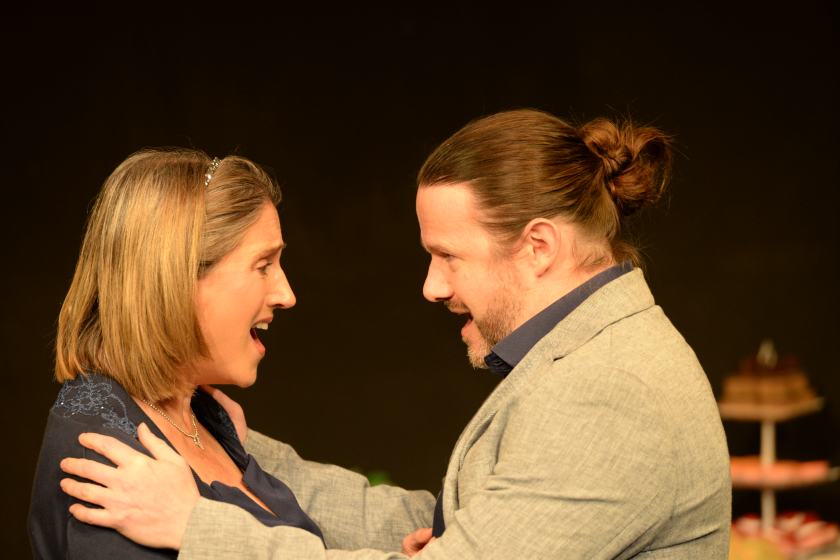
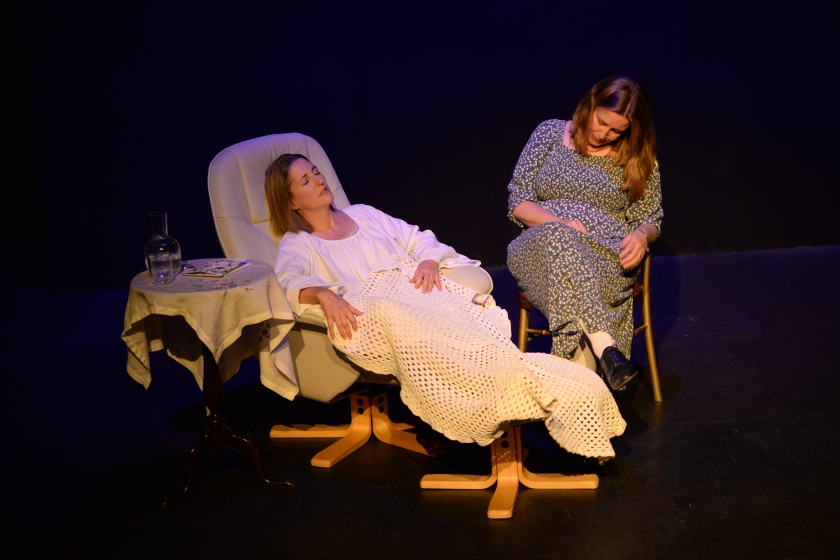
And in the third act “Death & Reconciliation” months later, Violetta is confined to her bed in a modest Paris apartment, severely weakened by tuberculosis and nearly destitute. She receives a letter from Giorgio Germont, revealing that he finally told Alfredo the truth about her sacrifice. Alfredo hurries to her side, and the two briefly dream of leaving Paris together. Her strength completely gives out, and Violetta dies in Alfredo’s arms.
I mean – tragic, or what? Well it is, but it’s a gripping story well told. Whilst some operas and plays rely upon some frankly ludicrous plots, mistakes and deceptions, La Traviata avoids these pitfalls. It feels realistic, believable and very much in the moment. A couple of hours in the company of this production passed in absolutely no time.
Lisa House as Violetta has a lot of heavy lifting to do in this role. She’s on stage throughout the first act, and is rarely offstage in acts 2 and 3 either. It’s a lot of work, and a lot of singing, but she carries it off effortlessly. If she ever made a mistake I certainly didn’t spot it.
The other principals – Robert Felstead as Alfredo, Jess Phillips as Annina, Paula Boyagis as Dr. Grenvil, Barbara Gompels as Flora, Jonathan Paget as Gaston, Jim Donovan as the grumpy Baron Duphol, and Robin Lane as the Marquis D’Obigny were all absolutely spot-on with their performances too.
And, although I always hate to single out any one particular performer from a superb ensemble cast, I have to say that I was particularly struck by the outstanding performance of Niall Hoskin as Giorgio Germont, the agonised father of Alfredo. His doubts and his tortuous changing emotions were rendered with a heart-stopping authenticity that I found particularly moving. Bravo!
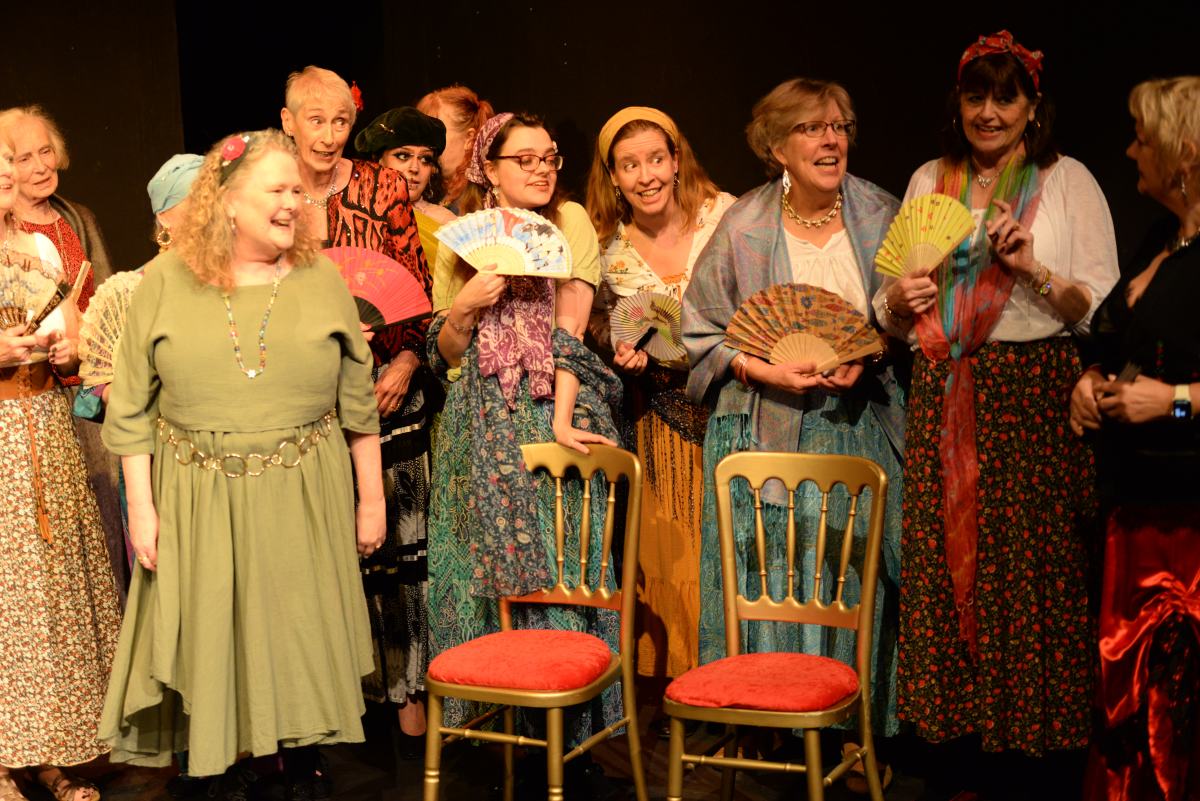
Again, let all WHO presentations, this production relies on a stripped-down stage, with minimal props or other distractions. Equally the “orchestra” is a simple four-piece up in the Minstrels’ Gallery at the back of the stage (Roshan Hughes on clarinet, Tony James on piano, Nikki Marshall on flute and Raphael Todes on violin) all under the adept musical direction of Roland Melia. The three scene changes are simple and quickly achieved, but there’s no lack of colour and variety. The costumes are striking and bold, and the cast sparkles with life. This allows the production to breathe, and to move the story along with some pace.
To be honest, the cast all looked like they were enjoying themselves on stage, injecting the production with plenty of energy. The whole opera is sung in English, and there are comprehensive plot notes in the programme, which makes the work completely accessible to a wide audience.
Did I enjoy it? – yes, absolutely! Should you go and see it? – again, an unqualified yes! We don’t get nearly enough opera in Devizes, so I’d urge you not to miss out on what is an exciting and sparkling production. There’s a few tickets left for tonight (Tuesday) and tomorrow (Wednesday). There’s no performance on Thursday, and then the Friday night and Saturday matinee performances are already close to being sold out. You have been warned!
White Horse Opera are based in Devizes and regularly perform operas around Wiltshire and beyond.
Find out more at sites.google.com/gompels.cloud/whitehorseopera/home
Future White Horse Opera productions:
Friday 11th December @ St Andrews Church, Devizes – Christmas Concert
Coming soon (TBA) Trial By Jury Touring Opera by G&S