
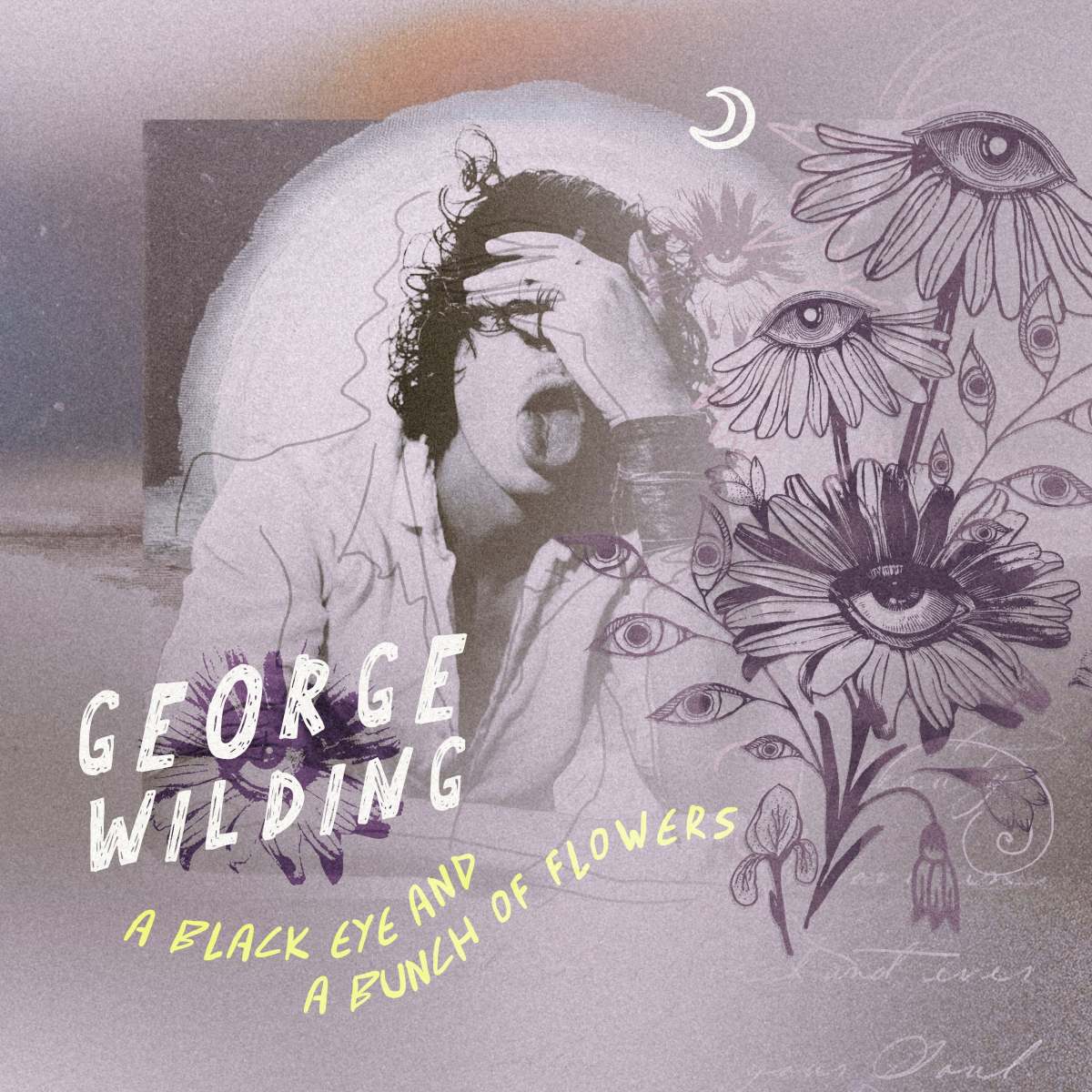
I’m uncertain if George Wilding sent us news of his newly released album, A Black Eye and a Bunch of Flowers, but we simply must have a listen or ten anyway. For whilst his fanbase should need no encouragement, I could (and will) waffle endlessly about it, unpicking greater detail as it embeds into my mind upon each listen, for it truly is everything I, and I’d imagine every fan too, has longed for in an album by George Wilding….
He usually does send such news, but my spam filters very wrongly assume I’m more interested in liposuction, bath wraps, and exiled princes of small countries wishing to transfer a trillion bitcoin into my account. If that’s the modern world, that an email from our loved local living legend might sit somewhere in my spam folder, George himself irregularly posts on social media, and when he does he suggests he’s fighting algorithms. Evidently, he has a point.
Yet, while he’s hardly the internet guru, and blissfully lives within an analogue era of yore, in much the same way, and method, musical legends of that time could evoke any emotion onto a listener they desire to, through a unique and quintessential delivery of ingenious wordplay, rather than a “reel” of hard sell, George has mastered this too, with a natural flare incomparably superior to his peers. And it’s worthy noting he does so in such an amiable way, he’s instantly your friend.
Being George is this genuine article, to analyse his creative outpourings we are best ridding ourselves of the Whitney harvest of soulless, pitch-perfect AI generated voices, of music technology and the indispensable evils of streaming platforms.

We must return to a time where musicians are credited by their output rather than social media follows. Reflecting on his earlier, often ironically whimsical yet with an edge of youthful psychedelic swirling work, there’s progression. And being George mentioned the Velvet Underground in the track Elephant Man from 2014’s Being Ragdollin EP, flipping cliché on its head to puncture pseudo-intellectual pretension, in this, if we were to compare his songs with The Velvet Underground, the new edge is more precise, less dreamy and more raw rock music, and perhaps ventures along a similar path to Lou Reed’s later solo writings.
I’d perfectly understand if you discredit this comparison, for Reed was hardly acclaimed for his vocal range, all raspy and intoxicated, whereas George’s is pure silk, which although carries cynical, observational wit like Reed, wherever his mood might opt, does so easily on the ear. It’s infectious, and beyond the reach of many; separating not only his great songwriting from standard indie fare, but his production too.
This is not only why working with Joylon Dixon is a coupling of the gods, but also why, when George takes a stage for an audience-selected human jukebox, he’ll take them on a similar spellbound path as he does with his originals. If this album does anything different, it should be that familiarising yourself with his original material is essential to your enjoyment, especially now he’s no longer aiming at the scene, rather moving from sharp youthful critique of arty posturing to channeling the depth of architects like Lou Reed themselves.
And while he rarely performs his originals, but I, for one, encourage him to, and when he once, upon a long time ago, told me he favoured the EP format to the LP, here it is now, aptly titled to coincidence with his contrasting irony; A Black Eye and a Bunch of Flowers. When leaking his intentions to release an album to me a few months back, and I reminded him about his once EP preference, he replied that he “felt the time was right.”

Starter for ten, it is. This twelve track strong album not only arrives at the right time, but the opening song immediately lambasts critics who might favour earlier works of an artist in comparison to newer, by suggesting rawness has lost edge, or the pressure applied to chase originality. If this is personally reflective, I should be careful, if it wasn’t for the fact I’ve nothing bad to say about the maturity of his sound! The irony rests in the sound of this satirical stab, Cat’s Lost Lick; the tune replicates his earlier work more than any other on the album. If, as he suggests, the walls are built and it’s a hard pill to swallow, it’s exactly the type of genius songwriting to prove them wrong.
It also pitches both sides of the fence you may sit on George’s progression. For me it’s a satisfying arc, and one which the second and ninth tracks highlight better than the opening. Babyshampagne is like the second single of 2026, Loser to Loser, both growers which carry delightful punches; if any type of punch could be deemed delightful, this is probably it. Loser to Loser kicks with an electric guitar riff, like an eighties power-pop anthem, but an “ooh-ooh” vocable breathing doo-wop or Motown into it, Babyshampagne mores simply, rocks out indie style.
If it’s breezily contented indie-pop, there’s this element in many of his new songs, and a sense of commercial viability, tempting me to reach to bands like The Boo Radleys or Deacon Blue for a comparison, certainly more than the Velvet Underground. Though, whether George ventures for hints of quirky or experimental hidden details, it remains as incomparable and unmistakenly George Wilding as belters like Signs of Life, which is a smashing the windows in Wilding classic.

Also in writing, although there’s something broken in the relationship in Loser to Loser, for example, whereas past characters might let it get them down, they seem to face up to realities gratified, or at least nonchalantly. Perhaps to match with the catchy hook and lively ambiences, but it seems this system is repeated through the album too, as the upbeat continues for Body, Soul and Spirit, which is Housemartins’ Happy Hour feelgood, and The Monkey Gets It, which is full of uplifting spirit, as the name suggests.
The crooner ballad element rolls the tempo down for No One’s Getting Out Alive, but builds to a wailing guitar climax. Year by Year is a reflective representation of all that’s satisfied with George’s acoustic live setting, and break-up song Feed Your Head brings back tempo but offers no such diversion, it simply rolls on a hard-hitting timeless indie-rock sound, as if Katrina And The Waves recorded Positively 4th Street.
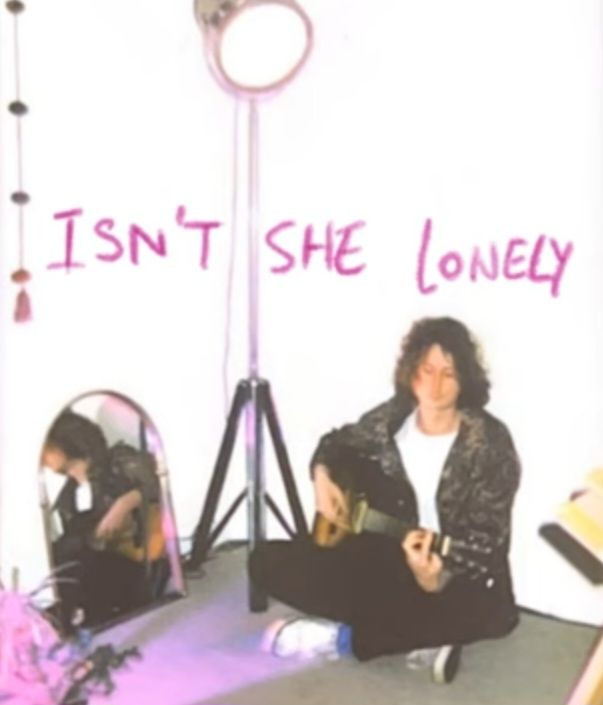
With the vaudeville ambience of Queen’s later material and sprinkles of doo-wop at the intro, the heartbreaking Isn’t She Lonely single follows, which whisps around crooners with subtle psychedelic undertones. It highlights how George is skillfully capable of frolicing vocally with the schlager of artists like Tony Christie, and remains cool throughout by splicing this music hall vibe ironically with melancholy in the narrative. It’ll remind fans somewhat of Terrible Little Secret from Being Ragdollian.
When the fantastic journey is near completion you are treated to two poignant pieces to complete the effect, because if the previous ten songs haven’t convinced you of George’s stature, these will win you over. The Only Way and Postcards from a Motorway are Mr Wilding at his best, swirling you in atmosphere and this seamless ability to take you on his mission to wherever, through the ultimate expression.
Fans will leave the album remembering every element as to why and how they became a fan of George Wilding. Newcomers will be left in astonishment as to why they’ve never heard of him before; curse those algorithms one more time for us, sweetheart! This album encompasses everything you want from an artist, pays respectable homage to George’s divine back catalogue whilst simultaneously introduces you to a newer George with desires to experiment and reach commercially without ruining that original and raw brilliance.
Top marks, but you knew it would be!
Trending…..
A Black Eye and a Bunch of Flowers for George Wilding’s New Album
I’m uncertain if George Wilding sent us news of his newly released album, A Black Eye and a Bunch of Flowers, but we simply must…
Keep reading
Captain Accident’s Sayonara Paranoia
After five years, a new album drops tomorrow (Friday 23rd October) from southwest Welsh reggae outfit, Captain Accident & the Disasters, and it’s worth the…
Keep reading
Cephid; Electronic Music Producer and Town Crier Partnership in Devizes
Well, what else is there to oyez about? Congratulations must go to our Devizes Town Crier, Charlotte Howard-Macdonald, again today, as Brian Mathew MP tabled…
Keep reading
Devizes; a Place for Festival, or Negativity?
On the Festival of Discovery, other political discoveries, and is the Crammer full yet?! No to the latter, but local Facebook groups are full ….of…
Keep reading
“Shakespeare’s Green-Eyed Monster” on tour, Central Wiltshire October 17th-24th 2026.
by Ian Diddamsimages by Gill Morrell and Penny Clegg How all the other passions fleet to air,As doubtful thoughts and rash embraceddespair, And shudd’ring fear, and green-eyed jealousy- Merchant of Venice, Act 3 Scene 2, William Shakespeare O, beware, my lord, of…
Keep reading
Shrek at Mac’s Theatre School
“What are you doing in my swamp?!” Shrek asked a horde of fairytale creatures, exiled to his wood by Lord Farquaad in his namesake Dreamworks…
Keep reading
Devizine Launchpad on Sunday
Okay you lovely lot, who are deffo coming The Festival of Discovery this weekend across Devizes, and who, deffo, going to pay us a visit…
Keep reading
Devizine Launchpad at DOCA’s Festival of Discovery
So, you’re joining us at Albion Place on Sidmouth Street in Devizes this weekend, right?! Don’t say I’ve not told you about it once it’s…
Keep reading
