

A sublime evening of electronic elegance was had at Bath’s humble Rondo Theatre last night, where Cephid’s album, Sparks in The Darkness, was played out exclusively to a packed house. It was, in a word, breathtaking….
The type of genius who built a laser-harp at seventeen years old, Cephid‘s composer, producer and multi-instrumentalist Moray McDonald is bound by modesty, and appeared, prior to the show, understandingly nervous about the prospect of performing. He hadn’t contemplated ever reproducing this masterwork on stage, for the project began as a collection of demos he created “for fun.” “With all my focus being on creating an album that would live up to the grand ideas in my head,” he explained, “I didn’t stop to think about whether this music could be performed in a live environment.”
Seems he shies from being centre of attention, his comfort zone on stage favouring the many occasions he hides as a keyboardist in prog rock bands. Moray, currently residing in Lavington, cut his teeth touring with progressive rock and metal artists such as That Joe Payne, Godsticks, Kim Seviour and Ghost Community, more recently he remixed for OMD.
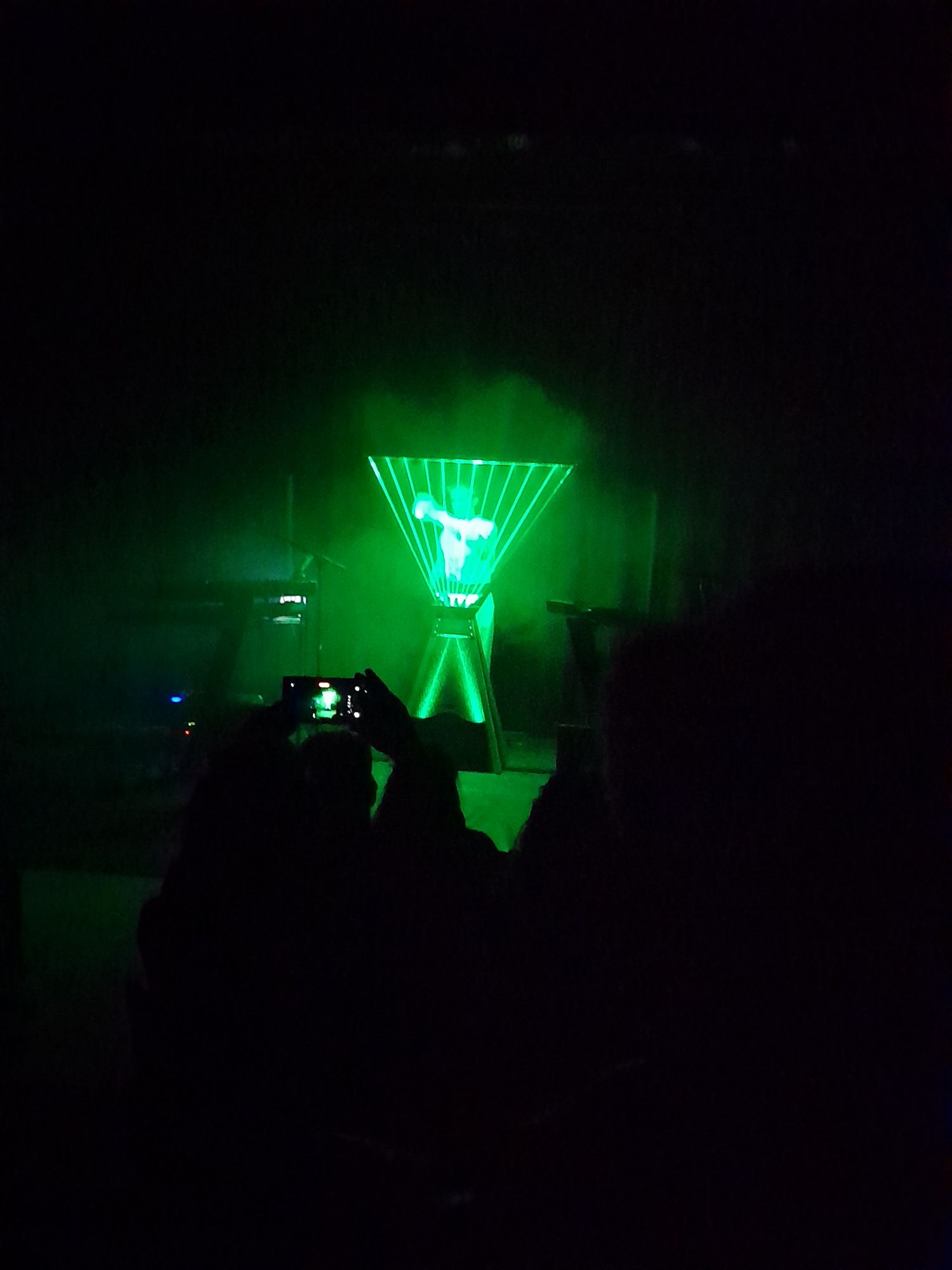
Moray was adamant this was a totally exclusive show which wouldn’t be taken on the road, although it has the magnitude of doing so. The show was produced and promoted by his partner Charlotte, who’s theatrical flamboyance encourages Moray to overcome his reservedness. Therefore a communal air bloomed in the audience, that this was a one-off treat, and we were the lucky few; because we were.
Being I was there to review, it probably didn’t help his anxiety any telling him I’d seen Kraftwerk at a Tribal Gathering of yore, where from every tent of every subgenre ravers descended to observe the roots of it all. “Kraftwerk was the beginning of everything,” he agreed.
While it’s an accurate summary of the origins of electronic pop music, Sparks in The Darkness delves beyond this for inspiration. It’s orchestral on a Jean-Michel Jarre level; even if the show wasn’t to the same scale it was in spirit. It nodded to the trial phase of electronic music, prog-rock’s psychedelic swirls found in Pink Floyd, Led Zeppelin et al, and continues to the ambient house pioneers like The KLF and Orb. It rests on the heyday of electronica, the quirky experiments of new wave post-punk like New Order, and early US electro outfits, like Newcleus. Yet it incorporates contemporary technological advances, the variety of modern subgenres stemming from it, and it evoked in me a fascination with the history of electronic sound.
To contemplate futurist Luigi Russolo’s 1913 The Art of Noises theories, that music would change due to the ear becoming accustomed to mechanical, industrial and urban noises, and the dadaists flouting this, is to consider the eighties clunkiness of the engine sampling of the aptly named Art of Noise, or Yello, or the piercing hubbub of acid house’s 303s, for the sake of artistic expressionism rather than melodious music. Sparks in The Darkness doesn’t go there, it doesn’t tumultuously provoke, rather it’s polyphonically beautiful, sampleless, and tonally complimentary on the ear. In this, the decades of electronic music progression has become an epoch, therefore a “folk” music, effectively turning music full circle; Cephid is on that cusp, and proved it last night.
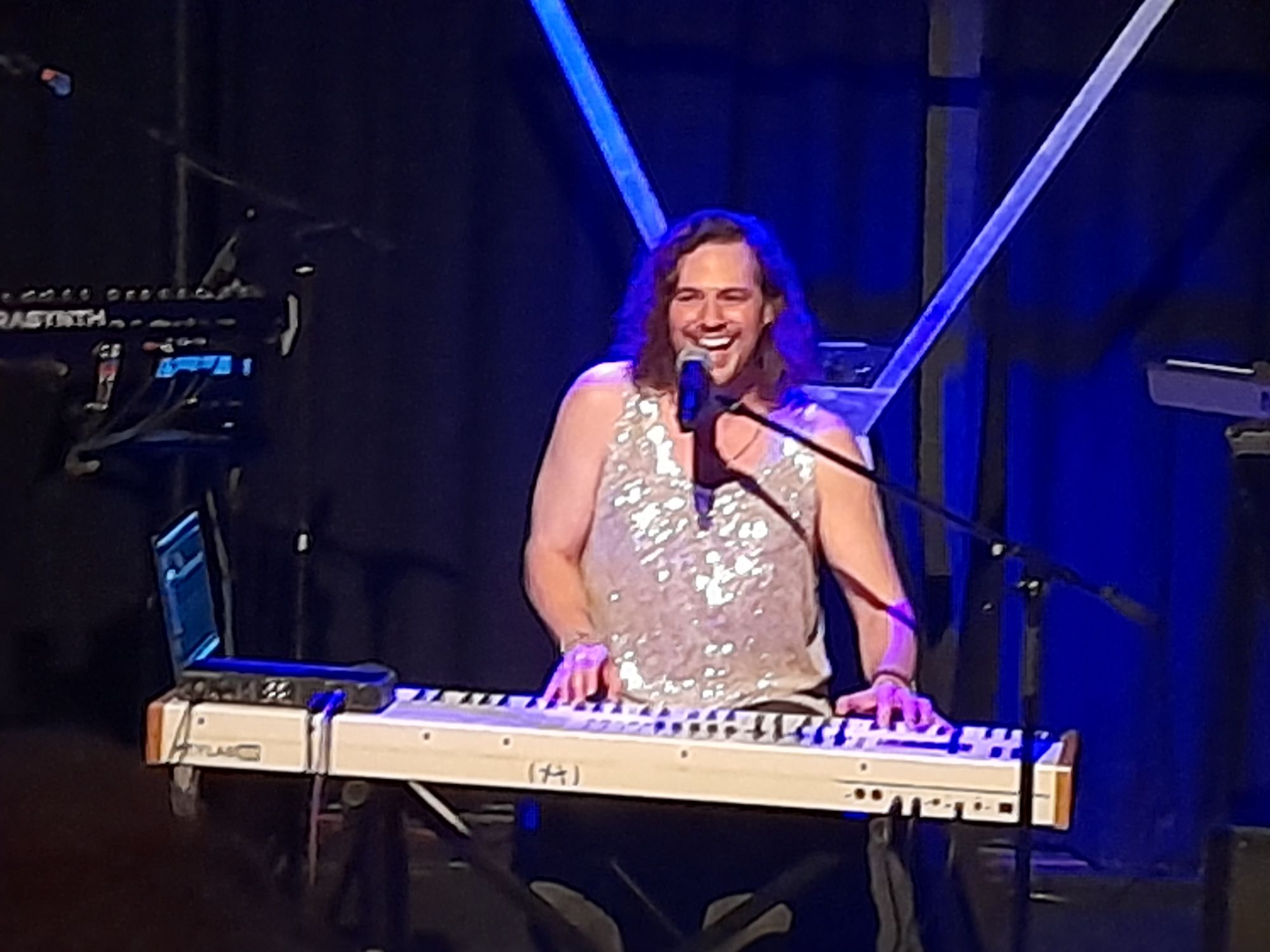
But not before That Joe Payne, who later returned to the stage to provide vocals for Cephid, supported with an astounding original set. With just keyboard and voice he acoustically gifted us with a one-man rock opera, the like I’d never seen before. Combining camp comedy with tragedy, reminiscent of Elton John’s heyday and expressed divinely with the vast vocal range of Freddie Mercury, this was delicious vaudeville. Though I cite these clear influences, they broke the mould when they made That Joe Payne, and that is the only shame about this highly entertaining character.
If That Joe Payne was something which bucked my norm in the nicest of methods, the whole evening was equally different for me, who these days is used to traditional rock, folk, or blues bands, and even with a history of dance music under my belt, this wasn’t a rave anymore than it was a gig in the tradition of, even if the effect was similar. This was a showcase of modernism, an electronica fantasy in fruition. If at any point I likened it to something visually, it was Howard Jones meets Orbital, and that’s a high compliment.
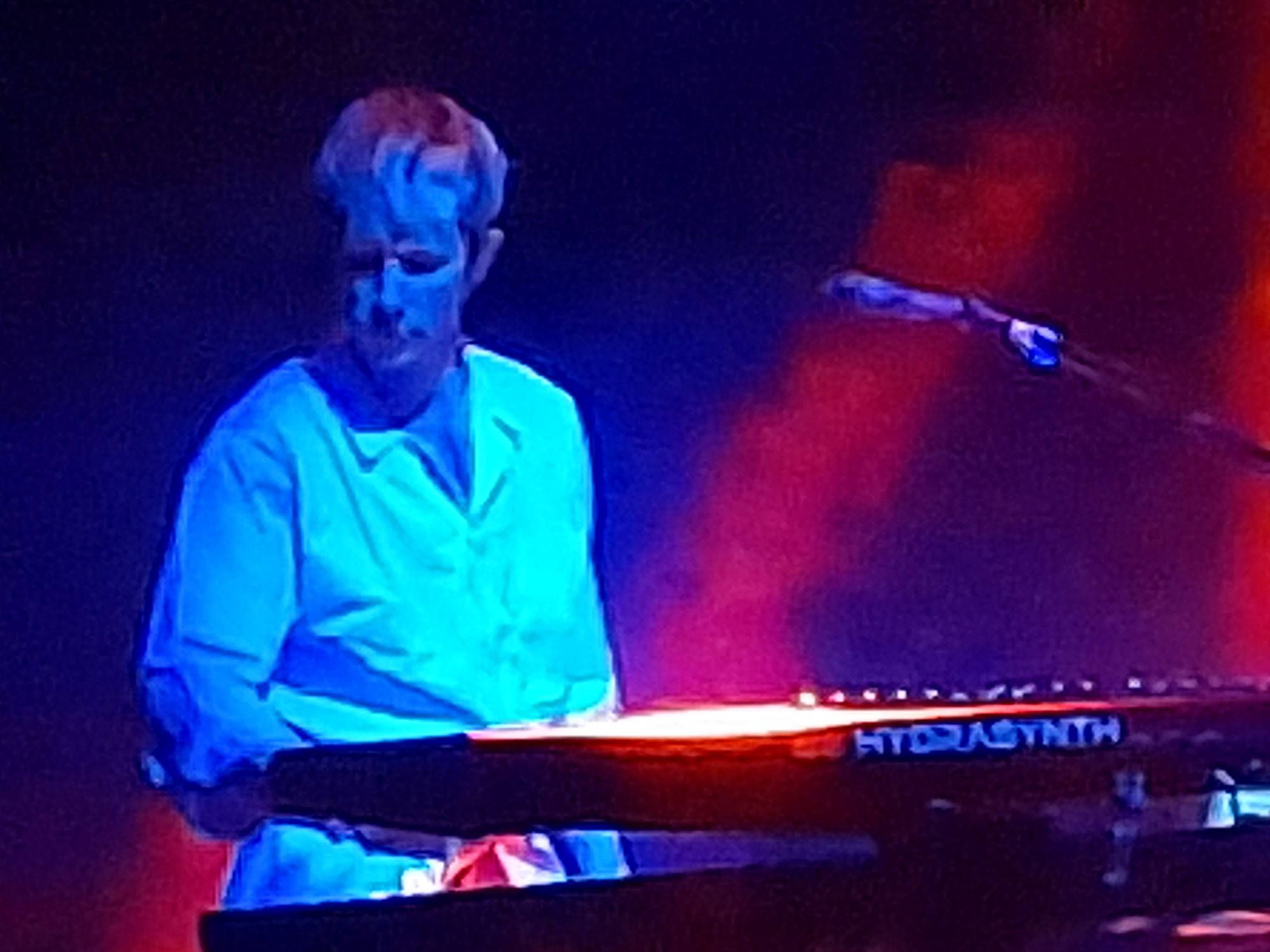
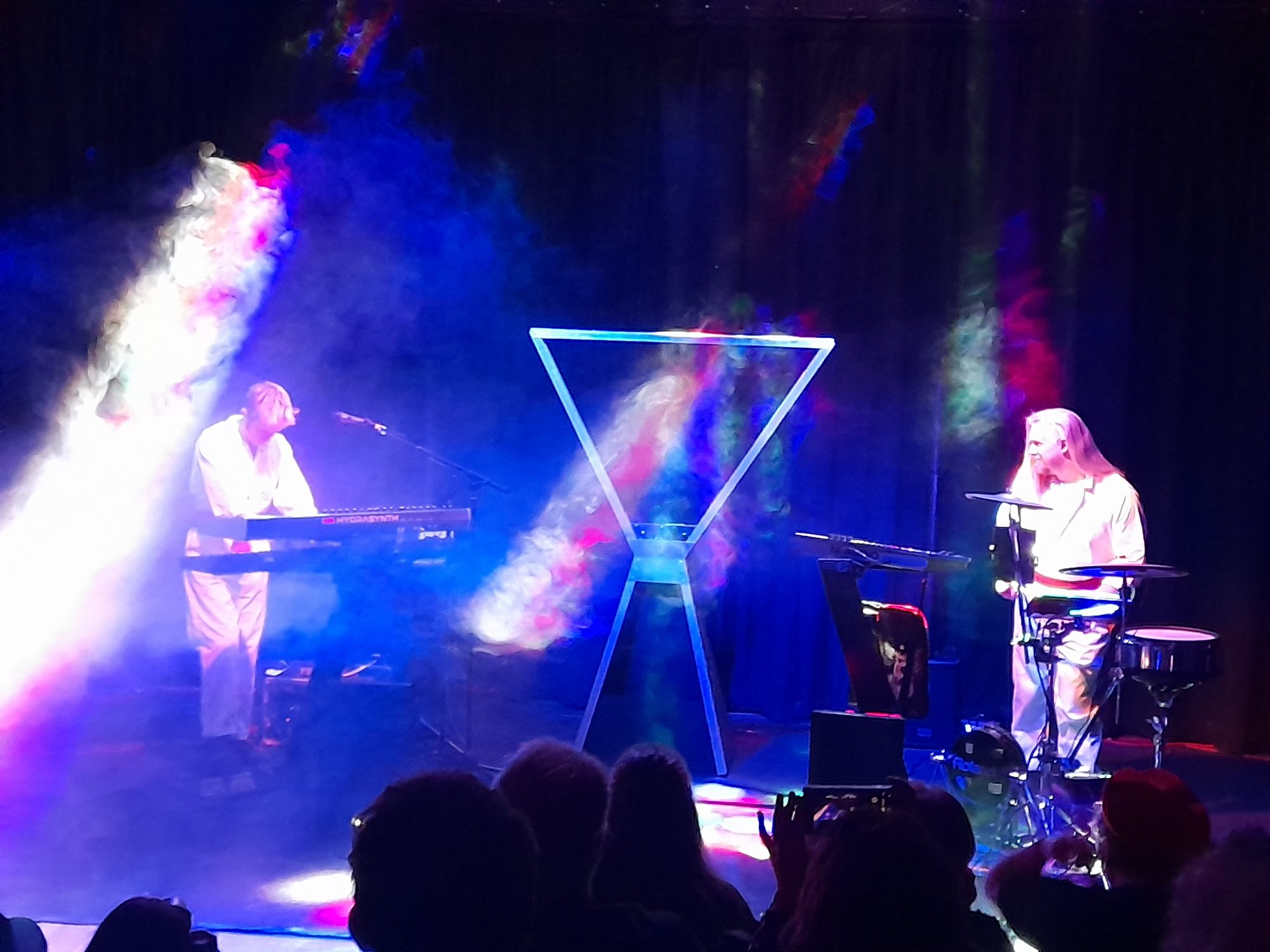
The Rondo ignited with laser lights after the interval, colouring the subtle smoke machine output, and doused with a building ambient drone. Moray appeared onstage with electric percussionist Graham Brown, both dressed in white bodysuits with scarlet tie-belts. Layers developed and the album was played out sublimely, stretched to fit the show. The skill of the pair, to unite in sound and highlight exactly how these tunes were accomplished was insightful, and amazing. The only analogue instrument being a snare, the rest was digital technology caressed to evolve the most refined musical topography, an audio landscape masterpiece.
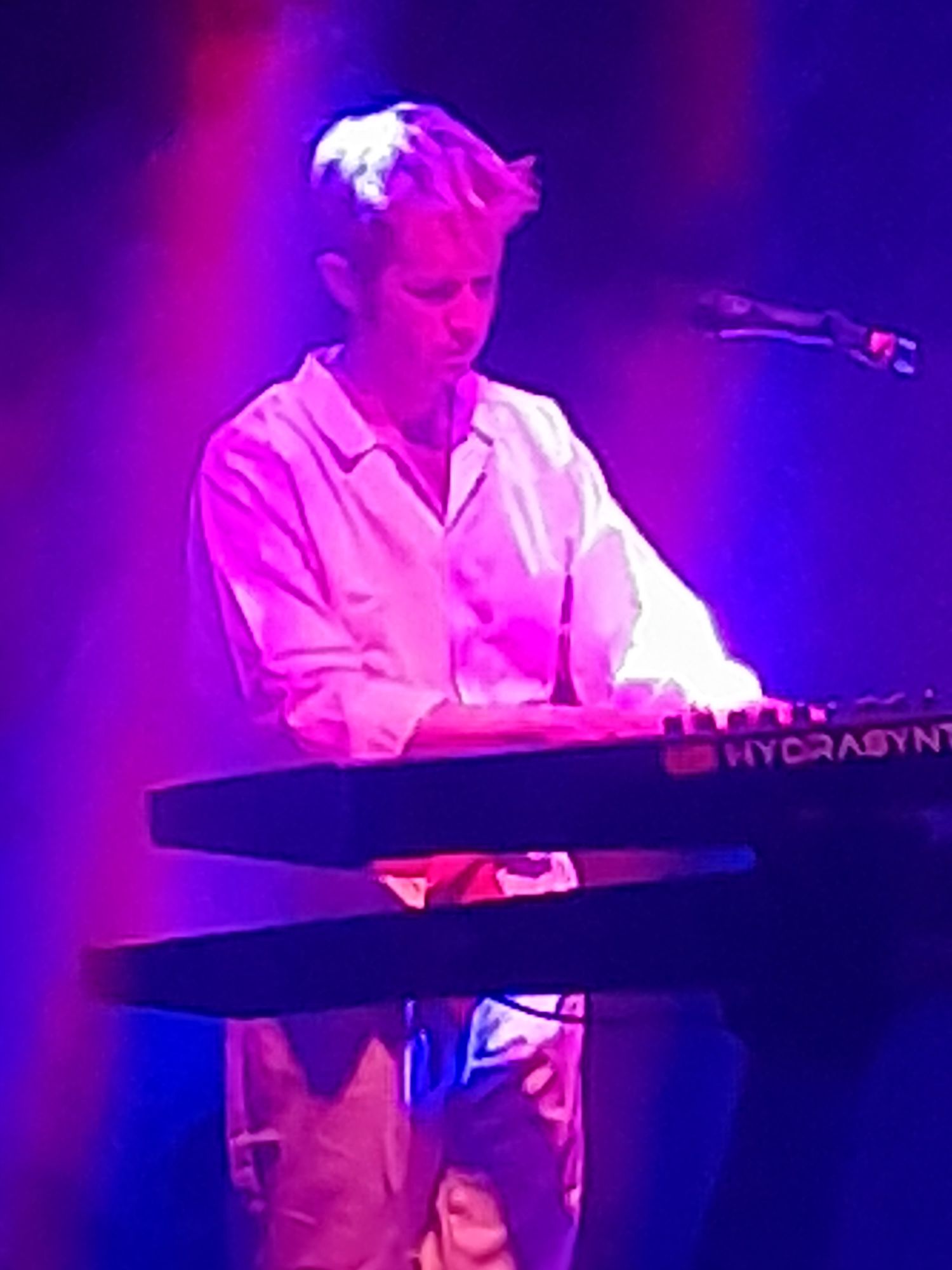
The grand finale was the usage of the triangular centrepiece, the laser harp Moray created at seventeen but had never used publicaly. Even if many in the crowd were connected in some way to Moray or the team, akin to a family party, everyone was held spellbound when the laser harp strings lit up, and Moray took position behind it.

If the perfect composition of this groundbreaking sound, with the laser show and theatrical performance wasn’t enough to convince anyone in the crowd to the monumental importance to the artist, and the rare and wonderful occasion this was, it was Moray’s expression of sheer joy, at the audience’s standing ovation. It was confirmation that this project, so immensely well received, is surely the testament, plus an ego boost, to the diffidence of a creative genius!
You might have missed this show, but you can (and should) buy the album HERE.

Trending……

From Nothing Rhymes With Orange and John Otway to Scummy Mummies and Milton Jones; Devizes Arts Festival Celebrates 40 Years with an Amazing Lineup
Featured Image: Helen Polaxpix What has Devizes’ greatest millennial musical export, England rugby player Jodie Ounsley’s ghost writer, some scummy mummies, a professor of biology at…
Keep reading
Only The Brave Burn The Midnight Oil
Hurrah, at last! Only The Brave is the debut song from Burn The Midnight Oil’s revised lineup; something I’ve been anticipating since watching them rehearse…
Keep reading
An Endless Summer with Braydon-Lee’s New Single
If, inspired by the likes of Ed Sheeran and James Arthur, the majority of Gen Z loves a good power ballad, the beginnings of the…
Keep reading
Tour Des Frites: Four Dauntseys’ Sixth-Formers Awarded Travel Scholarship Cycle from School to Bonn, Germany
Four Dauntsey’s Sixth-Formers have been awarded travel scholarships, and plan to cycle all the way from their school to Bonn in Germany, shortly after completing…
Keep reading
Wiltshire Business Leader to Host Free International Women’s Day AI Webinar to Prevent Women Being “Left Behind” in Tech Shift
Leading Wiltshire digital entrepreneur Natalie Luckham, AI Educator and founder of award-winning Wiltshire social media consultancy Naturally Social is hosting a free “Introduction to AI”…
Keep reading
The Return of The Fold Music Venue in Devizes
If your average Tuesday night in Devizes might feel like The Day The Earth Stood Still, it certainly felt this way for me yesterday; I…
Keep reading
Dulcet Tones Rock Back to Bassett!
You’re a teenage Tom Cruise, at least you wish you were, but stay with me on this! Your parents are away, you’re home alone with…
Keep reading
Talk in Code Headlined Devizes Winter of Festive Ales
Devizes Outdoor Celebratory Arts key into the town’s majority demographic for its first annual event of the year, mature couples, with an affection for sampling…
Keep reading
The Munster Returns to Slam-Dunk Wiltshire Council Budget!
Well, I admit, the Black Dog Crossroads has reopened with shiny new traffic lights and looks pretty groovy, as far as road junctions look groovy.…
Keep reading
Wiltshire Music Awards 2026 Announces New Organisers and Major Event Upgrade
The Wiltshire Music Awards 2026 entered an exciting new era when Stone Circle Music Events announced was as official sponsor and organiser. Backed by their…
Keep readingSomething went wrong. Please refresh the page and/or try again.


 devizine.com