Debuting in 1990, The Brand New Heavies may not be so new any longer, but they’re still heavy, funky acid jazz pioneers and they’re on tour in November to celebrate the thirtieth anniversary of their groundbreaking 1994 album Brother Sister, including The Cheese & Grain in Frome on Saturday November 30th….
Propelled by the classic singles “Dream On Dreamer,” Maria Muldaur’s “Midnight At The Oasis” and “Back To Love,” the record achieved huge success (a #4 chart position, over a million sales and a BRIT nomination) as they cemented their position as the pioneers of Acid Jazz.
Still sounding as fresh and timeless as it did back then, The Brand New Heavies celebrate the album’s 30th anniversary with the announcement of the ‘Brother Sister 30’ tour.
Featuring original members Andrew Levy and Simon Bartholomew with the phenomenal vocalist Angela Ricci, the tour will see The Brand New Heavies perform ‘Brother Sister’ in full alongside other hits and fan favourites from their storied history with a complete live band.
The band said, “We can’t believe that Brother Sister is going to be 30 years young! What better way to celebrate than coming to see us play the album in its entirety as well as all our hits.”
Tickets for the shows go on sale HERE from 10am this Friday, May 3rd. They play the Cheese and Grain in Frome on Saturday, November 30th. This saves me finding another vague local reason to mention it along the lines of Midnight At The Oasis was about a swimming pool in Swindon, which is obviously untrue, the leisure centre was always closed by midnight!
I’ve parked the van on the opening of a farm track, to have a sandwich and scan the area. I’m looking for a quarry which runs alongside the train track. A few years ago, I was a delivery driver, and though I didn’t know the roads, I’d recognise village names with fond memories. On this occasion I’ve turned off through the sleepy Oxfordshire village of Cassington; my memory of it was not so sleepy.
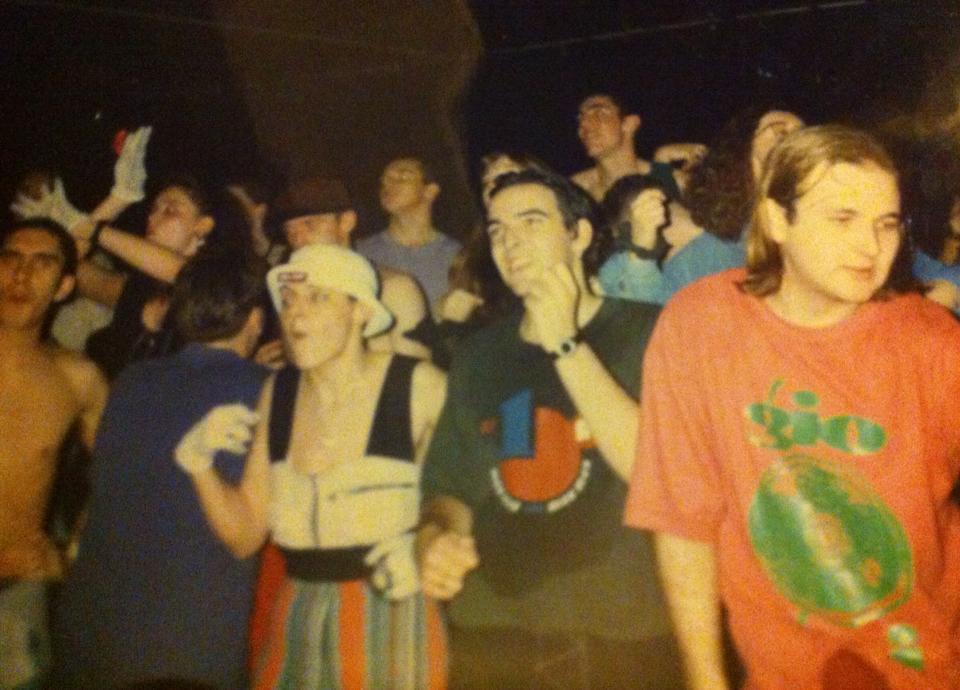
Those reading this too young or not into the south west free party movement of the nineties might wonder why, while those who were will know exactly why, and no doubt will be screaming a delighted, “yes mate, red and blacks!” Later to be referred to as Dennis the Menaces, without concern to what Beano publishers DC Thompson may’ve made of it all.
The distant resonance of an MC echoed through the valley, alas only in my head. “Get off the railway track,” he warned, “that is a live railway track!” A memory abetted by a rave tape capturing the irreplaceable moment, one of thousands I carelessly released into a skip many moons ago, foolish to the notion they’d be sought after.
On rave tapes, we’d either have a “master” or a recorded, taped from Christ knows how many cassettes down the line. Often inaudible by today’s standards, but recorded live at various events, they chartered the era. Endless weekday hours spent cutting up flyers to use as covers, doubles of those already pasted on my bedroom wall. In 1990 I had obtained a few, in the space of a year the wall was covered with them, overlapping to hide the roached edges.
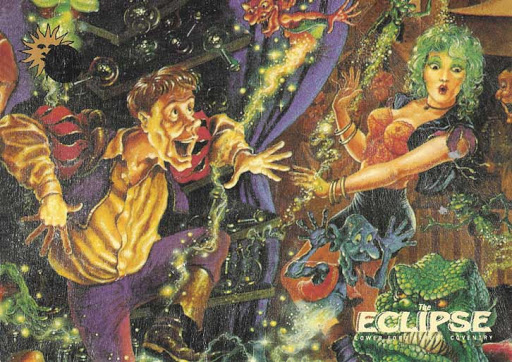
Akin to the accumulation of flyers, my rave tape collection increased like wildfire. From popping into Swindon’s Homeboyz Records, which at the time occupied a loft space in a head shop on Fleet Street, to ask for “the kind of tunes I’ve been hearing at the raves,” in which I was sold two, recorded from Coventry’s Eclipse; Frank De Wulf, and the second, Sasha and Top Buzz, to the point where an entire collapsing shelf was bursting with alphabetically arranged cassette boxes, with the wrong tapes in each. Ah, weekday timewasting activities; we lived for the weekend.
Another delivery driving time, after a few visits to Great Tew, I found the private airfield at Enstone. I recalled arriving there in 1991, one misty morning after a lengthy standoff at Peartree services outside Oxford. These were customary; convoys from every direction flooded in, police would surround them, rumours would circulate they were to search every vehicle moving out, meanwhile the bottleneck swelled, car stereos melded into one colossal clamour as kids danced on the embankments, blowing horns and whistles, undaunted to the likelihood of a tipoff, lawlessness supervened, petrol and spearmint chewing gum went mysteriously missing, and police finally acknowledged they were outnumbered, and allowed free passage out of there.
For the journey my mate spoke of nothing other this track he’d heard. “You remember the don’t talk to strangers’ advert with the boy and his cat, Charlie, went, like, Charlie says……” Yeah, I did, but hadn’t heard the song. Coincidently the DJ spun it as we arrived, and he wasted no time, leaping from the car prior to stopping, yelling “this is it!” and running off headlong into the fog.
I myself got lost in that fog sometime later, asked a friendly crusty if I could climb on his van to see if I could find my friends. The view of synchronised trilby hats and bobbed hair dipping into the low-level mist enticed me to dance, to which he seemed completely content with, as I stomped on top of his van. But as others, noting my joy, decided to do similar, I climbed off, persuading them not to follow my bad example, it was this guy’s home from home.
Charlie did say that, but with these carefree strangers, it didn’t seem to matter, hence the irony in the Prodigy’s song. Everyone had the smile of the Cheshire Cat, everyone would lend you a chewing gum in exchange for a rizla, and right in the moment, that was all that mattered. It was short-lived, a few years of complete bonkers, but it had a profound effect on society. Football fans returned from clubbing the night before, far too intoxicated with love drugs to cause the trouble the sport had become associated with. Football chants were adapted from “you’re going home in a fucking ambulance,” to “you’re going home in a fluffy ambience.”
In a clubland where once, to accidently knock over someone’s pint, or look at their girlfriend for longer than a millisecond, would likely evoke a fight. Now, the clubber sighed, “I know you didn’t mean to spill it, no worries mate,” to which the reply would be “sorry, I’ll get you another.” One clubber said, “is that your girlfriend pal? She’s gorgeous,” and that’d be seen as a compliment, perhaps understandably backed by an informal warning, but it certainly wouldn’t end in a drunken scrap.
Such was the scene expanding, a legendary party at the end of the summer of 91, somewhere near Banbury, extended into a nearby field, with a narrow track joining to two. A continuous stream of pedestrians sauntered to-and-fro, until a BMW hurtled through the wanders. A lone hippy cursed the driver, pleading he slowed down. The car came to a screeching halt and backed up. All four doors opened and some rather mean-looking urbanites, full of sovereign rings and bling stepped out to confront the scrawny fellow. Towering over him, the driver and his passengers asked him to repeat what he said; it was a setting akin to a violent scene of a gangster movie, and the expectant crowd held their breath. The crusty replied he had asked them to slow down, because someone could get hurt. The rude boys considered this, got back into the BMW and drove on, at a snail’s pace all the way to the end, carefully stopping for pedestrians.
An incident I’ll reiterate as an example to how genuinely passive and diplomatic raves were. We policed ourselves, troublemakers were dealt with, often in a medieval fashion. Yet troublemakers were few, unlike nightclubs you had to make reasonable effort to find a party, so most were aligned to the concept we were there for that and only that, to party. So too, if you overstayed a party till its conclusion, you willingly picked up and bin liner and helped clean the area, (okay, there was always a chance of finding some money or hashish, I’ll give you!)
The country suddenly seemed at peace, least it did to us, and the authorities had a problem with this.
There was a frustrated lost terrier, scrambling around in the dark, barking, scared without its owner; it was the Conservative Party. John Major walked into this, and knew if he was to overthrow the shadow of Thatcher, he’d need to take drastic change to society.
Me, my mates? We didn’t give a fuck. Other than the annoyance of the odd rave being broken up, when the police got the itch, we had no political opinion, we had no concern over much at all. Because, we knew there was a happy place, somewhere we could go, freely, and we were in the moment of building our own society, shaped as we wished, policed as we required, but as many adolescent dreams, we thought we knew it all.
Four Dauntsey’s Sixth-Formers have been awarded travel scholarships, and plan to cycle all the way from their school to Bonn in Germany, shortly after completing…
Leading Wiltshire digital entrepreneur Natalie Luckham, AI Educator and founder of award-winning Wiltshire social media consultancy Naturally Social is hosting a free “Introduction to AI”…
Devizes Outdoor Celebratory Arts key into the town’s majority demographic for its first annual event of the year, mature couples, with an affection for sampling…
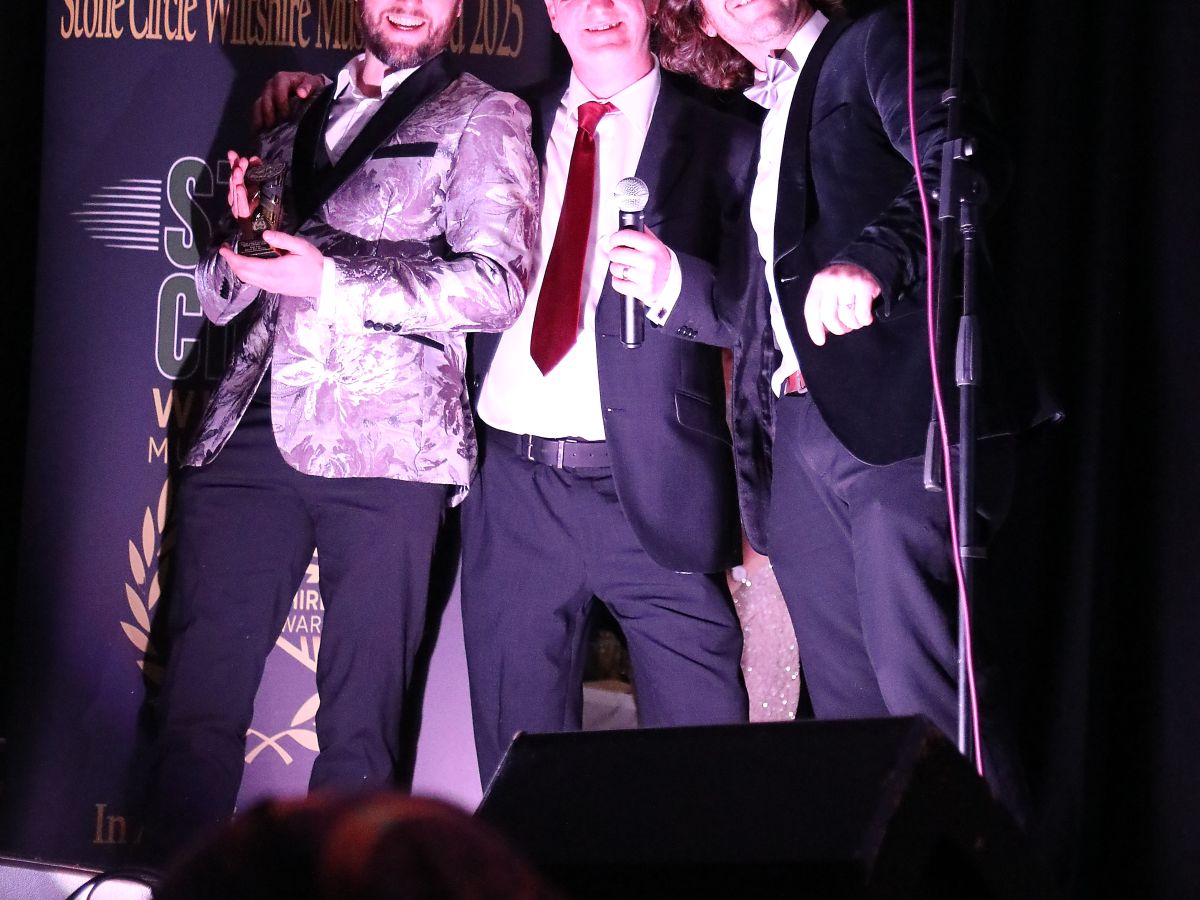
The Wiltshire Music Awards 2026 entered an exciting new era when Stone Circle Music Events announced was as official sponsor and organiser. Backed by their…
A branch of a classy supermarket chain seems an unlikely place to start a story of one’s first rave experience. It was a shop which, on a later occasion, my mate and I decided to walk ten miles back to, to thank them for such a lovely pizza. Overlooking the fact, it was the extra topping of liberty caps we added ourselves which sparked the idea, and, in turn caused us to only make it a hundred yards out of the village before we collapsed in a hysterical heap. Just as well, given I worked there at the time.
Oh, for the time, I’m slipping down my rose-tinted specs again, but, while I’m grateful to those reading this who lived it, I’d rather those too young would too, who they need to understand the era leading up to it, to know why we did what we did……
A protest at end of term school disco, 1988. Teachers, thought they were “hip” enough to do the “in” thing, hiring a standard DJ to deliver the latest pop sounds. One year away from leaving the institution we saw ourselves as mature. Obviously not, but sufficient to warrant a plain and simple fact; the pop chart was not aimed at us.
A decade old now and electronica has become timeworn and abused by the Hit Factory and Stock Aitken Waterman. The formula was simple, derived from sixties bubble-gum pop, and aimed an even younger audience. An assembly line of drum machine synthpop churned out uninspiring samey trash, a monotonous drone promoting pop stardom to Australian soap opera actors, failing have-been musicians convinced by a fat cheque and dreadful teenage dreamboats. They punished the last part of the decade; they commercialised the once experimental epoch. It should have been a crime.
We all sat in protest on the dancefloor, booing, as the DJ spun, I Owe You Nothing by latest teen-pop sensation Bros, two brothers from Camberley with Pet Shop Boys manager Tom Watkins, stupid belt buckles and leather vests donning crucifixes, which seeing as what they did for pop, was actually quite apt. The only person left dancing was a good friend of mine, who took the ingenuity to bring a Sony Walkman, and he skanked out of time, through the protesters in his own little world, lip-syncing the words to Buffalo Solider.
For me, even my love of hip hop worn thin. While it still had a nostalgic place in my heart, as it spread out from the Bronx it seemed to be whitewashed, typecast far from the original ethos. Yes, Grandmaster Melle Mel rapped conscious lyrics on The Message, but that was the exception to the rule. Now, seemed every rapper had a chip on their shoulder, something to criticise, a plastic attitude and some serious bling. It was either this, or sell yourself like a cheap tart; take MC Miker G & DJ Sven rapping over Madonna’s Holiday as red for why hip hop lost its way.
A far cry from the untroubled origins of hip-hop, where the idea was to throw your cares away for the duration and party. A notion closer to the new impending wave of electronic music, fresh from the underground.
In any case, at 14 I’d moved to Marlborough, where breakdance seemingly hadn’t the same impact as it had on my Essex town. Prior to starting school there, my mother suggested my brother and I attend a concert on the common, as promoted on GWR Radio, surprisingly. It may’ve been a tactic to encourage us to blend into our new home. What actually happened freaked me out. If I considered I’d descended time, back to the seventies, before this day, I certainly did now. I believe the band playing to have been popular local rock band, Read’m and Weep.
Looking back now, they were excellent, but through my trendy suburban Essex eyes I was shocked at the sight of scruffy rock kids perched on car bonnets, uniformed in black, smoking, drinking from bottles before me. I felt like the character Sam Emerson, the younger brother in the movie The Lost Boys, when they go to the beach fair. If one of these “weirdos” glimmered fangs at me, I was legging it.
In fairness, being bored with the direction of hip-hop, and annoyed with commercial pop, I had a sweeping overview of rock, as soft metal took the charts by storm. And as I emersed fuller into the cultural differences of my environment. I began to find it was the only musical avenue worthy of attention, and had to backtrack my knowledge to the classics. But as I was taking in Led Zeppelin, Hendrix and The Doors, in order to make friends at school, they became accepting of a new wave of electronic music called “house,” as it was, it had a commercial side, but looming was the psychedelic underground roots, sub-labelled “acid house.” We kind of met in the middle.
I find it amusing child-friendly raves have become a popular attraction recently. Organisers such Raver Tots and Big Fish, Little Fish attained a gap in the market with new parents who thought the stork has ended their raving days.
Ingeniously they create a pay-rave/soft play centre crossover, largely based on the hardcore era of the mid-nineties, as that’s the generation with easily persuaded toddlers. Way to go to push your diehard habits onto your saucepan and lids, but indulge now, as it doesn’t last! If you asked my daughter ten years ago what her favourite music is, she’d reply “reggae,” an obvious spoon-fed response. Now she’s engulfed by current pop, and you have to let them find their own path, their own thing. Pushy parenting backfires.
But that’s not the reason it amuses me, neither is the fact since the dawn of rave participants never take themselves too seriously. Yes, it’s “cheesy” by their own definition. Yes, there’s a childlike euphoria involved with raving too. Sucking of lollies, cuddling complete strangers, and dancing like a lunatic to a breakbeat sample of the Sesame Street theme. But it’s a notion the flipside, the “indie” kids could never fathom, in all their depressing reality-driven gloom; rave was never to be taken too seriously. It was quintessentially an escapism.
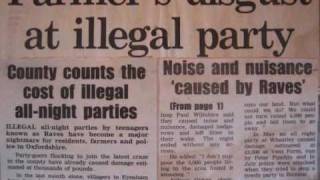
No, the reason it amuses me is thus, at the time rave was not the place to take a toddler and few did, save for perhaps the travelling folk who, for them, the sites were their home. Rave was illegal, primarily, until big businesses saw the opportunity to make a fast buck. Rave was daring, criminal and that’s what, unashamedly, made it exciting. In fact, the spread of the trend grew from a scare story, a tabloid attempt to frighten parents into believing every teenager, including theirs, was off their rockers in a dangerous derelict warehouse somewhere around the London orbital. Truth is, my friends and I hadn’t a clue about it, until now.
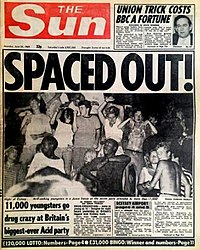
In fact, in 1988, just before some doughnut invited a lucky journalist to an acid house party, the scene was tiny, a secret association only a select few Ibiza diehards knew about. The desire to recreate their hedonistic holiday in the Balearics in London gained little attention, until one day the newspapers splashed it across their front pages. Needless to say, it backfired, now every teenager in the country wanted in on the deal. Including me.
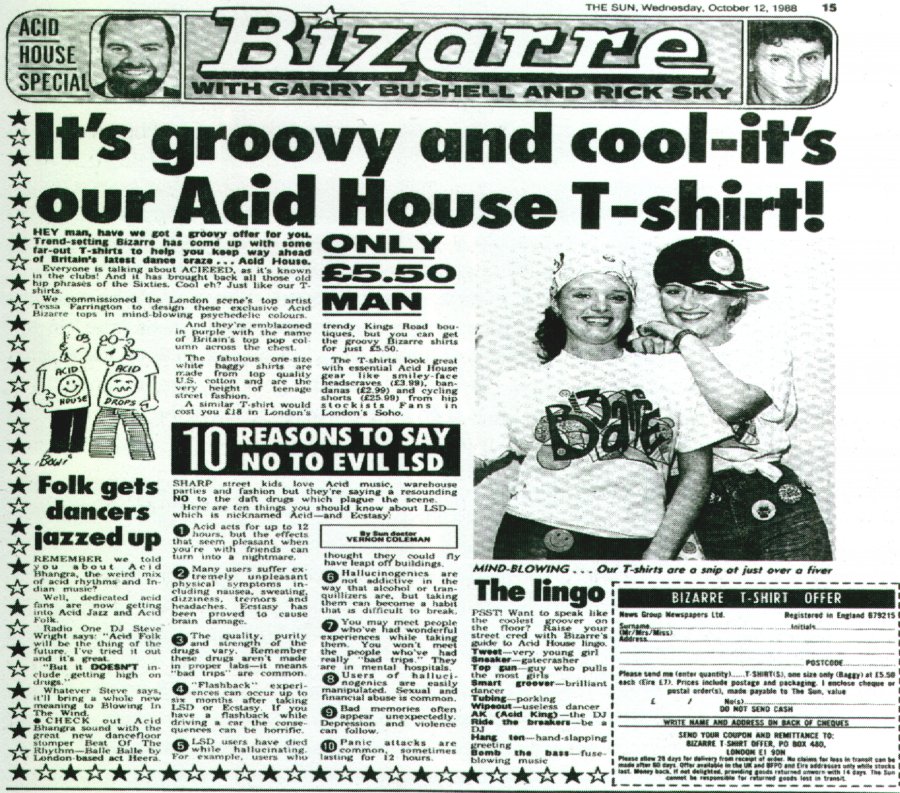
As ever, the Sun was the main culprit, Gary Bushell pasting a light-hearted angle, often satirical and tongue-in-cheek but definitely in favour of the exploding trend, in order to sell their “acid house t-shirt.” Soon as sales dropped, they turned nasty on the surge they had a hand in prompting. It’s almost as if they deliberately blossomed a teenage rebellious phenomenon in order to flip it over and create hysteria, to sell papers; who knew they could be so callous?!
But it was too late. D-Mob sounded it out; We Call It Acieeed. Prior tunes to hit the charts never wrote it directly on the wall. It was always just about “house” music, pumping up the volume, or jackin’ your body. One could differentiate, draw a definite line between run-of-the-mill “house,” hence being commercial, or the evil, drug suggested “acid house.” At least to our adolescent mind. Truth is, it was all the same.
Yet meanwhile we were still convinced electronic music was sold out to commercialisation, therefore we’d rewound back to the space rock of psychedelic sixties and seventies. Unlike my peers though, I retained small penchant for the original hip hop, and swept house with the same brush. It was short lived, but I liked house for all the silly samples of Bomb the Bass’ Beat Dis. It was as if electro had turned full circle, and divided from the cliche of fierce rap styled US hip hop, particularly now the west coast had as much clout as the east.
It’s also worth noting, although we took its source as American, British acts like Coldcut were now producing house. As the media hysteria became old news and mellowed, by 1990, the average joe blogs could be forgiven for assuming it had all been a flash in the pan. Little did even we know the trend was growing, and since graduating from pupil to student, felt we had moral responsibility to check it out for ourselves.
Perhaps not just our age, but also rural Wiltshire was hardly cutting edge when it came to trends. So, two years on and the words on our lips were “acid house,” despite the term had metamorphosed into “rave.”
With local Tory backhanding secret social clubs’ slaps on the back, our school opened its doors and poured children into the only supermarket in town, where the branch manager welcomed weekend staff, he could offer £2.20 an hour to. I succumbed for want of my own pocket money. Surprisingly, it was there where my adventure into rave begun.
Yet it was there, working my Saturday job, allowing us the newfound financial freedom to maturely decide where best to invest our earning, which happened to be getting wasted. A friend, a year or so senior, dropped the killer bombshell, to which I hide my excitement and pretended to know all about. “You going to the acid house party tonight, up the common?” he inquired.
Well, my feet didn’t touch the floor before arriving at the opposite side of the warehouse below the store, where my buddy priced up tins of soup. Shocking to think barcodes were still some way off, and one would have to be like Clint Eastwood with a pricing gun. But nevertheless, he stopped as I told him the news, and his face lit up with excitement, and a slight evil grin.
1991 beckons next week, as I relive my rave honeymoon, be there!
It seems Shrove Tuesday celebrations in Devizes have fallen as flat as a….well, you get the gag… Traditionally organised by Age Concern Wiltshire, and often…
The mighty mighty Minety Music Festival announced The Bluetones as their Sunday headliner at their Eames Laurie Main Stage, and The Dub Pistols on the…
The celebrated Shindig Festival at Malmesbury’s Charton Park announced their headline act for May bank holiday 2026, and being that it’s Bob Vylan, it is…
Spent a recent evening flicking through old zines I contributed cartoons to, relishing in my own nostalgia. Not egotistically admiring the artwork, or even laughing, rather cringe at most of it. More so because every publication has a backstory; where I was, what the hell I was up to, and thinking, if at all, at the time. It’s like Gran’s photo album, to me. But I guess reminiscing is symbolic of this pandemic year, nought else happening.
With that in mind, Bill Green of local self-titled Britpop trio Billy Green 3 has a great story to tell, ending with a retrospective release on the streaming platforms. He met Simon Hunt at a party, they liked each other’s jumpers, shared a love of music from the Beatles to the Stone Roses, and hung out on the guest list with Chester’s indie rock band, Mansun on their ’96 tour.
Billy’s mate John ‘Jimmy’ Burns “simply wanted to be in a band and dressed well.” Never having played their instruments before, let alone in a band, one night they decided to form one with another of Billy’s friends, Mark Molloy. “We” Bill explained, “jumped about to ‘The Jam’ and had often spent nights drumming along on bars and tables.”
With Mark on drums, Simon on Vox, Jimmy on bass and Billy on guitar, Still was forming. Yet I guess Bill was reminiscing this foundation when deciding upon a name for his debut album as the trio, back in January, which we cordially reviewed, here.
“I’d written a few songs,” Bill continued, “so we set up second-hand instruments in Marston Village Hall, and banged out a few tunes, no covers mind.” He had been DJing the ‘Vroom!’ Club, at the Corn Exchange. “Ian James was kind enough to put us on that Christmas and New Year’s, and people actually came to watch, a band was born.”
Still played the local circuit and even had a dalliance with Virgin Records, having spent a day travelling around London knocking on doors and dodging receptionists and PAs. They booked studio time with Pete Lamb’s studio in Potterne, followed by more studio time at Holt Studios, where a personnel change saw Andy Phillips join on drums and later, James Ennis on guitar.
As a five-piece they played into early 1999, before calling it a day and believing the recordings were lost. Simon Hunt recently unearthed the cassette, much to Bill’s delight, and the demos have been remastered “and tidied up a bit,” with the help of Danny Wise. Returned to Bill, who has enthusiastically released it as an album called Destruction at the beginning of the month. “And here they are,” he excitedly called, “as a permanent record of the biggest indie band ever from Devizes…. called Still!”
“I’m just shocked that Marston has, or had a village hall,” I expressed.
“Rubble when we finished playing!” Billy kidded, possibly.
These are raw demos, but brilliantly echo a time of yore when Britpop was in the making and a newfound generation of garage bands were spawning like a wart on the bottom of commercialised pop. What is great about this album, aside the backstory, is it represents all those early influences of the scene and mergers in a way we might today take for granted, but were, in essence, different scenes and youth cultures divided by decades, at the time. Yes, these may have been bought together by his more defined recent album, Still, but this is essential history for fans of that album, as it opens the casing and shows the very workings of it. Similarly, it works more generally than that, as an insight for fans of the genre.
For if influences of Britpop’s ‘big four’ are represented here, in the jaunty attitude of Blur, the maladroit studiousness of Pulp, the euphoric ballads of Oasis, and the brashness of Suede, there’s also arty punk rock and psychedelic reprises, like Elastica’s affection for Wire, even the Beatles.
There are echoes of Britpop inspirations, ‘Respect Now’ feels like it’s drawn from the genre’s eighties influences; the Jam, up to the Stone Roses. Yet tracks like ‘Happier Now’ ring drum-based upbeat riffs, but slating postpunk vocals, and the sobering drone of The Smiths. Whereas, ‘Pale Impression, Man’ is closer indie enthused from post-punk gothic, rather the end of the era anthems, like the track ‘Catch,’ which rings Suede or The Verve.
‘Lady Leisure’ just rocks, simple; this was produced at Pete Lamb’s, along with the other first bout of garage-style rock, ‘Happier Now’, and ‘Superstars,’ the latter savouring the sound of the Kinks. Perhaps the most poignant are two the love ballads, which along with ‘Catch’ were recorded at Holt. Bill informed me, “‘Gav4Saf’ was a fledging love song written for a friend’s wedding.” But the beautifully crafted ‘LoveSong’ is a missing piece of Oasis, and as a stand-out ballad is the only track rightfully to be reworked for Billy Green 3’s modern album Still. The finale is the title track, with a sublime rolling bass guitar, Who-like.
“We hope there are some people who will listen and remember those heady days as fondly as we do,” Bill expressed, “it’s basically demos but such good memories!” It may help, but is not, I reckon, essential. I reason, quite regularly, that finding the early recordings of any artist is often more worthy than the celebrated later releases, when eagerness overrides rawness and economical recording sessions. They brought out the original enthusiasm, the roots to greatness. I favour ‘The Wild, Innocent and E-Street Shuffle’ rather than Springsteen’s ‘Born in the USA,’ for example. Even delve into bootlegs of Steel Mill, where despite the boss not being frontman, you can hear a distant echo of genius harking from the background. ‘Destruction’ is out now, as well as the single, ‘Catch,’ across the streaming sites, (Spotify) a notable antiquity of the local music scene.
















 devizine.com